
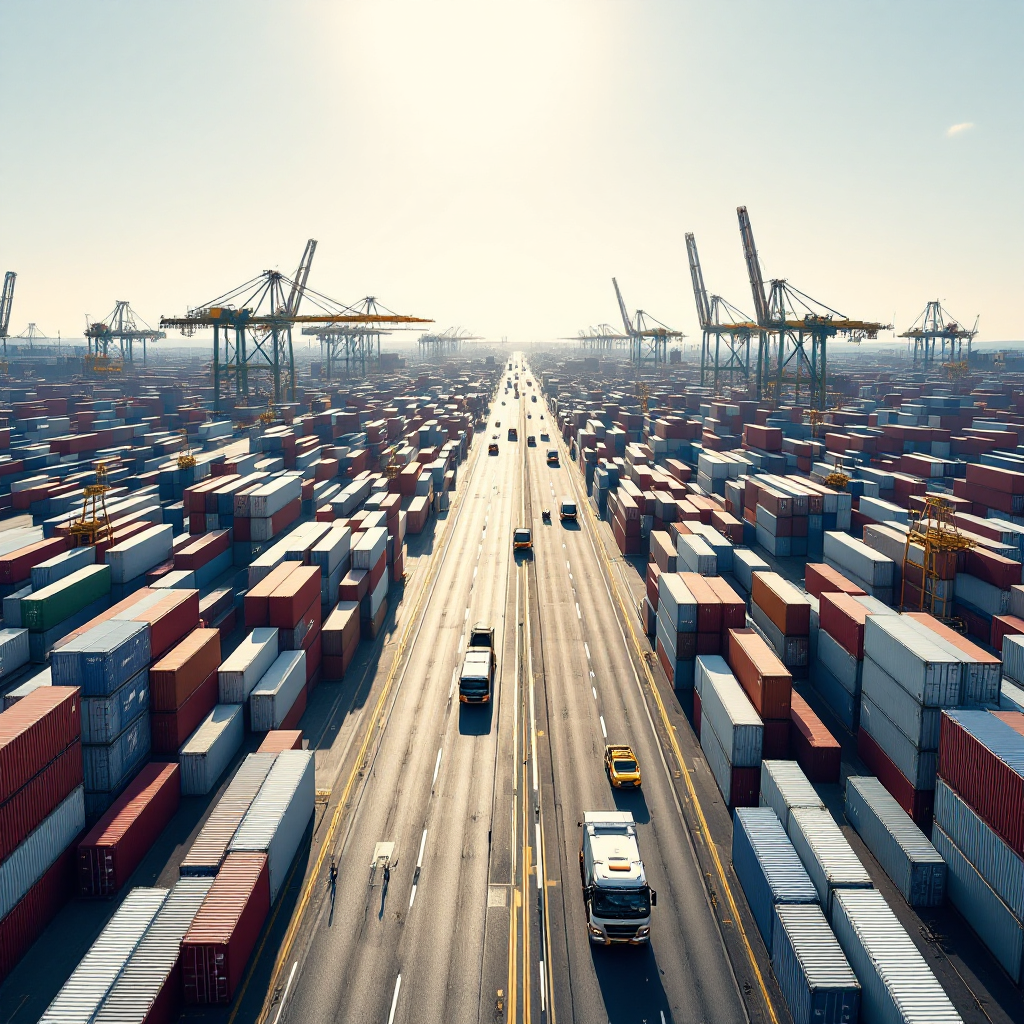
Chapter 1: Introduction – Significance and Challenges in Reefer Container Stacking
Reefer container volumes have grown fast, and deepsea trade now moves more temperature-sensitive loads than before. First, this growth increases energy demand. For example, reefers may account for up to 30% of a terminal’s energy consumption during peak seasons Greening container terminals: An innovative and cost-effective solution …. Second, terminals must handle power, space, and service access at scale. These pressures affect the quay, yard blocks, and gantry operations. Thus, terminal managers must balance stacking density with serviceability.
Key operational challenges break down into three linked areas. First, ENERGY DEMAND AND PEAK LOAD MANAGEMENT. Reefers draw continuous power. Consequently, terminals face sharp peaks that strain grid connections and increase utility costs. Smart charging and demand response techniques can shave peaks by 10–15% Smart charging with demand response and energy peak shaving for reefer …. Second, CARGO ACCESSIBILITY AND MAINTENANCE. Reefers require regular checks, and crews need easy access to any one container for temperature and power checks. Third, SPACE UTILIZATION AND LAYOUT CONSTRAINTS. Terminals must maximize yard density while keeping quayside flows steady and avoiding needless reshuffle moves. For an overview of yard-focused strategies, the reader may consult practical guidance on optimizing container stacking for yard operations optimizing container stacking for yard operations.
Operational context matters. At many terminals a single berth supports several vessels, and quay crane cycles must match yard dispatch. If stacking restricts access, cranes may wait, and throughput falls. Consequently, integrated stacking plans that link quay crane scheduling problem inputs to yard allocation yield better results. Industry observers and vendors now combine AI forecasting with improved storage strategies to reduce handling moves and to improve operation efficiency. For example, Maersk and port partners emphasize that energy and cargo quality need joint solutions; as Søren Leth Johannsen notes, “Cutting energy costs and optimizing cargo quality require a combination of existing and innovative technologies to meet the growing demands of reefer shipping” Insight: The Rise of Reefer Shipping | World Ports Organization.
Finally, terminals must treat this as an optimization problem across layers: berth, quay, and yard. The number of containers moving through a terminal and the mix of export container and import flows change daily. Therefore, a practical stacking approach should link forecasted vessel arrivals and quay crane allocation to yard placement rules, to minimize the number of moves and to preserve cargo integrity. For more on stowage interactions and quay-side sequencing see optimizing quay crane operations with container sequencing software quay crane sequencing.
Chapter 2: mathematical model for Energy Consumption and Yard Layout Optimisation
We now present a compact mathematical model that links energy use and yard layout. First, define objective functions. The proposed model may aim to minimize energy costs, to minimize handling moves, and to reduce yard congestion. The optimization model uses weights to combine these goals. For example, one objective term targets peak shaving and the cost of power drawn at any hour. Another term targets handling costs that rise when containers are reshuffled. Next, decision variables include container positions, power outlet assignments, and stacking height for each block. You must also decide which bay and which row host each export container or import load on arrival.
Constraints capture essential service limits. For instance, access for maintenance must hold for each reefed container so technicians can reach the container without moving a whole group of containers. Temperature control constraints require that reefers with similar setpoints cluster near compatible power infrastructure. Spatial limits enforce maximum stacking height and number of rows per block. Thus, constraints enforce that containers are stacked within capacity and that one container does not obstruct the servicing of another.
An example formulation uses mixed-integer programming. Binary variables decide whether one container occupies a storage location. Integer variables control stacking height. Continuous variables model power draw per pedestal over time. The model includes a constraint to minimize the number of containers that need relocation when a target container must be accessed, and another constraint to maintain power balance each hour to shave peaks. The aim is to minimize the number of high-power hours while keeping handling moves low. If you wish to see yard-level simulation, a simulation model can evaluate the model’s performance across realistic vessel arrivals and quay crane cycles. For methods that combine MAS or simulation for container terminal operations, see research that reports MAS benefits including cost reductions and handling time gains Cost-Effective, MAS-Based, Refrigerated Container System at Container ….
Practically, the mathematical model must link to terminal operating system workflows. Therefore, the model is developed to export stacking plans and to update the terminal operating system with power outlet allocation and stacking height targets. Additionally, constraints allow for dynamic scheduling so managers can adjust plans when arrival times change. In real deployments, one often uses heuristics to seed the optimization and then refines solutions with an integer solver for final allocation. For more about automating yard decisions and AI-based placement, see container terminal yard density prediction and yard AI tools yard density prediction.
Drowning in a full terminal with replans, exceptions and last-minute changes?
Discover what AI-driven planning can do for your terminal
Chapter 3: heuristic Strategies for Container Placement and Relocation
In practice, terminals rarely rely solely on exact solvers. Heuristic strategies give fast, robust rules that work under real-time pressure. First, greedy algorithms assign reefers to the closest available power pedestal and then fill outward by bay and row. Second, genetic algorithms explore alternative stacks and swap assignments to balance energy peaks and handling moves. A heuristic can enforce that reefers with similar temperature settings remain in the same stacking block. Third, a hybrid approach uses heuristics to produce an initial stacking plan and then applies a local-search operator to reduce reshuffle moves.
Multi-agent systems (MAS) offer a distributed heuristic that models each crane, yard truck, and power pedestal as an agent. MAS implementations have delivered notable gains. For instance, a MAS-based reefer system reported reductions of about 15% in operational costs and improved container handling times by roughly 20% Cost-Effective, MAS-Based, Refrigerated Container System at Container …. Thus, MAS can improve responsiveness and fault tolerance while keeping local decisions aligned to global objectives. Meanwhile, genetic algorithms can search for an optimal solution across permutations of stacks when time allows.
Comparative performance depends on priorities. Heuristics run quickly and support real-time dispatch and crane cycles. By contrast, exact optimization seeks an optimal solution but can take longer, especially if the number of containers or number of quay cranes grows. Therefore, terminals often use a model based approach where heuristics handle immediate dispatch and an optimization model runs in the background to generate improved stacking plans for the next planning horizon. For terminals testing integrated approaches, simulation and a simulation model can quantify expected reductions in reshuffle and improved throughput. For further reading on AI-driven yard operations and automated container terminal workflows, check the automated terminal and yard AI resources automated terminal and yard AI.
Finally, heuristics must respect constraints such as stacking height and access for maintenance. They must also adapt when the number of containers changes rapidly after a vessel arrival or when a quay crane scheduling problem requires different dispatch patterns. In such cases, a combined heuristic and short optimization run often achieves the best balance of speed and quality.
Chapter 4: Infrastructure Strategy – Underground Reefer Container Storage
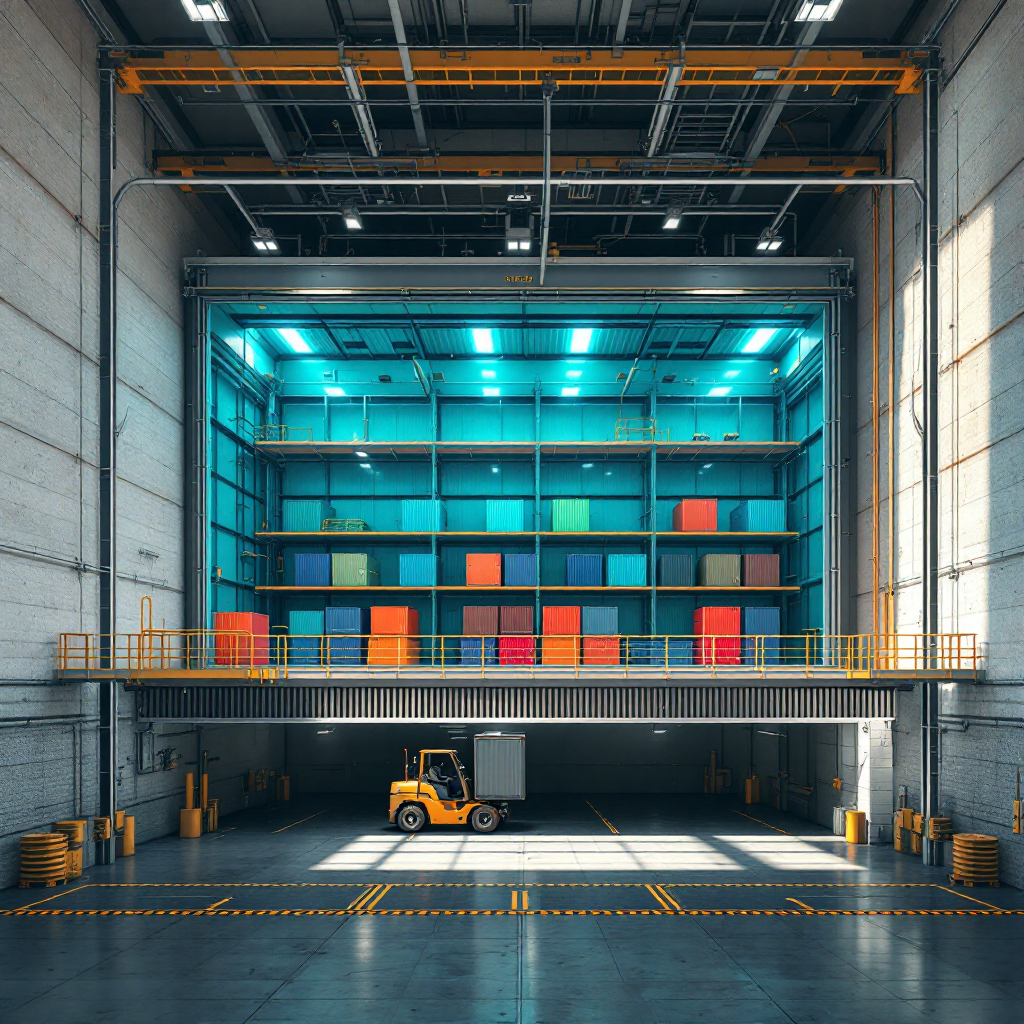
Underground Reefer Container Storage (URCS) is an infrastructure approach that uses natural insulation to cut cooling demand. URCS stores reefers in partially or fully subterranean vaults where ambient temperature remains lower, and thermal inertia reduces active refrigeration loads. Early assessments indicate potential energy savings up to 40% compared to conventional storage yard placement Greening container terminals: An innovative and cost-effective solution …. Thus, URCS offers a promising route to reduce peak load and to lower total energy cost for large terminals.
URCS requires careful layout design. For instance, access tunnels must support handling equipment and provide safe routes for maintenance personnel. Power distribution must still reach each reefer, and the terminal needs to plan for stacking height limits relevant to underground vault geometry. Consequently, layout considerations include the number of blocks, bay arrangement, and routing of handling equipment to and from the quay. Retrofitting existing facilities poses challenges: excavation, permitting, and integrating URCS with an existing terminal operating system raise capital and schedule constraints.
Despite these constraints, the long-term benefits include lower energy consumption, reduced quayside congestion, and improved cargo protection. URCS can also pair with renewable generation and on-site energy storage to further cut peak grid usage and to support dynamic scheduling of power. For terminals exploring URCS as part of a broader storage strategy, the goal is to provide a model that optimally locates underground vaults relative to berths and to cranes, so that handling moves remain low and throughput remains high. Pilot studies and layout simulations help to quantify the trade-offs before large investments.
When URCS is not feasible, terminal operators can still optimize container storage in the yard by clustering reefers near power pedestals and then routing handling equipment along efficient paths. In either case, the design must balance energy, handling, and access. For example, when construction or retrofitting tasks trigger dozens of emails across TMS, WMS, and ERP, AI agents can triage, route, and draft the required approvals so that teams focus on execution rather than on administrative friction.
Drowning in a full terminal with replans, exceptions and last-minute changes?
Discover what AI-driven planning can do for your terminal
Chapter 5: Integrated Scheduling – Smart Charging, Demand Response and AI
Integrated scheduling coordinates stacking sequences with charging slots to reduce peak demand and to improve serviceability. First, smart charging assigns power to reefers in time windows where grid rates are lower or where local storage can offset demand. Second, demand response programs allow the terminal to reduce draw during peak hours and to receive compensation. Field studies show smart charging and demand response can reduce peak power demand by 10–15% Smart charging with demand response and energy peak shaving for reefer ….
AI-driven demand forecasting helps the terminal schedule load flexibly. Predictive models estimate when reefers will require maximum cooling, and then dynamic scheduling shifts some charging to off-peak hours. Additionally, blockchain can record charging events, container handling schedules, and custody transfers to improve traceability and to prevent scheduling conflicts. Blockchain thus supports transparent scheduling integrity and reduces disputes in the flow between the quay and the storage yard.
Integrated scheduling also links to quay crane cycles and to the quay crane scheduling problem. For example, the stacking plan should align with predicted crane moves and with expected vessel operations so that reefers destined for a particular vessel sit in accessible rows parallel to the quay. Linking these layers reduces reshuffle and improves throughput. AI helps reschedule when delays occur; real-time status feeds update plans and instruct handling equipment on the next best moves. For practical tools that address container sequencing and quay-side coordination, see work on quay crane sequencing and digital twin technology which complements this integrated approach quay crane sequencing and digital twin technology.
Further, terminals can use prediction to allocate export container slots and to plan container transfers. A dynamic scheduling engine that links forecasted vessel ETA, crane availability, and power capacity will allocate charging slots in an order to minimize the number of moves and to ensure that one container ready for loading is not buried below other units. Implementing such systems requires careful integration with the terminal operating system and with handling equipment such as straddle carriers, automated guided vehicles, and gantries.
Chapter 6: Case Studies, Performance Metrics and Future Directions
Real-world deployments highlight measurable gains from integrated approaches. For instance, MAS pilots at large terminals reported roughly 15% cost reductions and a 20% improvement in container handling times Cost-Effective, MAS-Based, Refrigerated Container System at Container …. Separately, studies of optimized stacking and relocation report up to 25% fewer unnecessary moves, which directly reduces fuel use and handling wear Container Relocation and Stacking Optimization – Nature. Therefore, key metrics for success include saved relocation moves, energy consumption per TEU of reefers, and net throughput at the berth.
Metrics matter. Track relocation moves saved, energy consumption per hour, average access time per reefed container, and throughput per quay crane. For example, a terminal that reduces reshuffle by 20% will often see faster vessel turnaround, and a lower average dwell time for reefers. In practice, operators combine simulation runs and a simulation model to stress-test policy changes and to estimate long-run benefits. Simulation helps to test how changes to the stacking plan affect quay-side cycles and how many handling equipment cycles increase or fall under different demand patterns.
Future directions include renewable integration, advanced sensors, and digital twins. Renewable energy and battery systems can reduce net grid draw during peak hours when paired with smart charging. Advanced sensors on reefers and in pedestals enable real-time temperature and power telemetry. Digital twins let planners run “what if” scenarios for berth allocation and yard layout, and then to deploy the best stacking plan quickly. Zhang et al and Kim et al provide algorithmic and layout insights for these systems, while kim and park explore combined crane and yard interactions in mixed traffic terminals.
Finally, terminals can improve the efficiency of operations by combining model based optimization with approach based heuristics and AI. A realistic rollout begins with pilot blocks, collects data, refines the optimization model, and then scales. Teams who adopt these practices can reduce costs, protect cargo quality, and improve throughput.
FAQ
What is reefer container stacking optimization?
Reefer container stacking optimization is the process of arranging refrigerated containers in the yard to reduce energy use, handling moves, and access delays. It combines placement rules, power allocation, and scheduling so reefers remain serviceable and energy efficient.
How much energy can reefers consume at a terminal?
Reefers can account for up to about 30% of terminal energy consumption during peak seasons Greening container terminals: An innovative and cost-effective solution …. Therefore, managing their charging and placement has a large impact on costs and grid stress.
What are common approaches to solve the optimization problem?
Common approaches include mixed-integer programming, greedy heuristics, genetic algorithms, and multi-agent systems. Operators often combine heuristics for real-time dispatch with optimization runs for strategic stacking plans.
Can smart charging reduce peak power demand?
Yes. Smart charging combined with demand response has reduced peak demand by roughly 10–15% in studies Smart charging with demand response and energy peak shaving for reefer …. That reduction eases grid constraints and lowers energy costs.
What benefits does Underground Reefer Container Storage (URCS) provide?
URCS leverages natural insulation to cut cooling demand and can save up to 40% of energy relative to traditional yard storage in initial assessments Greening container terminals: An innovative and cost-effective solution …. It also shields cargo and reduces quayside congestion when designed well.
How do heuristics compare with exact optimization?
Heuristics run faster and support real-time decisions, while exact optimization seeks the optimal solution but takes longer. Many terminals use heuristics for immediate allocation and optimization to refine medium-term plans.
What role does AI play in integrated scheduling?
AI forecasts demand, predicts temperature and power usage, and supports dynamic scheduling that aligns charging slots with stacking plans. AI also helps reschedule when vessel ETAs change and when handling equipment availability shifts.
How do ports measure success for reefers?
Ports track relocation moves saved, energy consumption per reefer TEU, average access time for maintenance, and berth throughput. These metrics show the operational and energy benefits of improved stacking and charging.
Can blockchain help in reefer operations?
Blockchain can provide immutable records of charging events, custody transfers, and scheduling changes. That transparency helps to reduce disputes and to ensure scheduling integrity across stakeholders.
The platform reduces triage time, routes approvals, and drafts required replies so project managers focus on execution rather than on administrative tasks. This speeds rollouts and keeps terminal teams aligned.
our products
 stowAI
 stackAI
 jobAI
jobAI
Innovates vessel planning. Faster rotation time of ships, increased flexibility towards shipping lines and customers.
Build the stack in the most efficient way. Increase moves per hour by reducing shifters and increase crane efficiency.
Get the most out of your equipment. Increase moves per hour by minimising waste and delays.
stowAI
Innovates vessel planning. Faster rotation time of ships, increased flexibility towards shipping lines and customers.
stackAI
Build the stack in the most efficient way. Increase moves per hour by reducing shifters and increase crane efficiency.
jobAI
Get the most out of your equipment. Increase moves per hour by minimising waste and delays.