
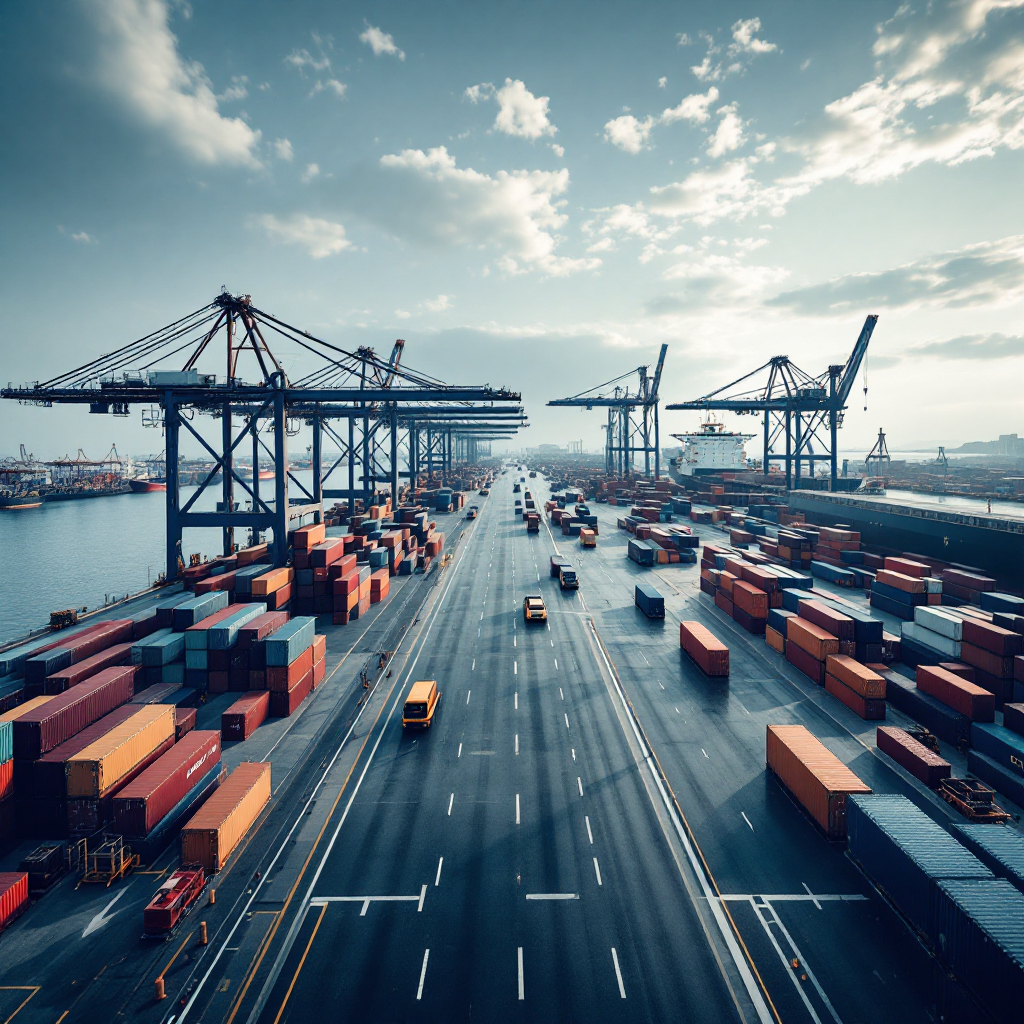
crane Operations in Container Terminals
First, understand the two main crane types that shape throughput in a container terminal. Quay cranes sit at the berth and move containers between vessel and quay. Yard cranes operate inside the container yard and move containers between stacks, Yard trucks, and staging lanes. Together, quay cranes and yard cranes form the core crane systems of any port container terminal. Also, gantry crane is a common term applied to both quay and yard equipment when you describe large, bridge-like machines. Next, note how each crane influences flow. Quay crane rates set vessel turnaround time limits. Yard cranes determine how fast you can clear the yard for the next vessel. Therefore, poor yard crane deployment increases congestion at the quay. In addition, imbalance between quay cranes and yard cranes can create bottlenecks that extend turnaround time and hurt container terminal throughput.
Also, a container terminal operation depends on smooth handoffs. For example, if quay cranes lift containers quickly but yard cranes lag, trucks and AGVs queue. Conversely, well-coordinated crane moves reduce queues and speed vessel handling. Studies show integrated planning of quay cranes and yard cranes can improve operational efficiency significantly; see the joint scheduling optimization model for yard cranes and AGVs for a quantified example here. Next, consider automation trends. Ports deploy automated container cranes and automated yard vehicles to reduce human error and improve consistency. Also, new control systems for seaport container operations feed data to scheduling systems to support predictive task allocation and reduce idle time. As a result, modern container port planners must balance the number of quay cranes, yard cranes, and yard trucks to match vessel arrival profiles and terminal storage needs.
Finally, practical system design ties to layout. A single yard crane can serve one bay, while multiple yard cranes may share adjacent bays. Consequently, crane interference and spatial constraints matter. For deeper technical context on yard layout and optimization, consult container-terminal-yard-optimization fundamentals for operational design and rule choices: container-terminal-yard-optimization fundamentals. Also, if planners want to review machine learning applied to these problems, see this survey of machine-learning use cases in port operations: machine-learning use cases in port operations. The result of good planning is shorter queues, fewer crane moves, and better throughput across the port.
yard cranes: Functions and Performance Metrics
First, define what yard cranes do day-to-day. Yard cranes load and unload containers from yard stacks. They transfer boxes to yard trucks, AGVs, and truck lanes. Also, they perform internal repositioning and stacking to optimize space. In short, yard cranes handle stacking, retrieval, and loading tasks that directly affect container handling times.
Next, list measurable performance metrics for yard cranes. Key metrics include gross moves per hour, average handling time per container, equipment idle time, and crane utilization. Also, turnaround time and waiting time for incoming trucks or AGVs matter. For terminal managers, minimizing waiting time and idle time translates into lower cost per move. Furthermore, yard block layout, the number of yard cranes, and the location of the yard crane for each job drive these metrics. Effective metrics let planners track whether a yard crane to handle jobs is being used efficiently.
Also, performance links to operational rules. For example, dispatching rules that limit crane interference improve safety and reduce lost moves. A container yard crane that stacks containers smartly reduces future rehandles. In addition, automation changes the measurement. In an automated yard, real-time yard crane control systems report precise cycle times. Simulation analysis of real-time yard behavior helps forecast bottlenecks under different vessel schedules. For readers who want a shortlist of efficiency levers, study predictive equipment repositioning to minimize non-productive moves in container terminals for techniques that reduce crane moves and energy consumption: predictive equipment repositioning.
Finally, link metrics to business outcomes. Decreasing average handling time by 10–20% can raise throughput substantially. For instance, joint scheduling and optimization studies report 15–20% gains in terminal efficiency when yard cranes and AGVs share optimized routes and schedules source. Also, genetic algorithm and deep learning applications have driven 10–12% reductions in total operation times in some trials study. In practice, monitoring gross moves per hour and the efficiency of the terminal makes optimization objective-setting clearer.
Drowning in a full terminal with replans, exceptions and last-minute changes?
Discover what AI-driven planning can do for your terminal
yard crane scheduling: Objectives and Constraints
First, outline the objectives of yard crane scheduling. The primary aim is to minimize waiting time for AGVs, yard trucks, and external container trucks. At the same time, planners seek to minimize crane moves and reduce energy consumption. Also, they work to reduce container rehandles and to minimize the total time containers spend in the yard. A good scheduling strategy balances these goals to maximize throughput in a port container terminal.
Next, identify the constraints. Spatial interference between adjacent cranes limits simultaneous moves. In addition, container priorities and jobs with different ready times force nontrivial sequencing. Also, yard block structure and the location of the yard crane for each task influence feasibility. For automated environments, real-time yard crane control systems must respect crane interference rules and safety buffers. Scheduling in a container terminal must also account for quay operations. Joint planning with quay crane scheduling problem inputs—the pattern of container arrivals and discharge—helps prevent bottlenecks between berth and yard.
Also, incorporate dynamic flows. A scheduling problem becomes harder when vessel ETA changes, truck peaks occur, or rail arrivals mix into the plan. Flexible models for mixed railway and road flows improve outcomes for maritime container terminal logistics. For example, flexible yard crane scheduling for mixed railway and road container operations shows how mixed flows change constraints and resource usage reference. In addition, yard crane scheduling problem formulations sometimes include crane interference, container priority, and storage occupancy as hard constraints. Planners then use optimization and heuristic techniques to compute viable schedules fast.
Finally, stateable objectives drive implementation choices. If the goal is to minimize waiting time, then scheduling must prioritize moves that unblock AGVs and trucks quickly. If the objective is to minimize energy consumption, then planners favor continuous crane routes and fewer starts and stops. Also, a clear objective helps select the right algorithm for real-world constraints and supports scheduling strategy choices across the container terminal.
algorithm Approaches for Yard Crane Scheduling
First, categorize algorithm approaches. Researchers and practitioners use exact optimization, heuristic algorithms, metaheuristics, and learning-based methods. Exact methods like branch and bound algorithm give optimal sequences for small problems. Also, optimization algorithm variants such as alternating direction method of multipliers appear in advanced models. For larger problems, heuristic algorithms and heuristic playbooks scale better. Heuristic approaches include genetic algorithm based solutions and particle swarm methods. In one study, genetic algorithm implementations cut total operation time by around 10–12% in test cases genetic study. Also, particle swarm has been explored for route and sequence tuning.
Next, consider learning approaches. Deep reinforcement learning adapts to stochastic arrivals and dynamic yard crane tasks. For example, a deep RL design reduced AGV waiting and improved dispatch decisions when container flows changed unpredictably deep RL study. Also, joint scheduling and integrated models that include quay cranes and yard truck behavior can deliver 15–20% operational improvements under realistic assumptions joint scheduling.
Also, combine simulation and optimization. Simulation lets teams evaluate a scheduling strategy under realistic variability. Simulation analysis of real-time yard performance checks robustness to ETA shifts and truck surges. In addition, hybrid methods that seed search algorithms with heuristic solutions and then refine them with local search find good solutions fast. A practical scheduling strategy often uses a two-stage pipeline: heuristics to produce feasible schedules quickly and a refinement search algorithm to improve the objective. This approach balances compute time with improvement potential.
Finally, note implementational tradeoffs. Exact algorithm results help benchmark heuristics. Yet, terminals often prefer robust, fast heuristics because they integrate with real-time control systems.
Drowning in a full terminal with replans, exceptions and last-minute changes?
Discover what AI-driven planning can do for your terminal
branch and bound algorithm for yard crane dispatch
First, introduce branch and bound algorithm as a search algorithm that systematically explores sequences to find an optimal dispatch plan. The method branches on task choices and bounds on partial sequences to prune unpromising branches. For a yard crane to handle jobs, branch and bound algorithm can assign tasks and routes while respecting crane interference and container priority constraints. Also, it proves optimality for many small to medium scheduling problem instances when computational budgets allow.
Next, describe application steps. Model tasks as nodes with ready times, durations, and precedence. Then, branch on which task a given crane will take next. Use lower-bound estimates of remaining time to eliminate branches that cannot beat the current best solution. Also, integrate constraints such as sequencing and scheduling of double-rail-mounted systems or constraints from quay crane schedules. Branch and bound can explicitly enforce crane moves separation to avoid crane interference and unsafe overlaps. In addition, the method handles jobs with different ready times and integrates storage assignment decisions when necessary.
Also, explain benefits. Branch and bound algorithm yields optimal sequences when it completes. Therefore, terminals use it as a benchmark for heuristic algorithms. Furthermore, when you combine branch and bound with clever bounding rules and problem decomposition, it scales further. In practice, a branch and bound core can solve subproblems like scheduling a yard crane in congested yard blocks and then pass decisions to real-time control systems for execution. This enables better task allocation and fewer rehandles, which reduces unnecessary energy consumption and crane moves.
Next, note practical limits. Branch and bound does not scale easily to very large container yards or to complete integrated models that include multiple quay cranes and yard trucks. However, hybrid strategies use branch and bound on critical lanes or high-priority job sets while employing heuristics elsewhere. Also, terminals can use branch and bound outputs to tune heuristic parameters and to validate simulation experiments. For a primer on how to align branch and bound with terminal simulation and scheduling, consider reading materials on development and simulation analysis of yard control systems. Finally, for scheduling for twin or tandem crane lifts, designers often combine optimal subproblem solutions with rule-based dispatching to achieve safe and efficient tandem moves.
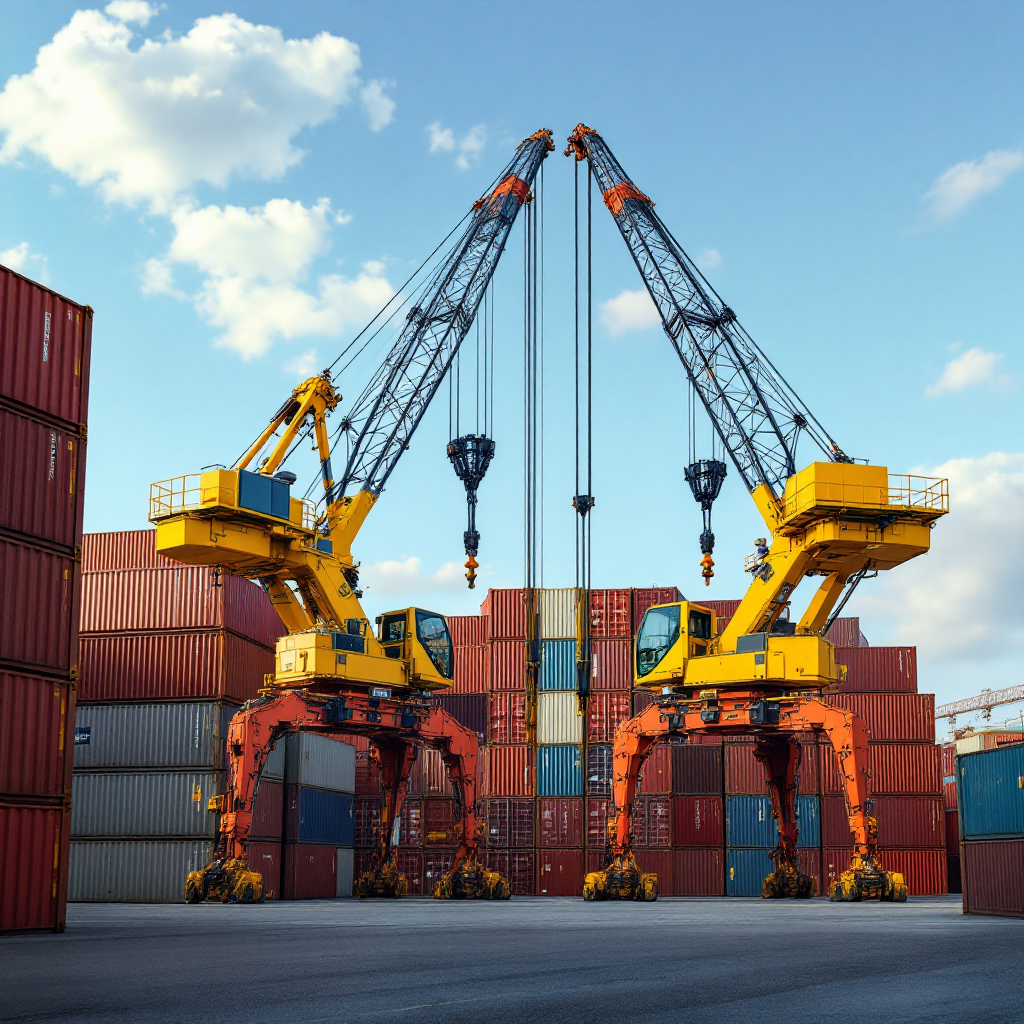
Integration with Smart Port Technologies
First, smart port technologies change how planners run container port terminals. Digital twins simulate yard operations in real time and let planners test scheduling strategies before committing them. Also, advanced data acquisition from PLCs, RTLS, and equipment controllers feeds real-time models for a more accurate scheduling strategy. For example, a digital twin can run a scheduling scenario and report on expected crane handling, energy consumption, and rehandle counts. In addition, studies on smart container port development highlight the value of combined sensor and simulation stacks for resilience and scheduling for twin deployments smart port review.
Next, emphasize joint scheduling. Integrated planning that combines quay crane scheduling, yard crane and AGV scheduling, and yard truck paths helps remove chokepoints. Also, joint scheduling of yard crane, yard truck, and quay crane reduces idle time for equipment and minimizes the total system delay joint scheduling study. In practice, this means the quay crane schedule informs yard crane dispatch decisions and vice versa. As a result, the terminal can use fewer crane moves while achieving faster vessel turnaround time.
Also, mention automation and orchestration. Automated container handling systems and real-time yard crane control systems enable higher precision. For example, automated yard cranes and AGVs follow optimized sequences with minimal human intervention. This saves time and keeps planners focused on strategic tasks.
Finally, outline future research directions. Combining deep reinforcement learning, digital twin simulation, and optimization algorithms promises adaptive schedules that handle dynamic port loads. Also, energy consumption targets and decarbonization strategies will shape future scheduling objectives. For practical reading on predictive analytics and planning quality across shifts, see resources on consistent planning quality across terminal operations shifts and predictive analytics for scheduled port of discharge planning: consistent planning quality across shifts. In short, integrating scheduling with smart port tech makes the yard more predictable, more resilient, and more efficient.
FAQ
What is the difference between quay cranes and yard cranes?
Quay cranes work at the berth to move containers between vessels and the quay. Yard cranes move containers within the container yard to stack, retrieve, and prepare boxes for trucks or AGVs.
Why does yard crane scheduling matter for throughput?
Efficient yard crane scheduling reduces queues for trucks and AGVs and lowers the number of rehandles. Also, good schedules shorten handling times and increase the gross moves per hour, improving terminal productivity.
Which algorithms are commonly used for yard crane scheduling?
Practitioners use optimization algorithms, heuristic algorithms, genetic algorithm variants, particle swarm methods, and deep reinforcement learning. Also, branch and bound algorithm can solve small scheduling problems to optimality.
Can branch and bound algorithm scale for large terminals?
Branch and bound algorithm finds optimal sequences but can struggle at large scale. Therefore, terminals often apply it to subproblems or use it to benchmark heuristics and hybrid solutions.
How do digital twins help with yard crane dispatch?
Digital twins simulate complex interactions among cranes, AGVs, and trucks, so planners can test scheduling strategies before deployment. In addition, simulation analysis of real-time yard behavior can reveal hidden bottlenecks and inform tuning of dispatching rules.
What role does crane interference play in scheduling?
Crane interference constrains which cranes can move simultaneously and how close they may operate. Managing crane interference is essential to avoid delays and unsafe conditions during tandem or adjacent operations.
How much improvement can optimization deliver?
Quantitative studies report improvements ranging from about 10% to 20% for joint scheduling of yard cranes and AGVs and for genetic algorithm based improvements in routing and sequencing. Also, deep learning approaches can add robustness when flows are uncertain.
What is the impact on energy consumption?
Better scheduling reduces unnecessary crane moves and idling, which lowers energy consumption. In turn, this supports terminal decarbonization targets and reduces operating costs.
How do I integrate scheduling with existing control systems?
Integration requires data links from crane control systems for seaport operations, PLC data, and real-time location feeds. Also, using a digital twin and staged rollouts helps validate the scheduling strategy before live deployment.
How can automation help with email-driven exceptions from scheduling?
AI agents can automate the full operational email lifecycle, classify exceptions, and draft or route messages with contextual data.
our products
 stowAI
 stackAI
 jobAI
jobAI
Innovates vessel planning. Faster rotation time of ships, increased flexibility towards shipping lines and customers.
Build the stack in the most efficient way. Increase moves per hour by reducing shifters and increase crane efficiency.
Get the most out of your equipment. Increase moves per hour by minimising waste and delays.
stowAI
Innovates vessel planning. Faster rotation time of ships, increased flexibility towards shipping lines and customers.
stackAI
Build the stack in the most efficient way. Increase moves per hour by reducing shifters and increase crane efficiency.
jobAI
Get the most out of your equipment. Increase moves per hour by minimising waste and delays.