
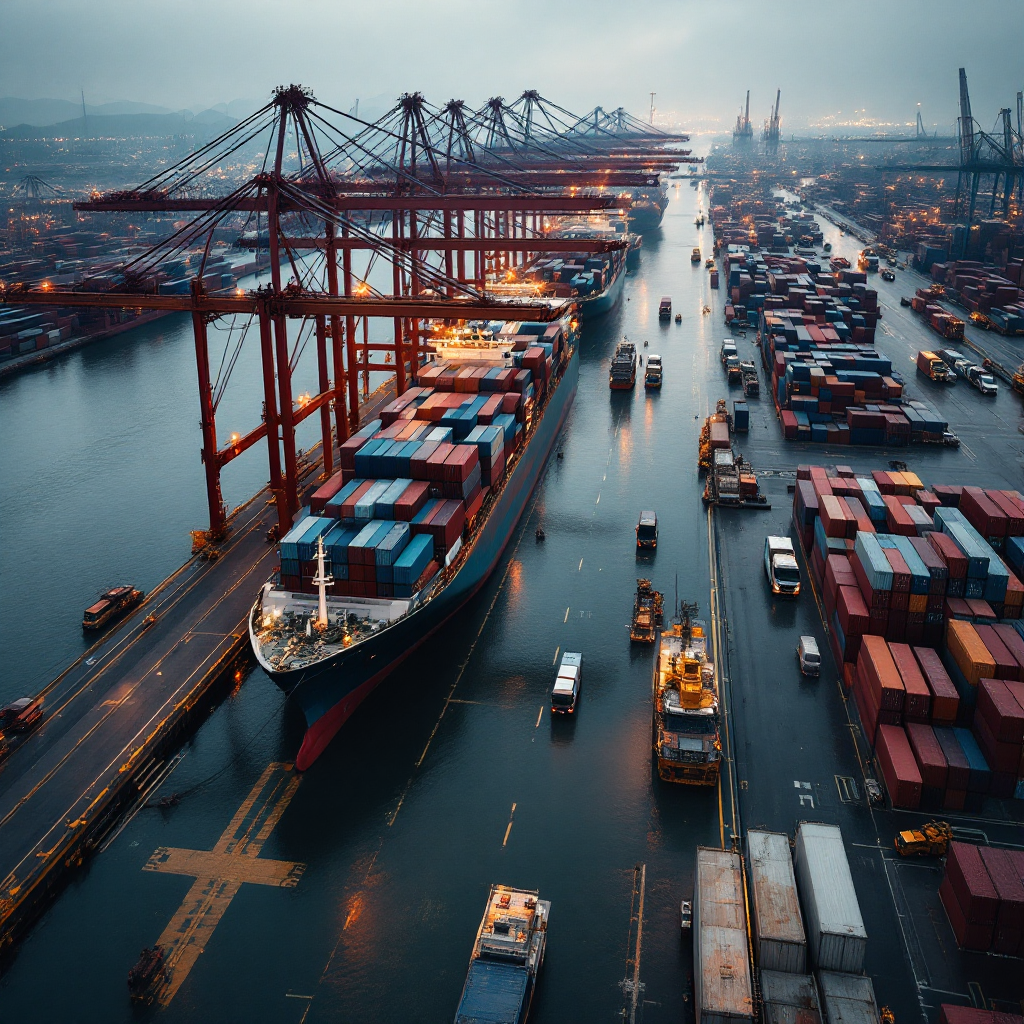
container port fundamentals and port of discharge changes
The container port serves as the hub where ocean freight moves between sea and land, and it links ships, trucks, trains, and warehouses. The Port of Discharge is the named place where a container ship unloads cargo for onward inland movement. Port teams plan for loading and discharge, and they arrange berth time, crane allocation, and truck gates. Yet schedules change. Port of discharge changes occur when a shipping line shifts the planned discharge port for a voyage leg. This can happen for many reasons. The main causes include port congestion, weather interruptions, operational delays, and strategic rerouting by a shipping line. For example, studies report that about 15–20% of scheduled port calls on major deepsea routes change each year, and that number shows how common POD changes are in practice.
Ports must match limited space and resources to changing demand. When a container vessel arrives, port terminal staff must coordinate loading to the port and unloading at the port of discharge, and then move containers to yard, gate, and hinterland connections. These steps require accurate planning for container handling and loading and discharge. When the pod shifts, operators must reassign quay cranes and revise truck booking slots. That causes extra moves and sometimes extra waiting time. The impact increases with port size and with the number of vessels in rotation. Port operators and container terminal planners rely on data, and they use tools to replan quickly. Real-time information and clear rules help reduce error and save time.
Transition and collaboration are essential. Port authorities, terminal operators, and container carriers must share data. Digital tools such as berth call optimization and yard planning systems make a big difference. For wider context, readers can explore berth-call optimization strategies and yard planning decision support to see how terminals reduce disruption and improve throughput in practice. In many ports, improving the flow of information cuts the chance that a port of discharge change becomes a lasting delay.
schedule disruptions in vessel schedule and container liner services
Vessel schedule unreliability strikes the heart of liner shipping services, and it affects operators, shippers, and inland partners. Port congestion acts as a major driver of vessel schedule problems, and the effect often cascades through an entire liner. When a vessel waits at anchor, other ships in the rotation feel the impact. In severe cases, average waiting times exceed 48 hours, and carriers respond by skipping or rearranging ports of call to keep the larger network moving (empirical analysis). Those decisions create schedule changes, and they force terminals to replan loading and discharge operations on short notice.
Schedule changes harm reliability and increase cost. Terminals must rewrite quay crane rosters, and container carriers must notify shippers and inland transport providers. The bill of lading and manifest stops matching the physical flow until systems sync. Frequent changes also raise the cost of empty container repositioning and reduce predictability for truck and rail partners. That undermines service frequency and causes cascading delays in loading and the port. Studies show that schedule unreliability in liner shipping rises with congestion and short-term disruptions, and that shipping lines adapt by changing port calls or adjusting the order of ports of call to protect the network.
Short lead times increase pressure. Carriers make routing choices to minimize total voyage delay, and they shift the discharge port when doing so improves aggregate schedule performance. The practice can help the container fleet meet contractual obligations, and it can reduce per-voyage delay. Yet it creates pain for terminals and for shippers who expect a specific discharge port. Port operators and port terminal managers need clear contingency plans. They also need tools to reassign resources fast. For technical readers, there are deeper resources on scheduling quality and berth call planning that explain methods to reduce disruption and improve planning quality. Better coordination between the shipping line, the terminal, and inland logistics reduces friction and speeds recovery.
Drowning in a full terminal with replans, exceptions and last-minute changes?
Discover what AI-driven planning can do for your terminal
port congestion and cargo handling in container services
Port congestion is a common trigger for changes to the port of discharge. When berths fill and yard stacks rise, vessels wait outside the harbor, and terminals face backlog. Congestion raises gate processing times and increases crane idle time, and that slows cargo handling and reduces throughput. Data show that gate-out delays and berth waiting times climbed by an average of 10–15% over five years, and analysts link that rise to more frequent POD change requests and rescheduling needs (port performance analysis). Those delays amplify the number of unplanned moves in the yard and the need for extra container handling effort.
The Container Port Performance Index highlights differences across ports. Ports with weaker infrastructure resilience see more unscheduled POD changes and slower recovery from disruption. The CPPI indicates that some ports experience up to a 25% higher incidence of unscheduled port of discharge changes than top-performing ports (CPPI 2020–2024). That metric connects directly to cargo throughput, and it explains why improving port capacity and process flow matters. Terminals that invest in equipment, in training, and in automation often reduce turnaround time and reduce the chance that a vessel will be rerouted.
On the ground, operational fixes matter. Port terminal teams adjust crane split plans and allocate extra shifts to clear backlog, and they prioritize critical export or import container cargo to avoid long dwell times. They coordinate with shipping line planners to confirm the discharge port and to update schedules. Tools for predictive equipment repositioning and crane split optimization help planners minimize non-productive moves and speed processing. For readers seeking technical solutions, predictive equipment repositioning and yard-crane scheduling research demonstrate ways to lower congestion and improve cargo handling efficiency in practice. Clear rules and shared data reduce the friction of each POD change, and they let the port restore normal flow faster.
advanced schedule and discharge optimisation techniques
Advanced scheduling techniques help ports absorb the impact of port of discharge changes. Dynamic berth allocation and quay crane scheduling systems reassign resources as vessel arrivals shift, and they enable terminals to cut berth time and to improve crane productivity. Optimization models react to updated vessel arrival estimates, and they rework crane sequences, and quay-side task lists in near real time. Research on berth allocation and quay crane scheduling shows how adaptive models lower turnaround time and improve resource use (comprehensive summary).
AI-based predictive analytics forecast the risk of delays and the likelihood of a port of discharge change. They blend AIS data, weather feeds, terminal throughput, and historical performance. Predictive models flag high-risk sailings, and then operations teams can pre-authorize contingency plans. That approach reduces manual email traffic and speeds decisions. The company’s AI agents extract the right data from ERP, TMS, WMS, and emails, and they draft accurate replies while keeping full context. That reduces time lost on triage and speeds coordination when a discharge port shift happens.
Optimization also involves yard and stowage planning. Integrating vessel stowage plans with yard planning and with real-time crane allocations cuts rehandles and reduces delay when a port of discharge changes. Terminals can use container terminal yard planning decision support systems to reschedule moves and to preserve throughput under stress for detailed methods. In short, these techniques combine AI prediction, dynamic scheduling, and process automation to limit the disruption from POD changes and to keep the port functioning efficiently.
Drowning in a full terminal with replans, exceptions and last-minute changes?
Discover what AI-driven planning can do for your terminal
just-in-time container ship arrival and port logistics
Just-In-Time arrival strategies reduce idle time at anchor and lower the pressure that leads to POD changes. Ports that enable JIT arrivals coordinate vessel arrival windows with berth availability and crane readiness. Shanghai is a noted example where research shows port call processes that support JIT arrival can cut waiting time and improve predictability (JIT arrival study). When ships time their approach to match planned service windows, the result is less anchorage congestion and fewer forced port of discharge changes.
JIT needs real-time data sharing. Terminals, shipping lines, and port authorities exchange ETA updates, berth occupancy, and gate slot availability. That data flow allows quick decisions about whether to hold a vessel at sea for a later slot, or to accept an early arrival and to reallocate cranes. With clear signals, the order of ports and the next port in rotation remain stable more often, and shippers face fewer surprises.
Technology and operational rules both matter. Port terminal automation, truck appointment systems, and predictive berth planning reduce the chance of delays in port that cause rerouting. Integrating vessel planning and yard planning helps terminals fit container flows to available capacity and to reduce rehandles. For more technical approaches to integration, see the discussion on integrating vessel and yard planning that details how to keep cargo moving when the scheduled port shifts and why it helps. When JIT and strong data links work together, they lower berth waiting times and make port schedules more reliable.

strategic logistics for port of discharge management and container port resilience
Strategic logistics combine predictive models, flexible planning, and smart-port investment to strengthen resilience. Ports that prepare for POD change scenarios create contingency playbooks, and they define rules for how to reassign cranes and to reroute trucks. UNCTAD emphasizes that resilience in container ports matters for global trade flow during shocks, and ports that invest in process and technology recover faster from disruptions (UNCTAD report).
A resilient approach includes collaborative decision making. Port authorities, terminal operators, and shipping lines form joint operations centers to coordinate when a port of discharge change occurs. They set priorities for critical cargo, and they create transparent rules for updating vessel schedules. These teams use AI forecasting and predictive analytics to spot at-risk sailings early, and they prepare diversion plans before delays force last-minute swaps. For terminals, systems that provide predictive equipment repositioning and that optimize crane splits help keep productivity up even when the discharge port changes.
Operational automation is another pillar. Automating the email lifecycle and other routine communications reduces manual work and speeds response time. That reduces the number of manual messages required to confirm a change and to align trucks and rail. Finally, investment in infrastructure and in digital platforms matters. Ports that improve port capacity and that standardize data exchange with standards and APIs lower the friction when a vessel diverts or when the discharge port changes. Together, these elements form a practical framework that keeps the container port operational, and that supports liner schedule reliability across the global supply chain.
FAQ
What does Port of Discharge mean?
The Port of Discharge is the port where a vessel unloads containers for onward transport. It is the official place on the bill of lading where cargo exits the vessel.
How often do scheduled port of discharge changes occur?
Changes occur regularly and can affect 15–20% of scheduled port calls on major deepsea routes annually (UNCTAD). The rate varies by trade lane and by local congestion levels.
What are the main drivers of POD changes?
Common drivers include port congestion, adverse weather, operational delays, and strategic decisions by a shipping line to protect broader network reliability. These factors can force carriers to alter schedules and to shift discharge ports.
How does port congestion impact cargo handling?
Congestion increases waiting times, and it causes more rehandles and longer yard dwell. Gate-out delays and berth waiting times have risen in recent years, and that trend links to more POD change requests (analysis).
Can predictive analytics reduce POD changes?
Yes. Predictive analytics forecast delays and highlight at-risk sailings so teams can act earlier. AI models help schedule alternatives and reduce the operational shock of a port of discharge change.
What role does Just-In-Time arrival play?
JIT arrival aligns vessel arrival with berth availability, and it reduces anchorage time. When implemented with real-time data sharing, JIT lowers the risk that a vessel will be rerouted or that the discharge port will change (study).
How should terminals respond when the discharge port changes?
Terminals should follow contingency plans, reallocate crane resources, and communicate with trucking and rail partners. Using yard planning tools and berth optimization helps restore throughput quickly.
How does automation in email handling help during schedule changes?
Automation reduces time lost on triage and manual lookups, and it routes or resolves messages automatically. That speeds coordination between shipping lines, terminals, and hinterland partners and cuts error rates.
Where can I learn more about berth and yard optimization?
Technical resources and case studies cover berth-call optimization and yard planning decision support. For concrete methodologies, review berth-call optimization strategies and yard planning decision support resources here and here.
What is the best first step to prepare for POD changes?
Start with improving data sharing and with building clear rules for contingency execution. Combine predictive analytics with automated workflows to cut manual email load and to speed decisions when a port of discharge change occurs.
our products
 stowAI
 stackAI
 jobAI
jobAI
Innovates vessel planning. Faster rotation time of ships, increased flexibility towards shipping lines and customers.
Build the stack in the most efficient way. Increase moves per hour by reducing shifters and increase crane efficiency.
Get the most out of your equipment. Increase moves per hour by minimising waste and delays.
stowAI
Innovates vessel planning. Faster rotation time of ships, increased flexibility towards shipping lines and customers.
stackAI
Build the stack in the most efficient way. Increase moves per hour by reducing shifters and increase crane efficiency.
jobAI
Get the most out of your equipment. Increase moves per hour by minimising waste and delays.