
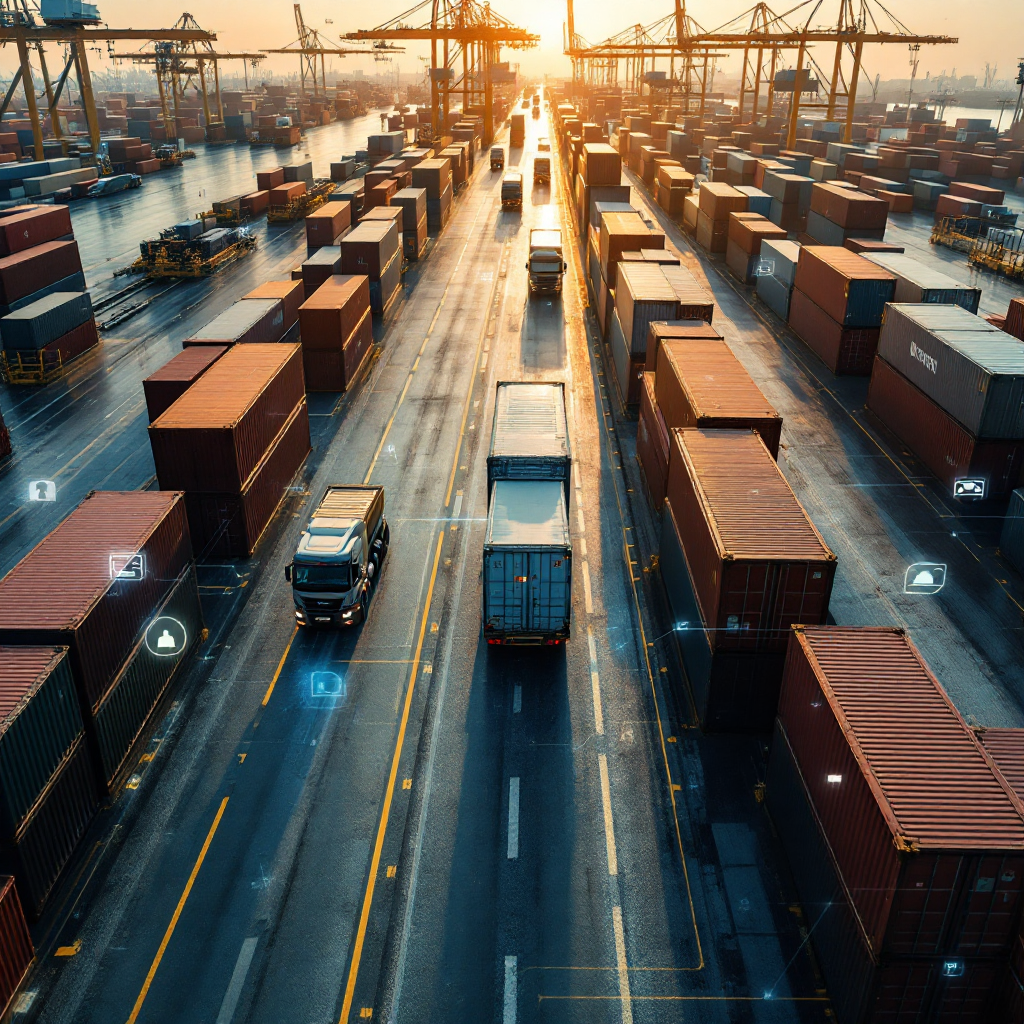
Begin with automation overview: Benefits for inland container terminals and maritime supply chains
Automation is the use of technology to control tasks and to streamline container movement and yard functions. It plays a clear role in hinterland logistics and in the link between seaports and inland distribution hubs. When terminals automate, they often increase throughput. For example, terminals that adopt automation can see up to a 30% higher throughput and about 20% lower operational costs over time, according to recent industry analysis that report. These figures make a strong case for investment.
The definition of automation in a container terminal context includes hardware, software, and connected control systems. It covers systems such as Terminal Operating Systems, automated guided vehicles, automated stacking cranes, and AI-driven scheduling tools. These elements work together to improve container handling and to reduce manual errors. As a result, terminals can reduce container dwell times and increase productivity. Studies show automated terminals may cut handling times by up to 40% and reduce operational costs by around 25% in that assessment.
Automation also supports maritime supply chains beyond yard gates. It enhances visibility of load units, and it helps coordinate truck and rail movement. This makes ship calls more predictable and improves berth planning. For terminals and terminal operators, the benefit is both financial and operational. The technology reduces repetitive manual tasks and supports safer, more consistent working conditions for port workers and truck drivers. This allows terminal operators to focus on strategy rather than triage.
In short, the overview shows why inland facilities must consider automation. It boosts efficiency. It helps terminals operate with greater predictability. It also supports wider logistics and distribution goals.
Conduct a container terminals feasibility study: Assess needs and ROI
Start any automation project with a rigorous assessment. The feasibility study should quantify current throughput, dwell times, and labour costs. First, measure baseline KPIs. Then, collect data on average container dwell and peak hourly flows. This study must also include a financial model that compares capital expenditure to long-term savings. Many terminals find payback windows that justify investment once operators factor in efficiency gains and lower maintenance costs. For instance, terminals that automate report productivity increases and lower ongoing costs in multiple studies showing reductions in handling times.
Next, evaluate infrastructure readiness. Check power capacity and connectivity. Assess available space for a yard redesign and for installing charging stations for electrified vehicles. Inspect quay-side interfaces and evaluate rail and truck access. Infrastructure gaps often determine whether a phased retrofit is feasible. If power upgrades are required, the investment can be significant. At the same time, electrification lowers emissions and maintenance costs, which ties into broader environmental goals noted in planning guidance.
Also assess technology fit. Map existing IT systems, including TOS, and determine integration work. Estimate software licensing, hardware, and implementation costs. Factor in change management and training budgets. Consider partial approaches. A fully automated or a partial automation strategy can both work. The study should include scenario modelling that shows ROI under different throughput and labour-cost assumptions. Use conservative and optimistic cases. Link internal operational data to external benchmarks. For example, compare current gross moves per hour to benchmarks and to expected improvements after automation. If you need further details on yard optimisation and AI-based prediction to support capacity decisions, review dedicated resources like this paper on AI prediction and yard capacity AI-based prediction of modal shifts.
Finally, produce a clear recommendation. This should include scope, an estimated timeline, an investment plan, and success metrics. The assessment will guide whether to automate now or to phase the work. It will also show which parts of the terminal yield the highest return and which require more preparatory work.
Drowning in a full terminal with replans, exceptions and last-minute changes?
Discover what AI-driven planning can do for your terminal
Develop a port integration and port automation plan: Align stakeholders and systems
Good integration planning brings stakeholders together. Start by mapping manual processes and IT architecture. Document who sends and who receives critical messages. Identify current choke points in booking, gate processing, and yard planning. This mapping helps terminal operators, carriers, and IT teams see dependencies. Then prioritise interfaces that must be live at go‑live. These typically include the Terminal Operating System, control systems for cranes, and gate automation.
Engage all relevant stakeholders early. This includes terminal operators, technology suppliers, carriers, truck drivers, rail partners, and union representatives when applicable. Clear governance avoids delays. Studies report that 65% of automation projects face coordination issues among suppliers and operations teams, which leads to schedule slips and higher costs that research explains. So, create cross-functional teams and clear decision rights.
Plan for phased rollout to minimise disruption. Start with non-critical stacks or with a pilot yard block. Validate integration with TOS and with external systems. Then expand scope. Use staging environments and test harnesses. This reduces the risk of major outages during cutover. Also dedicate resources for real-time issue resolution on day one. For terminals that want advanced yard planning and consistent shift quality across terminal operations, consider integrating AI-driven decision support. See resources on consistent planning quality and yard planning decision systems for examples consistent planning quality and yard planning decision support.
Address data governance and security. Define data owners and data flows. Ensure that TOS APIs and control-system links use secure protocols. Finally, schedule regular stakeholder reviews and communication cadences. Frequent, short updates help maintain momentum and surface issues early. This approach will help you integrate technology with least disruption and with clearer operational handoffs.
Select port automation technologies: TOS, AGVs, ASCs and AI
Choosing the right technologies starts with aligning them to use cases. Terminal Operating Systems form the backbone. Modern TOS platforms provide real-time yard planning, gate interface, and equipment scheduling. Some platforms include AI-driven scheduling that can reduce container dwell times by up to 15% when properly implemented AI scheduling examples. Compare vendors on integration capability, extensibility, and vendor support.
Next, review vehicle and crane options. Automated guided vehicles and agvs enable horizontal movement between quay and stack. Automated stacking cranes and ASCs provide efficient vertical moves in the yard. Also evaluate gantry cranes and yard cranes for tandem or twin-lift sequencing. Include straddle carriers in the assessment where they remain the conventional choice. Each equipment type affects yard layout and yard management approaches. For terminals moving to a fully automated block, integrate AGVs with rail and truck interfaces to ensure smooth outbound flows.
AI and optimisation layers add value. They orchestrate equipment, plan stacks, and schedule crane moves. Advanced control systems can sequence crane lifts and reduce non-productive moves. For example, predictive equipment repositioning algorithms help minimise empty travel and increase productivity. For technical readers, related research on predictive repositioning and crane split optimisation can be helpful predictive equipment repositioning and crane split optimisation.
Finally, check vendor roadmaps and interoperability. Ask about lifecycle maintenance and about upgrades. Compare total cost of ownership, not just purchase price. Include maintenance models and expected maintenance costs in your evaluation. The right technology mix will improve throughput and will lower per-move costs while keeping operations flexible.
Drowning in a full terminal with replans, exceptions and last-minute changes?
Discover what AI-driven planning can do for your terminal
Upgrade yard infrastructure and equipment: IoT, smart sensors and electrification
Physical upgrades ensure that technology delivers promised gains. Begin with network and power. Install robust wired and wireless connectivity across the yard and the quay. Then add power capacity for electrified vehicles and for charging stations. Smart power designs help future-proof the facility. Electrification reduces emissions and helps long-term maintenance budgets, as PIANC planning guidance highlights in their planning for automation.
Next, retrofit cranes and add sensor networks for predictive maintenance. IoT sensors on crane booms, on spreaders, and on motor drives provide real-time condition data. This supports scheduled maintenance and reduces unexpected outages. Regular data feeds into monitoring dashboards, and AI models can predict failures before they cause downtime. For terminals that need advanced predictive telemetry integration, related work on PLC data powering AI is helpful PLC data to power AI.
Plan yard layout changes. Automated stacks require clear lanes, robust foundations, and uniform stack footprints. Add charging islands and maintenance bays for AGVs and for electric trucks. Consider electrified quay cranes and shore power where vessel dwell can support it. The market for automated container handling equipment is growing fast, with a projected growth rate at about a 12% CAGR through 2030, reflecting rising adoption worldwide market growth data. That growth means more mature supplier ecosystems and more competitive pricing over time.
Finally, include environmental and safety upgrades. Install lighting, CCTV, and safety interlocks. Ensure deconfliction between automated vehicles and human-operated trucks. Implement yard management processes and control systems to coordinate movement. These upgrades will reduce delays and will help your terminal operate more reliably.
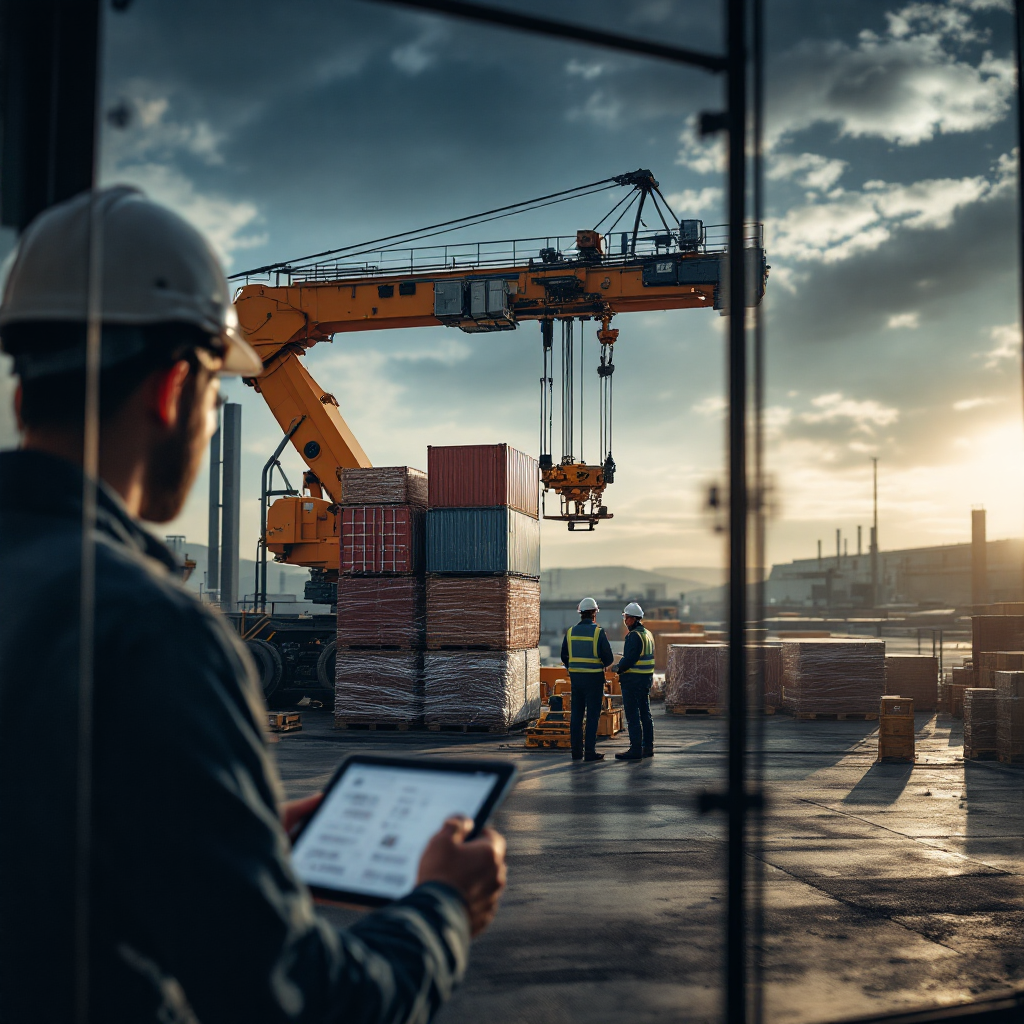
handle change with training, pilots and KPIs: Workforce adaptation and continuous improvement
Change management is as important as technology. Start by building training programmes. Create role-based courses for operators, maintenance staff, and terminal supervisors. Use hands-on simulators and classroom sessions. Train trainers internally. This ensures consistency across shifts and improves adoption. Also, include reskilling workshops for staff whose roles will evolve. Terminal operators that invest in training report higher acceptance rates and smoother cutovers.
Run pilot tests and phased deployments. Pilots validate the end-to-end chain, including TOS, equipment, and gate processes. They reveal interface bugs and operational blind spots. Use pilots to refine yard planning rules and to stress-test scheduling algorithms. Pilots also let you measure KPIs under controlled conditions. Track key metrics such as container throughput, equipment utilisation, and turnaround times. These KPIs help you understand whether the automation increases productivity as expected.
Set up continuous improvement processes. Use daily huddles and weekly reviews to inspect KPI trends. Then, iterate on software settings, and on yard rules, and on maintenance schedules. Emphasise quick wins and regular feedback loops. This reduces handling time for routine communications and frees human staff to focus on exception handling.
Also monitor safety and union interactions. Engage unions early and explain retraining plans. Address concerns about job security and about new working conditions. Provide clear career development paths. Over time, the result is a safer and more efficient facility. Automated terminals operate with fewer accidents and with improved productivity. Keep measuring and modifying the approach. This ongoing attention will ensure the automation achieves its projected benefits.
FAQ
What is inland container terminal automation?
Inland container terminal automation is the integration of automated equipment, software, and control systems to handle container movement and storage in inland facilities. It typically includes TOS, automated guided vehicles, and automated stacking cranes to improve throughput and reduce manual tasks.
How do I start a feasibility study for automation?
Begin by collecting baseline KPIs such as throughput, dwell times, and labour costs. Assess power, connectivity, and yard space. Then develop financial models to compare capital expenditure to long-term operational savings. Use scenario analysis to test different adoption levels.
Which stakeholders should I involve in the integration plan?
Include terminal operators, technology suppliers, IT teams, carriers, truck drivers, rail partners, and any union representatives where applicable. Early engagement reduces coordination risks and helps define clear decision rights and data governance.
What technologies are essential for a modern terminal?
Key technologies include a robust Terminal Operating System, automated guided vehicles or AGVs, automated stacking cranes or ASCs, and AI-driven scheduling and optimisation layers. These systems must be integrated for real-time control.
How important is yard infrastructure for automation?
Very important. Yard upgrades should include reliable power and network connectivity, charging stations for electrified vehicles, sensor networks for predictive maintenance, and redesigned stack footprints to support automated equipment.
What training and change management steps are needed?
Develop role-based training, run reskilling workshops, and create simulator-based exercises. Run pilot deployments to build real-world experience. Maintain continuous improvement routines and regular KPI reviews to support transition.
Which KPIs should I track after deployment?
Track container throughput, equipment utilisation, turnaround times, and maintenance metrics.
Can automation reduce environmental impact?
Yes. Electrification and optimised equipment usage lower emissions and reduce fuel consumption. Smart scheduling and predictive maintenance also cut unnecessary moves and related emissions.
How do pilot tests help a rollout?
Pilots reveal interface issues and operational gaps early. They let teams validate integration between TOS and control systems. Pilots also provide measured KPIs to inform phased expansion.
Where can I find more resources on yard planning and optimisation?
For deeper technical guidance, consult resources on yard planning decision support and on predictive equipment repositioning. Relevant articles include AI-based prediction for yard capacity and predictive repositioning approaches for container terminals available on specialist sites.
our products
 stowAI
 stackAI
 jobAI
jobAI
Innovates vessel planning. Faster rotation time of ships, increased flexibility towards shipping lines and customers.
Build the stack in the most efficient way. Increase moves per hour by reducing shifters and increase crane efficiency.
Get the most out of your equipment. Increase moves per hour by minimising waste and delays.
stowAI
Innovates vessel planning. Faster rotation time of ships, increased flexibility towards shipping lines and customers.
stackAI
Build the stack in the most efficient way. Increase moves per hour by reducing shifters and increase crane efficiency.
jobAI
Get the most out of your equipment. Increase moves per hour by minimising waste and delays.