

Understanding causes port congestion in a container port environment
Port congestion describes the situation when truck flows, container moves, and ship calls exceed handling capacity at a container port, and this reduces terminal throughput and raises costs. For terminals, congestion causes longer queues, slower container handling, and unpredictable berth windows. Gate queues form outside the gate and then extend onto adjacent roads. Yard stacking conflicts pile up inside the terminal, and equipment shortages amplify delays. These three bottlenecks—gate queues, yard stacking conflicts, and equipment shortages—explain much of the operational pressure.
Truck wait times provide a clear measure. For instance, the Bureau of Transportation Statistics reports truck wait times that sometimes exceed two hours during peak periods, and this slows freight movement and increases detention fees https://www.bts.gov/freight-indicators. In numeric terms, long waits inflate operating cost per move, push up dwell time, and reduce container throughput per berth hour. Ports with limited yard capacity experience higher dwell time and lower vessel productivity. A 1–2 hour average delay adds layers of downstream disruption in the global supply chain and affects inland distribution.
Gate congestion also creates safety and community issues outside the port. Truck queues can block arterial roads, and they strain port access infrastructure and local stakeholders. For container terminals that serve major container shipping trades such as those touching the ports of los angeles, a single peak can ripple through a dozen shipping schedules and inland rail bookings. Therefore, terminal operators and port authorities must address congestion with both tactical fixes and strategic shifts.
To tackle causes port congestion, teams must measure gate throughput, monitor yard operations, and track handling equipment utilisation in real time. For example, implementing appointment systems smooths arrivals, and dynamic yard planning reduces reshuffles. If terminals and port authorities combine better visibility with predictive decision-making, they reduce queues and increase productivity while lowering costs for carriers and importers.
literature review of predictive analytics in container port logistics systems
This literature review surveys how predictive analytics changes operations in container port logistics systems and what data fuels those models. Researchers and practitioners draw on historical arrival records, appointment logs, TOS timestamps, and real-time GPS and telematics to predict haulier behaviour. Studies also integrate weather, vessel arrival data, and gate staffing levels as explanatory variables. Academic and industry work shows that combining historical records with live telematics greatly improves short-term arrival accuracy.
Model approaches split into classical statistical methods and AI-driven models. Statistical models, such as time-series and regression, provide interpretable baselines and work well with regular patterns. AI methods, including machine learning and ensemble models, capture complex non-linear patterns and adapt when behaviour shifts. Case studies find that AI improves prediction accuracy and extends useful lead time for gate scheduling, and that AI-driven scheduling can cut truck wait times by up to 30% https://eaigle.com/blog/hidden-in-plain-sight-four-ways-to-optimize-yard-management/.
Data quality and integration create the biggest adoption barriers. Many terminals run a Terminal Operating System (TOS) and separate Yard Management Systems (YMS), and building a port logistics system that connects these sources takes careful API design and governance. Vendors and port operators report integration work as 40–60% of project effort, especially when legacy systems lack open interfaces. To address this, projects now use TOS-agnostic middleware and standardised APIs to link booking, appointment, and gate operating systems. For practical guidance on system design and digital roadmaps, see a port digitalization roadmap that outlines staged integration and governance for terminals port digitalization roadmap.
Drowning in a full terminal with replans, exceptions and last-minute changes?
Discover what AI-driven planning can do for your terminal
Analysing port operation challenges for efficient freight movement
Gate appointment schemes aim to smooth arrivals and reduce peaks, but they require accurate arrival forecasts and strict compliance. When hauliers miss slots or bunch up, the scheme breaks down and queues return. Effective schemes combine fixed booking windows and dynamic adjustments based on predicted arrivals. AI-enhanced truck appointment systems can push late-haul alerts and rebook hauliers automatically to reduce queues, and terminals that pilot these systems report marked improvements in on-time gate performance AI-enhanced truck appointment systems for terminal operations.
Yard slot scheduling sits at the centre of container yard efficiency. Poor slot assignment increases yard reshuffles, and piling boxes in suboptimal stacks reduces yard capacity and increases crane moves. Yard capacity limits force operators to choose between speed and density. To improve utilisation, operators must balance density with access, and they must prioritise moves that reduce downstream retrieval time. Metrics such as average moves per container and crane productivity highlight where to act.
Resource allocation covers yard cranes, chassis, and labour gangs. Shortfalls in any of these resources create cascading delays. For example, a shortage of chassis blocks truck exits quickly, and crane downtime increases vessel idle time at the berth. Terminal operators need flexible resource pools and short-cycle redeployment plans. For tactical improvements, terminals use real-time job scheduling for autonomous equipment and staff, which helps to adapt when arrival patterns change real-time job scheduling for autonomous equipment.
Mapping freight flow helps planners spot peak-period surges and off-peak underutilisation. Most terminals have predictable morning and late-afternoon peaks for truck traffic, and night shifts often show spare capacity that could absorb rescheduled work. By studying these patterns and controlling gate scheduling, ports can smooth demand and use yard operations to absorb variability. This approach reduces dwell time and increases cargo handling throughput while lowering stress on workers and equipment.
Designing a port logistics system to optimise gate and yard workflows in the supply chain
Designing an effective port logistics system requires a layered architecture that connects YMS, TOS, booking platforms, and appointment-booking interfaces. A clear data layer collects timestamps, GPS traces, booking confirmations, and equipment status. An integration layer standardises messages and exposes APIs for decision tools. Finally, a decision layer runs AI models for arrival prediction and dynamic slot allocation. This modular design lets terminals replace components without disrupting the whole system.
In practice, a port logistics system should offer automated gate scheduling, dynamic yard assignment, and exception handling. When a model predicts late arrival, the system reassigns slots, notifies the haulier, and rebalances yard moves. When a container vessel delays a berth, the TOS adjusts yard pick sequences to preserve vessel turnaround. To see how algorithmic yard planning works, study automated container port yard planning algorithms that optimise moves and reduce reshuffles automated container port yard planning algorithms.
Operational emails drive many ad-hoc actions in the yard and gate. Here, automation of the email lifecycle reduces response time and error. This reduces manual triage time and supports faster operational decision-making at the gate and in the yard. As a result, human teams spend more time on proactive coordination rather than clerical work.
Smoother workflows strengthen supply chain resilience and they reduce the probability of supply chain disruption. By combining predictive arrival data with flexible slot allocation and rapid communications, terminals reduce queuing and keep cargo flowing. The system also improves carrier satisfaction by reducing detention exposure and by improving predictability for inland connections and rail bookings.
Drowning in a full terminal with replans, exceptions and last-minute changes?
Discover what AI-driven planning can do for your terminal
Evaluating quantitative benefits: reducing port congestion and boosting freight throughput
Empirical evidence shows clear gains when terminals use haulier arrival predictions. AI-powered dock scheduling systems have cut truck wait times by up to 30% in several terminals https://eaigle.com/blog/hidden-in-plain-sight-four-ways-to-optimize-yard-management/. Other implementations report a 15–20% uplift in yard throughput when arrivals are smoothed and yard moves are optimised https://eaigle.com/blog/optimizing-yard-throughput-key-strategies-for-efficient-yard-operations/. Case study terminals that deploy appointment systems and predictive scheduling noted a roughly 25% decrease in gate congestion and related road carrier delays https://journal.oscm-forum.org/journal/journal/download/20250805143350_oscm-2025-truck-sharing-constraints-two-case-studies.pdf.
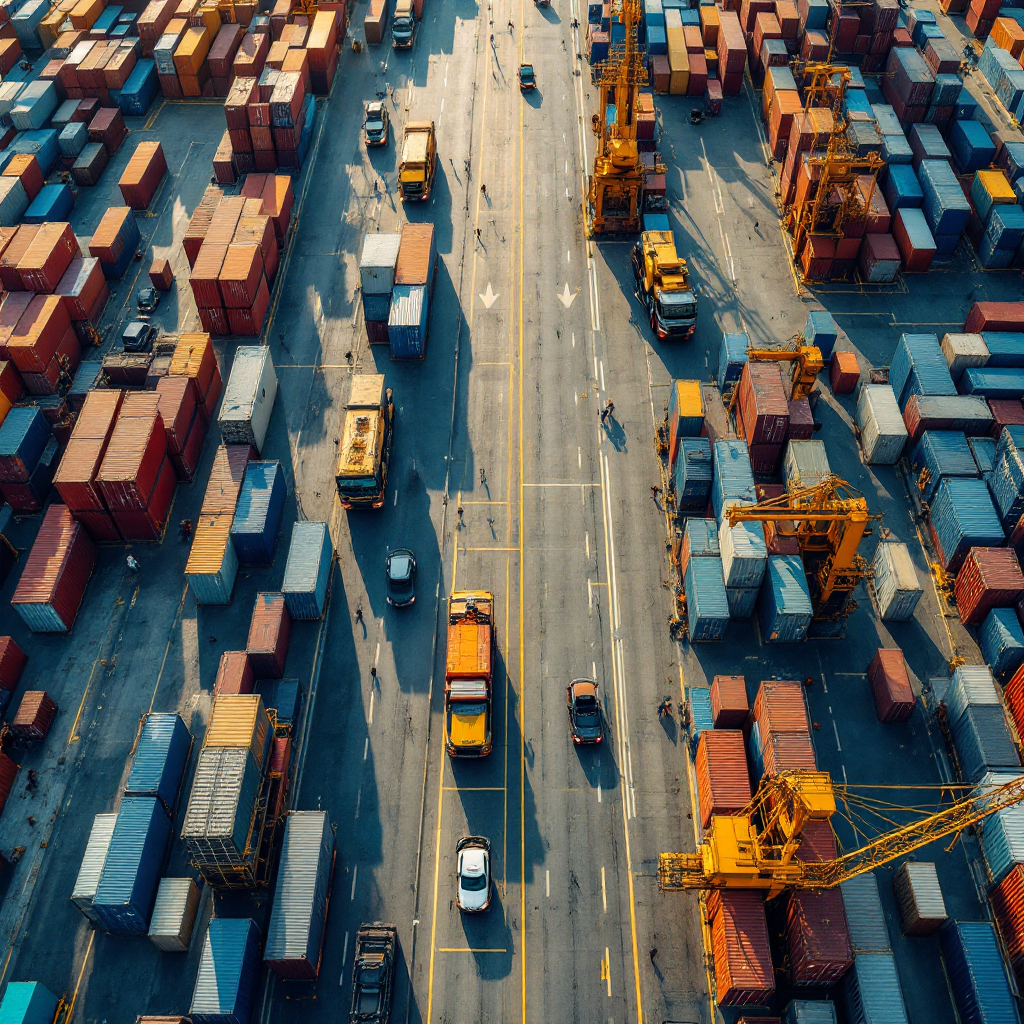
Key performance indicators show where benefits appear. Gate throughput rises as average truck turn time falls. Vessel turnaround falls when yard moves per container drop and when berth productivity improves. Dwell time shortens, and terminal productivity per crane-hour increases. These improvements free capacity and cut costs. For ports under capacity constraints, the uplift can postpone capital expansion while improving service levels.
Return on investment comes from lower detention fees, faster truck cycles, and improved carrier retention. Terminals also lower carbon emissions by reducing idling and by shortening driving distances inside the yard. Operators report higher carrier satisfaction and fewer disputes over late pickups. For operators planning deeper digital transformation, see a container-terminal digitalization roadmap that links performance targets to staged investments container terminal digitalization roadmap.
future research on port operation improvements in a container port
Future research should focus on data sharing, standardisation, and real-time visibility across the port complex. Many projects stall because data formats differ and because stakeholders fear exposing commercial details. Research directions must include governance models and privacy-preserving data exchange. Trials that show how anonymised telemetry supports scheduling without leaking carrier strategy will help adoption. Also, congestion may respond differently in gateway ports versus smaller terminals, and pilots should test both contexts.
Emerging technologies present opportunities. Edge computing brings low-latency predictions to gate controllers, and digital twins let planners run what-if analyses on yard layouts. Blockchain can secure tamper-evident booking records and improve trust in shared appointment systems. Combined, these technologies promise better port capacity use and stronger supply chain resilience. For hands-on pilots on rolling out AI in terminals, operators can learn from operational readiness strategies and staged deployments operational readiness strategies for rolling out AI in container ports.
Designing pilot projects means defining success metrics up front. Use KPIs such as average truck wait time, yard moves per container, berth hours per vessel, and gate throughput. Track carbon-emission reductions and carrier satisfaction scores. Effective pilots also test cross-system integrations and test the human processes around exceptions. Finally, researchers should evaluate how shocks—like the covid-19 pandemic—change model performance and what governance is needed to maintain accuracy during global supply chain disruptions.
FAQ
What is a haulier arrival prediction and why does it matter?
A haulier arrival prediction forecasts when trucks will reach the terminal gate using historical data and live telematics. It matters because accurate predictions let terminals schedule gates and yard slots proactively, which lowers wait times and improves throughput.
How much can arrival predictions reduce truck wait times?
Real-world deployments have recorded reductions up to about 30% in truck wait times when predictive scheduling and appointment systems work together https://eaigle.com/blog/hidden-in-plain-sight-four-ways-to-optimize-yard-management/. Results vary by terminal, and gains depend on data quality and operational discipline.
Which data sources feed predictive models for ports?
Predictive models draw on historical gate timestamps, GPS and telematics, TOS logs, booking records, and carrier messages. They may also include vessel arrival estimates and local traffic data to improve accuracy.
Can appointment systems fail, and how do predictions help?
Appointment systems can fail when hauliers bunch up or miss slots. Predictive arrival data helps by signaling likely no-shows and by enabling automatic rebooking so the system keeps flowing.
How do yard planning algorithms reduce reshuffles?
Yard planning algorithms assign container slots to reduce future moves and to prioritise easy retrieval for imminent vessel calls. This lowers moves per container and increases crane productivity, which shortens dwell time.
What role does automation of operational email play?
Operational email automation speeds up communications about late arrivals, slot changes, and exceptions.
Are there environmental benefits to reducing congestion?
Yes. Reducing idling at gates and unnecessary yard driving cuts fuel use and greenhouse gas emissions. Terminals also lower emissions by reducing vessel idle time through better berth planning.
What should a pilot project for predictive arrivals include?
A pilot should include a defined geographic scope, clear KPIs (truck wait, dwell time, throughput), data governance rules, and an integration plan to TOS and YMS systems. It should also include a human workflow for exception handling and escalation.
How does predictive scheduling affect carrier satisfaction?
Predictive scheduling improves predictability, reduces detention exposure, and shortens queues, which increases carrier satisfaction. Reliable schedules also make inland appointments and rail connections more dependable.
What are the main research gaps today?
Key gaps include standards for data sharing, methods to protect commercial sensitivity, and robust models that hold up during shocks such as the covid-19 pandemic. Research directions include improving cross-stakeholder governance and testing edge and digital-twin technologies in live terminals.
our products
 stowAI
 stackAI
 jobAI
jobAI
Innovates vessel planning. Faster rotation time of ships, increased flexibility towards shipping lines and customers.
Build the stack in the most efficient way. Increase moves per hour by reducing shifters and increase crane efficiency.
Get the most out of your equipment. Increase moves per hour by minimising waste and delays.
stowAI
Innovates vessel planning. Faster rotation time of ships, increased flexibility towards shipping lines and customers.
stackAI
Build the stack in the most efficient way. Increase moves per hour by reducing shifters and increase crane efficiency.
jobAI
Get the most out of your equipment. Increase moves per hour by minimising waste and delays.