
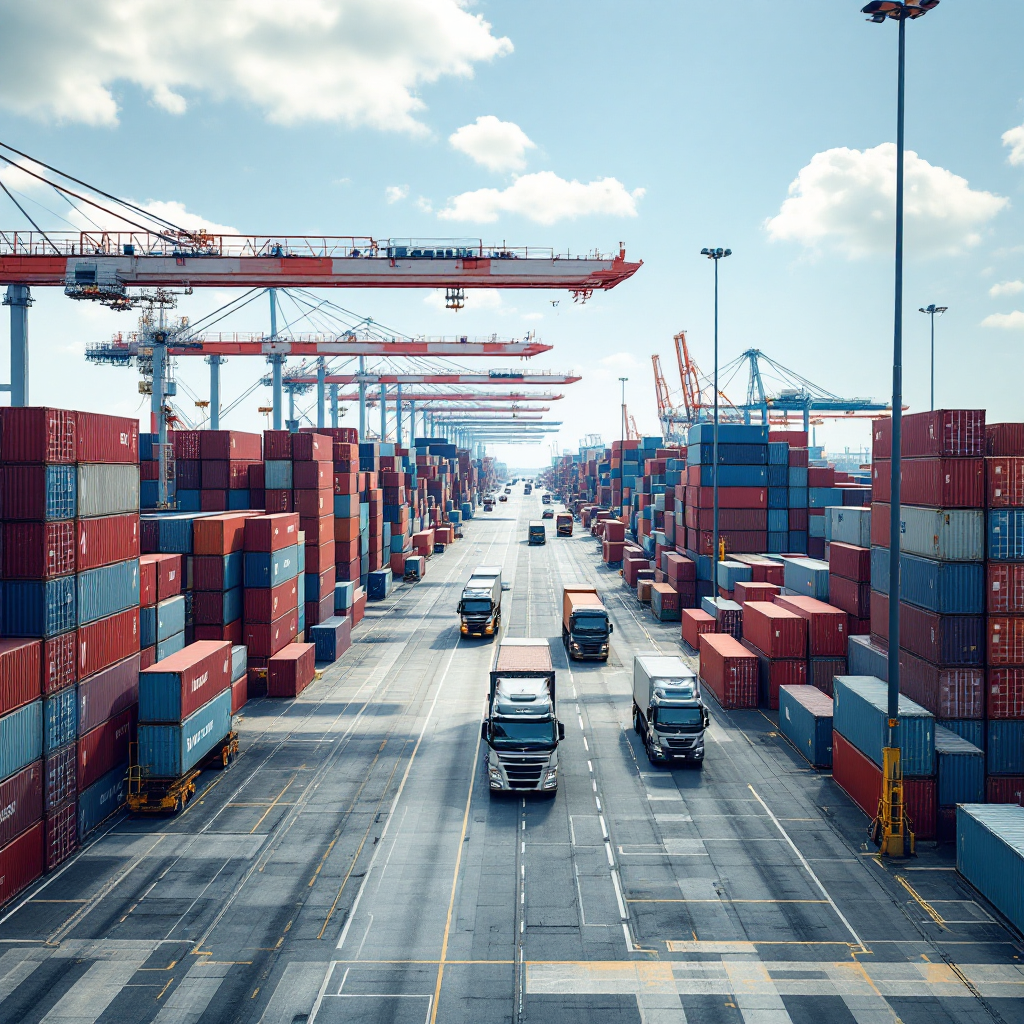
container scheduling problems in container terminals
The container matching challenge asks operators to pair inbound flows with outbound demands so operations stay efficient and resilient. First, this problem affects terminal throughput directly, and thus it affects shipping schedules, trucking networks, and supply chains. Second, delays at the gate and in the yard cascade quickly. Third, berth delays reduce vessel turnaround time and increase port congestion. For context, global throughput neared 800 million TEUs recently, which shows scale and urgency (CMC Container Study). Also, inefficient matching can raise dwell times by up to 20%, which worsens congestion and increases costs (PORT CONGESTION PROBLEM).
Root causes make the assignment problem hard. Vessel schedules shift, and arrival times change. Also, container types differ by size, weight, and special requirements. Furthermore, stakeholders such as shipping lines, hauliers, and rail operators each hold partial data. Hence, poor coordination causes mismatches in storage and transport. This happens especially when real-time updates are missing or delayed, so the terminal cannot reassign slots quickly.
Key metrics to track include dwell time, crane utilisation, and truck turnaround. Dwell time measures how long a unit sits inside the terminal. Crane utilisation shows equipment load, and the gate measures truck turnaround and waiting time. These metrics drive near-term decisions. For example, a yard crane schedule that ignores predicted truck arrivals will increase waiting time, and it will raise handling costs. To explore yard-focused approaches, read more about haulier arrival prediction methods. Operators who focus on these metrics can avoid bottlenecks and start solving the problem methodically.
literature review of assignment problem solutions
Researchers treat container matching as a classic assignment or facility location style problem and as a combinatorial optimization case. Early models used facility location problem frameworks to place storage and assign flows, and these models produced measurable gains in throughput in simulation studies (floating container terminals study). Also, the literature review of planning problems in container supply chains maps many related models and identifies persistent complexity (A Literature Review, MDPI). In short, foundational approaches rely on integer programming, network flow formulations, and combinatorial optimization, and they set performance baselines for heuristics and metaheuristics.
Heuristic approaches, and greedy rules, often serve as fast operational methods. For instance, simple heuristics assign closest available slots or reserve bays by departure time. These rules work when loads and schedules are stable. However, when variability rises, heuristics fail to adapt quickly, so practitioners turn to metaheuristics such as ant colony optimization, simulated annealing, particle swarm optimization, and genetic algorithm frameworks. Experimental results show that FLP frameworks and well-tuned heuristics can yield up to 18% throughput improvements in specialized studies (study). Also, robotized terminals report handling gains when control software integrates matching logic (robotized terminals).
Gaps remain. Most models lack real-time adaptability and multi-criteria decision making that balances dwell time, rehandles, energy use, and crane wear. Also, many formulations ignore human-in-the-loop requirements and the need for transparent decision support. For more on decision systems that support container scheduling, see the review of container terminal decision support systems. Finally, literature suggests integrating learning approach layers and live data to close the gap between offline optimization and operations at container.
Drowning in a full terminal with replans, exceptions and last-minute changes?
Discover what AI-driven planning can do for your terminal
container stacking and the container stacking problem
Containers are stored in stacks, and stacking rules create constraints that affect matching outcomes. Weight limits, bay structure, and handling equipment determine which units can rest on which stacks. For example, heavier units cannot sit above delicate cargo, and refrigerated units need accessible power points. Also, stacks vary by height across rows, which restricts placement of certain container types. These physical constraints elevate the complexity of the blocks relocation problem and of the container stacking problem that operators face daily.
Stacking matters because containers are moved multiple times. Each extra relocation increases handling time, and rehandles raise fuel use and crane wear. The container stacking problem is a subtask of the broader allocation problem. It interacts with scheduling problems for quay cranes and yard crane shifts. If planners ignore stacking constraints, yard congestion grows and the number of containers requiring reshuffles rises. Thus, stack-aware assignment is necessary to reduce rehandles and to smooth operations.
Performance measures include rehandles, stacking height, and space utilisation. Rehandles count how often a container must be moved to reach a target unit. Stacking height affects equipment cycle times and container safety. Space utilisation measures how effectively the container yard uses available ground and vertical capacity. Terminal studies show that optimized stacking policies reduce handling time and improve throughput. For hands-on yard strategies and job prioritization, consider approaches to RTG job prioritization.
Advanced methods treat the stacking challenge as an NP-hard combinatorial optimization problem and use tailored heuristics or metaheuristics to produce near-optimal stacks in realistic time. Also, automated container terminals gain by combining automated lifting with smart stacking rules, because automation enforces stack plans precisely. In practice, terminals measure success by drop in rehandles and by smoother gate flows, and they track metrics continuously to adapt stacking policy. These adjustments often drive the greatest marginal improvements in yard congestion and in loading and unloading schedules.
algorithm approaches for container matching
The choice of algorithm impacts runtime, robustness, and the quality of assignments. Deterministic algorithms such as greedy rules and branch-and-bound find predictable results. For small or structured instances, branch-and-bound gives exact solutions but at high computational cost. Greedy rules yield fast, often-good solutions, and they fit live operations. Conversely, metaheuristics like genetic algorithm, ant colony optimization, simulated annealing, and particle swarm optimization explore larger solution spaces and escape local minima.
Complexity is central. The assignment problem in terminals frequently maps to an NP-hard combinatorial optimization problem, and exact methods scale poorly as the number of containers and constraints grow. Therefore, operators choose hybrid methods that mix deterministic and stochastic elements. For example, a greedy initializer can seed a genetic algorithm population, which then refines assignments under multiple objectives. This combination balances speed and solution quality, and it reduces the risk of trapped local optima.
Solution quality versus runtime matters. Metaheuristics typically provide better assignments for large problems but they need tuning and compute resources. Deterministic algorithms ensure reproducibility but may fail under disruption. For operational deployment, integration with terminal operating systems is essential. That integration must expose APIs for real-time updates and must accept constraints from the yard, from cranes, and from gate systems. Terminals benefit when algorithms connect to systems that manage quay crane schedules and to tools for reducing driving distances in port operations (reducing driving distances).
Finally, transparency and explainability matter. Decision makers ask for interpretable outputs and for what-if scenario analyses. A decision support system that explains why a specific container position was chosen increases trust and helps staff adjust the plan. Such systems support continuous improvement and allow terminals to respond quickly when the current container mix or vessel schedule changes.
Drowning in a full terminal with replans, exceptions and last-minute changes?
Discover what AI-driven planning can do for your terminal
genetic algorithm design for container matching
A genetic algorithm offers a flexible way to tackle the allocation problem inside a busy terminal. First, define encoding that maps a candidate solution to container positions and to handling sequences. For example, a chromosome can list container IDs with assigned stacks and relative move orders. Next, design crossover operators that respect stacking constraints and stacking height limits. Also, mutation must avoid illegal moves and must preserve equipment and weight rules. Finally, fitness functions must reward low dwell time, low rehandles, and balanced yard crane loads.
Customization is crucial. Terminals must embed constraint handling into genetic algorithm operators so solutions remain feasible after crossover or mutation. Multi-objective criteria demand either scalarized fitness or Pareto-based selection, and the latter supports trade-offs between throughput and energy or between crane utilisation and waiting time. In experimental settings, tuned metaheuristics report handling time reductions of 15–25% and better vessel turnaround times, especially when combined with yard-aware scheduling and automated control logic (robotized terminal results). These gains align with reported improvements from automation and from richer planning models.
Genetic algorithm variants must also work with short planning horizons. Operators need fast, near-optimal solutions when vessel ETAs change or when gate arrivals spike. A practical setup uses rolling horizons and warm-started populations that evolve as new data arrives. Also, integration with a decision support system helps route solutions to operations staff and to automated equipment. For design guidance on terminal vessel planning in software, see methods for vessel planning optimization.
In short, the genetic algorithm balances exploration and exploitation, and it adapts to multi-criteria objectives in a terminal context. When terminals pair GA outputs with live telemetry and rule-based checks, the method delivers robust performance improvements, and it supports a learning approach for tuning parameters over time. The approach pairs well with simulated annealing or particle swarm optimization in hybrid workflows for fine tuning.
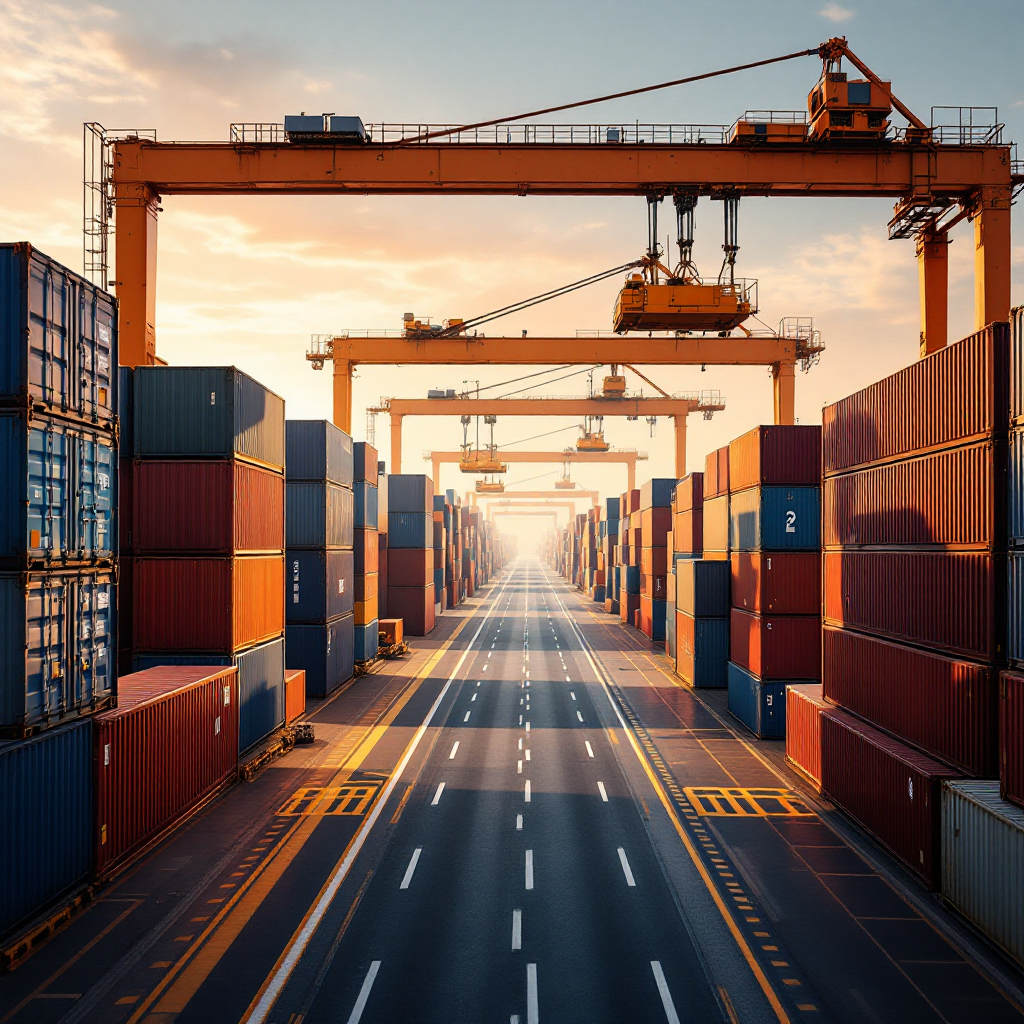
container operations: optimising yard and transport performance
Optimised matching streamlines yard crane schedules and gate operations. Better assignments reduce unnecessary moves and lower waiting time for trucks. Also, optimised matching smooths rail drayage by aligning blocks with rail departures. Operational gains include faster truck turnaround and lower emission from fewer idle cycles. For structured approaches that reduce carbon and driving distances, terminals use route and yard models together (reducing carbon footprint).
Practical steps begin with pilot testing and then move to scale. First, run controlled pilots on one yard block or one berth. Second, collect experimental results and refine policies. Third, train staff on new processes and on tools that automate assignments. For example, our AI agents can parse inbound shift emails, fetch ERP and TMS data, and route exceptions to the right team. This reduces manual triage and keeps the roll-out agile.
Implementation should pair algorithm outputs with human oversight for exceptions. Use dashboards that show predicted dwell times, yard crane load, and gate queues. Also, continuously monitor metrics and adjust parameters in the optimization algorithm. Terminals often measure improvements by decreases in waiting time, fewer rehandles, and improved crane utilisation. For real-time yard tactics, consider cloud-based yard optimization solutions and digital replicas for scenario simulation (real-time yard strategies) and (emulation software).
Finally, ensure data sharing between shipping lines, hauliers, and rail operators. Transparent data flows enable adaptive scheduling in response to delays. Also, tie optimization models to gate systems so plans execute reliably. The net effect will be fewer delays, higher throughput, and smoother container transportation across the network.
FAQ
What is the container matching problem?
The container matching problem refers to assigning inbound and outbound units to storage slots, transport, and handling sequences so operations stay efficient. It combines scheduling, stacking, and vehicle routing under real-world constraints.
Why does container matching matter for terminal throughput?
Matching affects crane cycles, truck turnaround, and yard congestion. When assignments are poor, dwell time rises and vessel turnaround slows, which reduces terminal throughput and raises costs.
Which metrics should terminals monitor?
Key metrics include dwell time, crane utilisation, truck waiting time, rehandles, and space utilisation. These measures reveal how matching and stacking policies perform in daily operations.
What algorithm classes solve the assignment problem?
Deterministic methods like greedy rules and branch-and-bound and metaheuristics like genetic algorithm, ant colony optimization, simulated annealing, and particle swarm optimization are common. Each class trades off speed and solution quality.
How do stacking constraints affect matching?
Stacking constraints such as weight limits, bay structure, and power access for refrigerated units limit feasible placements. Poor stacking raises the number of relocations and increases handling time.
Can genetic algorithm work in real-time operations?
Yes, when implemented with warm starts, rolling horizons, and fast operators that enforce constraints. A genetic algorithm can produce near-optimal plans quickly enough for operational use if engineered for speed.
What role does automation play in resolving the problem?
Automation improves precision and execution. Robotized systems reduce human error and carry out planned moves exactly, which enhances the value of optimization outputs and lowers handling time.
How important is stakeholder coordination?
Coordination is crucial because shipping lines, hauliers, rail operators, and terminal staff each provide partial information. Data sharing and collaborative platforms reduce mismatches and enable adaptive scheduling.
What practical steps should a terminal take to implement improvements?
Start with pilot testing, then measure experimental results and train staff. Integrate optimization outputs with the terminal operating system and automate routine communication tasks to reduce manual triage.
Where can I read more about yard optimisation and decision systems?
Explore resources on real-time yard optimisation and decision support systems for terminals. For example, review strategies on real-time yard optimization, decision support designs at container terminal decision support systems, and vessel planning tools at vessel planning optimization.
our products
 stowAI
 stackAI
 jobAI
jobAI
Innovates vessel planning. Faster rotation time of ships, increased flexibility towards shipping lines and customers.
Build the stack in the most efficient way. Increase moves per hour by reducing shifters and increase crane efficiency.
Get the most out of your equipment. Increase moves per hour by minimising waste and delays.
stowAI
Innovates vessel planning. Faster rotation time of ships, increased flexibility towards shipping lines and customers.
stackAI
Build the stack in the most efficient way. Increase moves per hour by reducing shifters and increase crane efficiency.
jobAI
Get the most out of your equipment. Increase moves per hour by minimising waste and delays.