
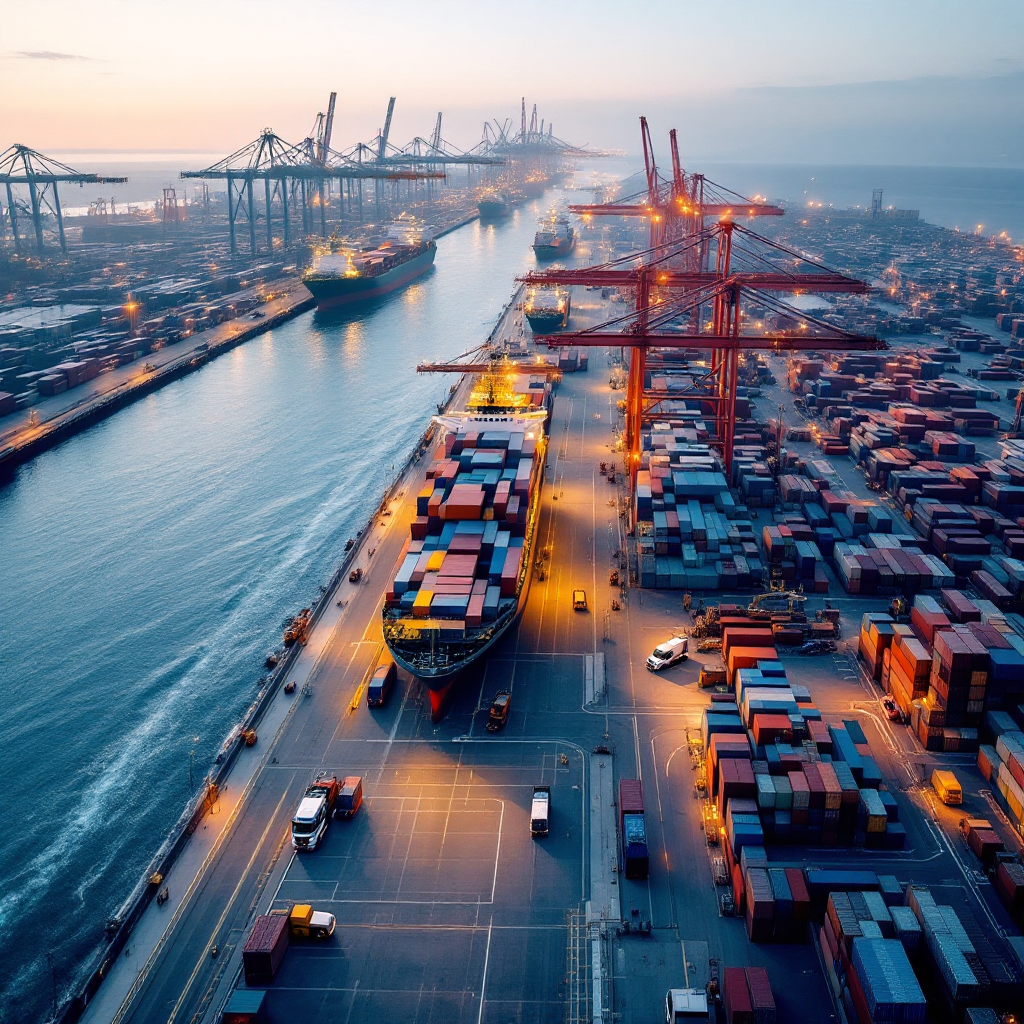
Overview of Multi-Vessel Crane Scheduling Optimisation
Multi-vessel crane scheduling optimisaton addresses how to assign QUAY EQUIPMENT to several ships that share a berth or adjacent berths. In deepsea container ports this task steers vessel turnaround and container throughput and it links berth allocation with crane work. The core idea is simple and the challenge is complex: assign quay cranes and support yard cranes so that ships spend less time at berth and containers flow without delay. Port operators watch two metrics closely: port CONTAINER THROUGHPUT and vessel turnaround time. Both metrics drive commercial performance and berth productivity.
Quay cranes do the heavy lifting at the ship interface, and yard cranes handle stacks inland. When QCs and yard crane teams coordinate, the terminal runs smoother and trucks wait less. Research underlines this point: “the productivity of the quay cranes (QCs) determines the performance of a container terminal; hence QC scheduling has received significant attention” [Coordinated optimization of equipment operations]. Therefore, the scheduling task spans equipment, stowage, and yard movements, and it must bridge short-term shifts and planning horizons. In practice, a scheduling plan must respect vessel arrival windows, quay crane joint availability, and yard space.
Deepsea terminals normally operate many cranes across multiple berths. They must manage crane joint scheduling in container operations, and they must manage allocation and quay crane assignment while avoiding interference. Modern operations combine planning and feeder arrival scheduling with dynamic reassignments when delays occur. This integrated scheduling approach improves throughput and reduces idle equipment. For further detail on how yard operations affect flow, explore real-time container yard optimisation strategies and the links between quay work and yard activities at a container terminal [real-time yard optimisation].
In short, multi-vessel crane scheduling is central to port performance. It covers berth and quay crane allocation, quay crane assignment and scheduling, and joint scheduling across cranes and yard resources. A successful schedule tightens windows, increases quay crane utilisation, and cuts truck dwell. Terminal planners, software vendors, and researchers focus on this problem because it yields measurable gains in throughput and cost. With growing vessel sizes and dense liner schedules at many ports, the need for robust scheduling models grows quickly.
Constraints of Quay Crane and Yard Crane Scheduling Problems
The quay crane scheduling problem embeds many constraints that planners must balance. Vessel arrival and departure times create hard windows for work. Berth allocation shapes where cranes can operate. Crane interference rules prevent cranes on the same berth from crossing or colliding. Stowage plans define which containers sit where on a ship and thus which moves come first. These constraints make the scheduling problem combinatorial and sensitive to small changes.
Yard operations add another layer. A container yard has finite slots, and yard space allocation rules control where inbound and export container blocks land. Yard crane scheduling ties closely to quay operations because yard cranes must retrieve and deliver boxes to the gate or stacking area on time. When quay cranes finish a container, yard cranes or internal trucks must accept it quickly. Otherwise, buffers fill, congestion grows, and vessel service slows.
Planners also cope with uncertain arrival patterns. Scheduling problems with stochastic arrival and scheduling problem under uncertain arrival force conservative plans, and stochastic optimization often appears in optimization models. For example, robust berth scheduling using machine learning can reduce waiting and handle uncertain arrivals [Robust berth scheduling]. The yard crane scheduling problem also needs to account for yard truck deployment in container movements, and for worker variability that changes cycle times. Space allocation and yard crane sequences must therefore align with quay workflows, otherwise the terminal loses efficiency.
Regulatory and physical limits further constrain plans. Tidal ports with multiple arrival windows must coordinate time-invariant quay crane assignments in some cases, and some terminals operate time-invariant crane assignments to simplify shift handovers. Yet fixed assignments reduce flexibility. Where possible, planners prefer allocation and quay crane scheduling that adjust in real time. This creates a trade-off between predictability for stevedores and responsiveness to delays.
To manage these constraints, planners use simulation optimization method for deep-sea berthing, and they test scheduling schemes via digital replica tools. A three-phase simulation optimization method then validates schedules under realistic traffic. For readers interested in simulation, see the digital replica of terminal operations for scenario simulation [digital replica for scenarios]. Such tools let teams test how space allocation and yard crane deployment affect port throughput, and they help to tune joint scheduling in container ports.
Drowning in a full terminal with replans, exceptions and last-minute changes?
Discover what AI-driven planning can do for your terminal
Quay Crane Productivity and Crane Intensity
Quay crane productivity measures moves per hour, and crane intensity records cranes assigned relative to vessel capacity or TEU volume. Together they shape terminal output. Typical QC productivity varies by vessel type and terminal practices, but under optimized regimes many terminals push utilisation above 85% [Robust berth scheduling]. High utilisation means fewer idle shifts and higher container throughput per berth.
Crane intensity rises with vessel size and the desire to shorten berth time. Operators allocate more cranes to large vessels, and they sometimes concentrate cranes to exploit parallel work. Yet more cranes can cause interference if planners ignore spacing rules. Therefore, quay crane joint robust scheduling becomes essential to capture gains without creating downtime due to interference.
Quantitatively, ports measure crane operation in moves per hour, crane availability, and downtime. They track truck turnaround time and yard crane cycle times to evaluate downstream impact. Research shows that AI-driven predictions for container relocation and scheduling can boost efficiency: a recent study reported prediction accuracy of 90.76% with R² = 0.9139 for container relocation needs, which supports dynamic assignment decisions [AI-driven container relocation]. When planners combine those predictions with a robust optimization model, they can assign cranes to vessels that yield measurable reductions in dwell.
Crane intensity also affects fuel and labor costs. Higher crane counts can raise fuel consumption for yard equipment and increase shift labor, while faster vessel service reduces waiting fuel burn at anchorage. Some ports considering carbon therefore balance crane intensity with emissions targets. For details on reducing emissions through operational changes, refer to research linking port queuing systems to CO₂ impacts [port queuing and CO₂].
Finally, terminal operators use KPIs—from moves per hour to crane utilisation—to tune deployment in container operations. Where automation exists, automated container terminals measure performance in moves and system uptime. For pragmatic tips on boosting crane productivity, see crane productivity optimisation techniques in port operations [crane productivity techniques].
Scheduling Optimisation Metrics
Choosing the right metrics makes scheduling measurable. Overall Equipment Effectiveness (OEE) is a broad view that compares actual crane output with theoretical capacity. OEE includes availability, performance, and quality. Availability tracks scheduled hours against downtime, performance tracks moves per hour against a target, and quality captures rework from mis-stows or relocations. Together they summarise how well planners execute schedules.
Other operational metrics matter too. Crane availability and downtime give direct signals to maintenance teams. Truck turnaround time affects gate throughput and road congestion. Yard crane cycle times and yard space utilisation indicate how well the container yard absorbs quay flow. Energy consumption links operational choices to fuel costs and emissions. Planners use these metrics as feedback into scheduling decisions so they can balance speed against cost.
In optimization practice, companies run multi-objective models that trade off vessel service time and equipment cost. For instance, a bi-objective optimization model might minimise vessel waiting times and crane idle time at once. Simulation then validates schedules under variation. The scheduling model must therefore ingest data on berth windows, container stowage, yard slotting, and truck patterns.
Real-time decision-making calls for monitoring dashboards that display key metrics every shift. That transparency supports collaborative scheduling among operations, stevedores, and trucking partners. It also supports proactive approaches for simultaneous berth and quay crane decisions, and it supports allocation and scheduling with worker constraints. Today, terminals layer analytics and AI so that scheduling decisions reflect both historical patterns and live telemetry from yard and quay systems.
Lastly, maintenance and fuel cost considerations for container terminal operations feed into scheduling choices. For example, longer continuous shifts increase maintenance cycles but reduce frequent startup fuel costs. Tracking these metrics helps planners choose schedules that align with both throughput goals and cost control.
Drowning in a full terminal with replans, exceptions and last-minute changes?
Discover what AI-driven planning can do for your terminal
Data-Driven and AI Approaches for Crane Scheduling
Data-driven methods transform how terminals solve the crane scheduling problem with stochastic elements. Machine learning supports robust berth allocation and quay crane assignment by predicting vessel arrival times, container relocation needs, and yard congestion. One study highlights robust berth scheduling using machine learning for vessel arrival and explains how such methods extend to quay crane scheduling [Robust berth scheduling]. These predictions let planners run a scheduling scheme that adapts when arrivals shift.
AI models also power container relocation forecasts. Research reports a 90.76% prediction accuracy (R² = 0.9139) for container relocation needs, which supports real-time scheduling adjustments and reduces unnecessary moves [AI-driven container relocation]. When combined with genetic algorithms or mixed integer programming, AI predictions feed objective functions and cut solver times. Terminals then deploy a simulation optimization method for deep-sea scenarios to test schedules under variability.
Optimization method choices vary. Planners use genetic algorithms, stochastic optimization, and robust optimization models. They also employ simulation-based optimization and three-phase simulation optimization method approaches to validate schedules. One useful setup is a robust optimization model for integrated berth and quay scheduling that accounts for uncertain arrivals and yard constraints. That model reduces vessel waiting and strengthens quay crane joint scheduling under delay stress.
Operational automation ties into AI too. Automated container handling and an automated container terminal design call for different scheduling models, and they require tight coordination between quay crane allocation and yard crane deployment. Modern software can generate a scheduling plan, push assignments to the crane control system, and feed exception alerts to human supervisors.
Finally, a practical optimization approach blends proactive planning with reactive correction. Systems use arrival predictions to set a baseline schedule, and then they adjust that baseline as telemetry arrives. That hybrid approach supports simultaneous berth and quay crane decisions, and it links to yard crane scheduling with uncertain conditions. For technical readers, see predictive analytics in container port logistics for implementation patterns [predictive analytics].
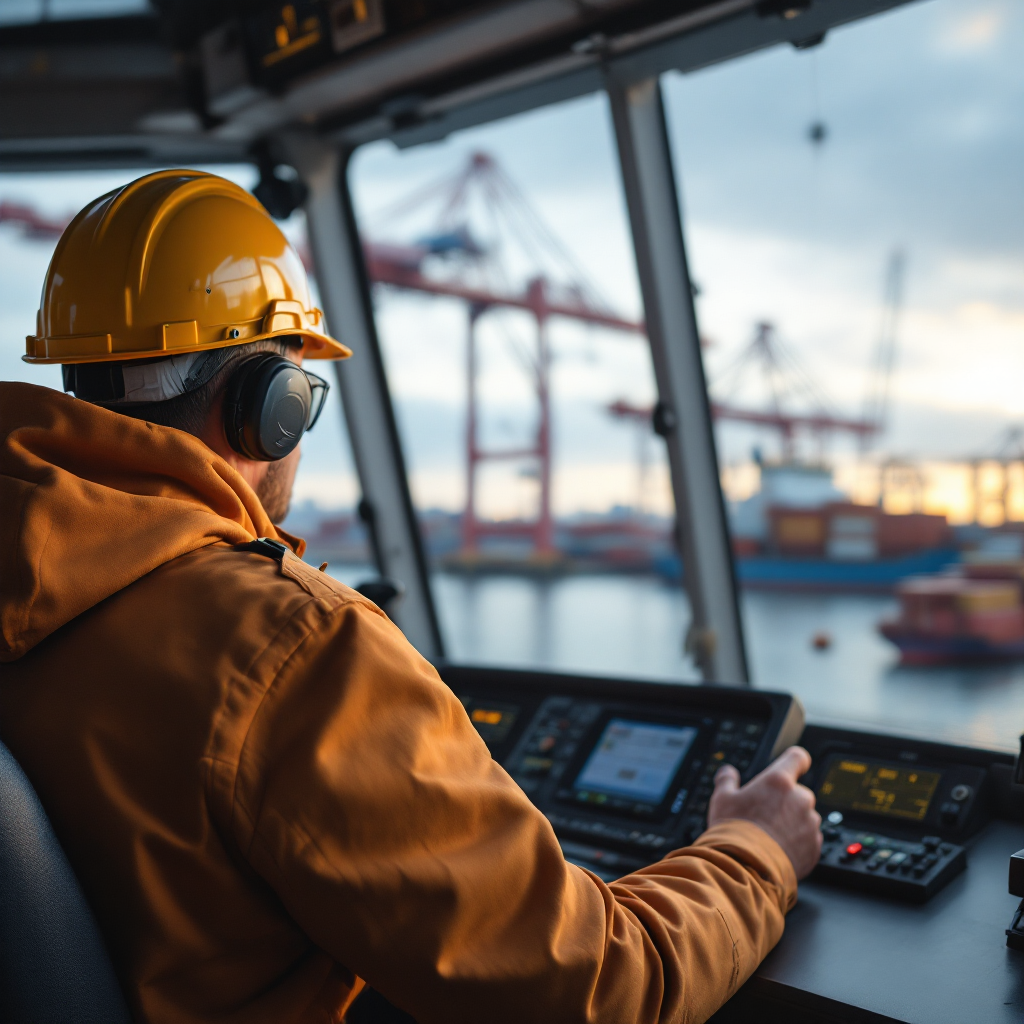
Environmental and Economic Implications
Efficient scheduling reduces berth congestion and cuts vessel waiting times. Less waiting at anchorage lowers fuel burn and CO₂ emissions. Research links improved port queuing and scheduling systems to emissions reductions, and it highlights that optimized operations yield both environmental and economic gains [port queuing and CO₂]. When terminals reduce idle equipment time they also lower energy consumption across cranes and yard machines.
Economically, better schedules increase container throughput per berth and shorten service windows. Higher throughput translates to higher revenue per berth and better return on capital. Studies on berth allocation and crane allocation report improved quay crane utilisation rates often exceeding 85% under optimized schedules, which directly affects terminal margins [berth allocation study]. Faster turnaround also attracts liner calls, and that strengthens a port’s competitive position.
Ports considering carbon now factor emissions into scheduling decisions. For example, planners may slow crane intensity at low-congestion hours to reduce peak energy usage, and they may shift truck appointments to flatten gate peaks. These choices affect fuel costs considerations for container terminals and for container transportation partners, and they impact yard truck deployment patterns. A coordinated plan that links berth allocation and quay crane scheduling to yard truck flows yields both lower emissions and lower operating expenses.
Beyond fuel, scheduling affects labor and maintenance costs. Smoothing workloads reduces overtime and spreads wear on equipment. Lower maintenance frequency reduces downtime and raises effective crane availability. A collaborative scheduling culture that uses joint scheduling in container ports can therefore reduce total cost of ownership while improving service. For readers who plan environmental metrics into operations, see resources on reducing carbon footprint in container ports [reducing carbon footprint].
Finally, expert voices make the case. For instance, a leading researcher notes that optimizing multi-vessel crane scheduling “fundamentally transforms port capacity and sustainability by minimizing idle equipment and reducing emissions” [Investigation of a port queuing system on CO₂ emissions]. That perspective reinforces why terminals invest in robust scheduling systems and in optimization models that balance throughput with carbon goals.
FAQ
What is multi-vessel crane scheduling?
Multi-vessel crane scheduling is the process of assigning quay cranes and coordinating yard cranes across multiple ships that call at a berth or adjacent berths. It aims to minimise vessel turnaround and keep container throughput high while respecting physical and operational constraints.
Why does quay crane productivity matter?
Quay crane productivity determines how fast a vessel gets serviced, and it directly affects berth occupancy and port CONTAINER THROUGHPUT. Higher productivity shortens ship stay and reduces waiting, which benefits carriers and terminals alike.
How do yard operations influence quay work?
Yard operations supply and accept containers to and from the quay, and therefore yard crane scheduling and yard space allocation determine how quickly quay cranes can offload or load containers. Poor yard flow creates bottlenecks and slows the quay.
What metrics should terminals track for scheduling?
Terminals should track OEE, moves per hour, crane availability, truck turnaround time, yard utilisation, and energy consumption. These metrics reveal where schedules cause delays and where optimization can improve outcomes.
Can AI reduce vessel waiting times?
Yes. AI models that predict arrivals and container relocations help planners create robust schedules and make real-time adjustments. Published work shows high accuracy for relocation prediction and improved scheduling when AI supports decision-making.
What impact does scheduling have on emissions?
Better scheduling reduces waiting at anchorage and idle runs by trucks and yard machines, which lowers CO₂ emissions. Ports that optimise berth and crane use report measurable reductions in fuel burn for ships and equipment.
Is automation required to implement advanced scheduling?
No. Automation helps, and automated container terminals can execute schedules with high precision, but many terminals achieve gains with improved data, simulation, and decision-support tools. Automation accelerates execution but is not always mandatory.
How do planners handle uncertain arrivals?
Planners use stochastic optimization, robust optimization models, and simulation to test schedules against arrival variance. They typically build contingency rules and real-time adjustment procedures to handle deviations.
What role do internal communications play in scheduling?
Clear, fast communication reduces delays caused by manual email triage and missing context. Tools that automate operational emails, summarize schedule changes, and attach relevant data help teams react faster and keep schedules aligned.
Where can I learn more about yard and quay integration?
Start with resources on real-time yard optimisation, predictive analytics for port operations, and case studies on joint scheduling. For integrated decision support and scenario simulation, consult digital replica and predictive analytics materials that cover container terminal planning.
our products
 stowAI
 stackAI
 jobAI
jobAI
Innovates vessel planning. Faster rotation time of ships, increased flexibility towards shipping lines and customers.
Build the stack in the most efficient way. Increase moves per hour by reducing shifters and increase crane efficiency.
Get the most out of your equipment. Increase moves per hour by minimising waste and delays.
stowAI
Innovates vessel planning. Faster rotation time of ships, increased flexibility towards shipping lines and customers.
stackAI
Build the stack in the most efficient way. Increase moves per hour by reducing shifters and increase crane efficiency.
jobAI
Get the most out of your equipment. Increase moves per hour by minimising waste and delays.