
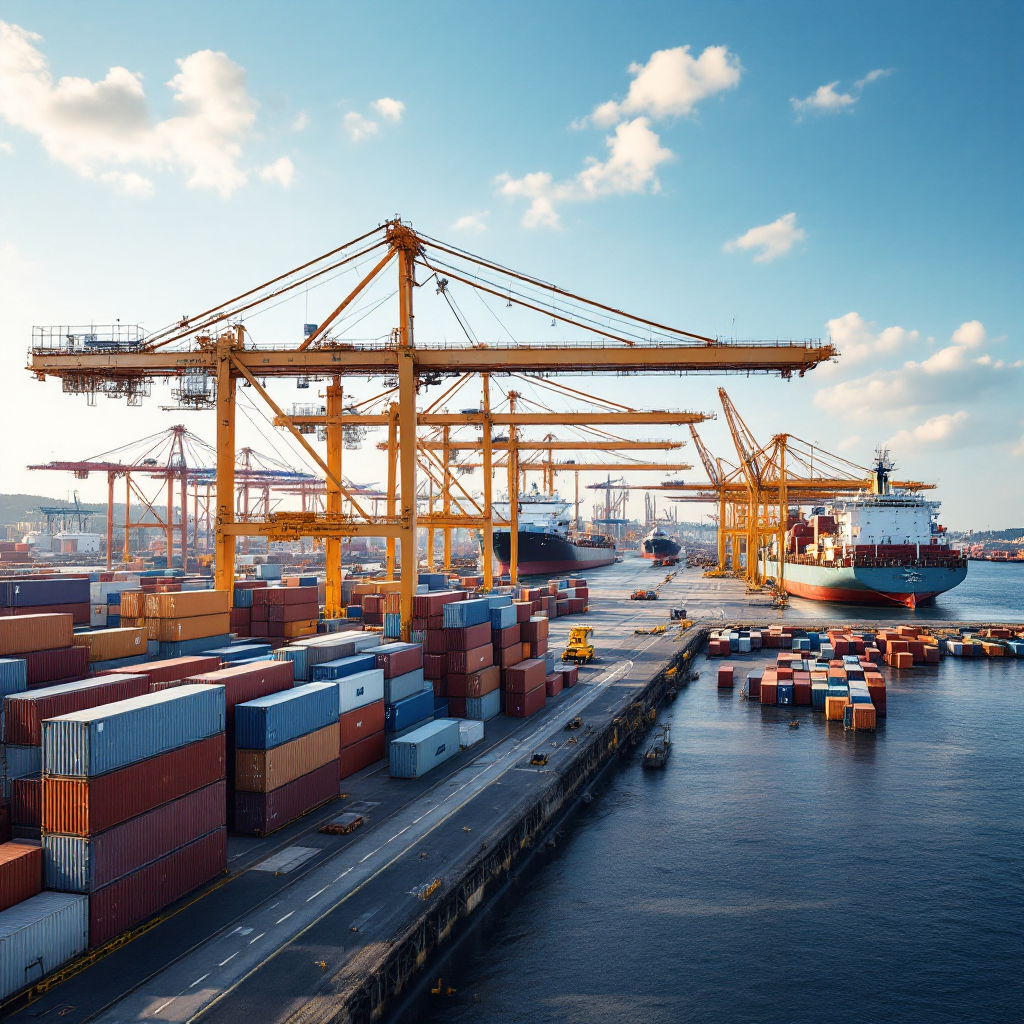
terminal: Current State of Terminal Operations and Lift Planning
Terminal operations still rely heavily on manual planning in many ports. Planners check stowage lists, talk to vessel agents, and sequence moves by hand. That approach works for routine calls. Yet it struggles with complexity when calls are large or schedules shift. The result is longer quay stays, uneven equipment use, and frustrated shipping lines. Key performance metrics show where problems occur. Crane idle time rises when plans lack coordination. Throughput drops if the sequence requires extra repositioning. Turnaround time grows when small delays compound into larger ones. For operators, the pressure to improve these numbers is constant.
Growing container volumes and tighter schedules drive change across the sector. Shipping lines demand faster berth productivity and predictable vessel unloading. That trend forces terminals to reevaluate procedures and tools. In response, many terminals deploy digital scheduling tools and integrate sensor feeds. These systems reduce manual lookup time and help standardize responses. For more technical approaches to move productivity, see factors affecting gross moves per hour in container terminals for deeper context factors affecting gross moves per hour.
Still, manual processes create recurring inefficiencies. Human planners cannot always process large volumes of conflicting data in real time. They miss subtle patterns in crane movements, vehicle routing, and berth sequencing. That gap opens an opportunity for AI and automation. AI can analyze incoming schedules, predict lift conflicts, and propose optimized sequences. For terminals considering advanced sequencing for tandem work, review optimizing tandem and twin lift sequencing for vessel operations optimizing tandem and twin lift sequencing.
Planners must also manage resource allocation and safety. Equipment use needs to match vessel operations and yard constraints. Poor choices increase energy consumption and raise the chance of operational conflicts. In short, terminal operators must act faster and with better information. AI-driven decision support can provide that. It helps terminals meet strategic goals, reduce operational costs, and scale performance when call sizes grow.
container terminal: Complexity and Constraints in Container Terminal Handling
Container handling in a busy container terminal involves many moving parts. Tandem and twin lifts require precise coordination between two or more quay cranes. Tandem lifts split a long container across two cranes. Twin lifts use separate spreaders for two containers carried together. Both methods offer clear benefits. They speed vessel unloading and increase throughput. However, they also introduce coordination challenges. Cranes must synchronize movements, match hoist speeds, and avoid cross-rail interference. Safety becomes a major operational constraint. A single timing error can force a stop that delays an entire berth.
Real-time variability compounds complexity. Container locations change quickly in the yard. Vessel schedules shift. Crane availability can vary with maintenance needs or equipment faults. These dynamics make static plans brittle. A proactive approach must consider live sensor data and up-to-date yard maps. Digital tools that integrate berth windows, crane operations, and container stacking rules help. For terminals with limited space, optimizing yard crane schedules and dispatching can be decisive; see the related guide on yard crane scheduling and dispatching in port operations yard crane scheduling and dispatching.
Operational conflicts go beyond timing. Weight distribution across a vessel affects lashing and stability. Stack accessibility in the yard dictates how quickly an automated container or truck can reach a container. Equipment compatibility matters too. Automated guided vehicles and automated stacking cranes change the flow and require new sequencing logic. Planners must also respect safety zones and crew movements. Finally, environmental factors like wind and visibility play a role in deciding whether tandem lifts are safe to proceed.
All of this shows why human-only planning faces limits. Systems that react slowly to change create bottlenecks and increase energy consumption. By contrast, decision support that synthesizes real-time data and rules can suggest safer, faster lift patterns. Those systems help terminal operators balance throughput, safety, and equipment life. They also allow staff to focus on exceptions instead of routine sequencing. As container vessels grow and berth windows tighten, such capabilities will become more important for maintaining competitive terminal productivity.
Drowning in a full terminal with replans, exceptions and last-minute changes?
Discover what AI-driven planning can do for your terminal
ai and artificial intelligence: Generating Optimised Lift Plans for Tandem and Twin Cranes
AI-driven systems analyze vast operational data to generate optimized lift plans. They pull real-time inputs from berth schedules, crane telemetry, and yard locations. Then they apply predictive analytics and learned patterns to propose sequences. Those proposals aim to reduce crane idle time and balance workloads. For example, studies have shown AI-enabled planning can increase crane productivity by up to 15–20% and reduce vessel turnaround times by about 10–12% Efficiency and productivity in container terminal operation. These numbers show tangible operational benefits.
Machine learning models support lift sequencing in several ways. Supervised learning captures historical patterns in successful sequences. Reinforcement learning experiments with action choices and learns through simulation. Predictive models forecast container arrivals, yard congestion, and equipment failures. AI systems then synthesize these forecasts into a recommended plan. That plan may include tandem or twin lift assignments, timing offsets, and contingency steps. The goal is clear: optimize resource allocation while keeping safety constraints intact.
Operators often worry about trust and explainability. Research emphasizes that “building trust through the need for visibility and explainability by increasing user understanding” is essential for adoption AI for Decision Support: Balancing Accuracy, Transparency, and Trust. Transparent interfaces that show why a plan reduces idle time or avoids a predicted conflict help operators validate suggestions. At the same time, AI provides measurable efficiency gains. Terminals using AI-driven decision support report improved terminal productivity and lower operational costs. For next steps on implementing integrated sequencing, see advanced container terminal planning systems and related decision tools advanced container terminal planning systems.
AI can also integrate with a terminal operating system or a terminal operating system API layer to feed optimized sequences directly into execution. That integration reduces manual handoffs and speeds decision-making. In practice, this means fewer errors, faster vessel unloading, and better alignment with strategic goals. As the industry invests in cloud-based solutions, AI solutions become more scalable and accessible to terminals of different sizes.
digital twin technology: Real-Time Visibility and Predictive Insights
Digital twin technology creates a live representation of the terminal, its equipment, and its vessels. A digital twin maps the yard, stacks, quay cranes, and berth positions in software. It receives continuous real-time data from sensors and operational systems. With that feed, planners can simulate lift scenarios before committing to a plan. Simulation allows the team to test tandem and twin lift strategies without risk. Teams can compare sequences for safety, time, and energy consumption. Then they pick the best candidate for live execution.
Using a digital twin also supports what-if analysis. For instance, what if a crane goes offline? What if a vessel berth window shortens by two hours? The twin helps evaluate contingencies and prioritize moves. Simulation outcomes can feed back into machine learning models to improve future decisions. This creates a feedback loop of continuous learning and optimization. In addition, digital twins enable terminal operators to visualize complex dependencies across berth, crane operations, and container stacking.
Integration of digital twins with data-driven intelligence platforms enhances situational awareness. Bosch’s data-driven intelligence framework is one such example of embedding AI into scalable solutions that enhance productivity and resilience Data-driven intelligence – Bosch Mobility. Terminals that integrate digital twins with terminal operating system APIs can automate part of the decision flow. That automation supports efficient scheduling, effective equipment use, and reduced operational costs. For guidance on port digitalization strategies and how to integrate these components, explore the port digitalization roadmap for port operations port digitalization roadmap.
Finally, digital twins support collaborative decision-making. Planners, berth controllers, and vessel agents can view the same live model and agree on an execution plan. This shared visibility reduces email traffic and manual coordination. That same reduction of friction applies to lift planning. With a robust twin, terminals can anticipate disruptions and adjust plans with confidence.
Drowning in a full terminal with replans, exceptions and last-minute changes?
Discover what AI-driven planning can do for your terminal
machine learning: Algorithms for Crane Coordination and Efficiency Gains
Machine learning provides the algorithms that turn data into coordinated crane movements. Supervised learning handles pattern recognition in historical crane scheduling problems. Reinforcement learning can optimize sequencing by trial and error inside simulations. These methods complement traditional operations research techniques. Together, they produce efficient scheduling that respects safety and equipment limits.
Models help balance workloads across cranes. They suggest which quayside crane pairings work best for tandem lifts. They define timing offsets to avoid cross-rail clashes. They also recommend when twin lifts deliver higher throughput without increasing risk. The result is reduced crane idle time and fewer blocked moves. In tests, AI-driven lift planning delivered efficiency gains that improved terminal productivity and lowered turnaround time Experts Imagine the Impact of Artificial Intelligence by 2040.
Case studies show measurable savings. Terminals reported 15–20% higher crane productivity and roughly 10–12% shorter turnaround when switching to AI-enabled sequencing Efficiency and productivity in container terminal operation. Those improvements translate into lower operational costs per TEU and better competitiveness with shipping lines. Machine learning also contributes to reduced energy consumption by minimizing unproductive crane movements. For terminals seeking to integrate AI with yard planning, see automated-container-port-yard-planning-algorithms for practical models and approaches automated container port yard planning algorithms.
Algorithms must be robust and explainable. Planners need to know why a schedule is recommended. Visual summaries, confidence scores, and scenario comparisons make AI suggestions actionable. When operators trust the output, they accept more automated guidance. That increased trust accelerates uptake of automated container terminal features and helps terminals scale without compromising safety.
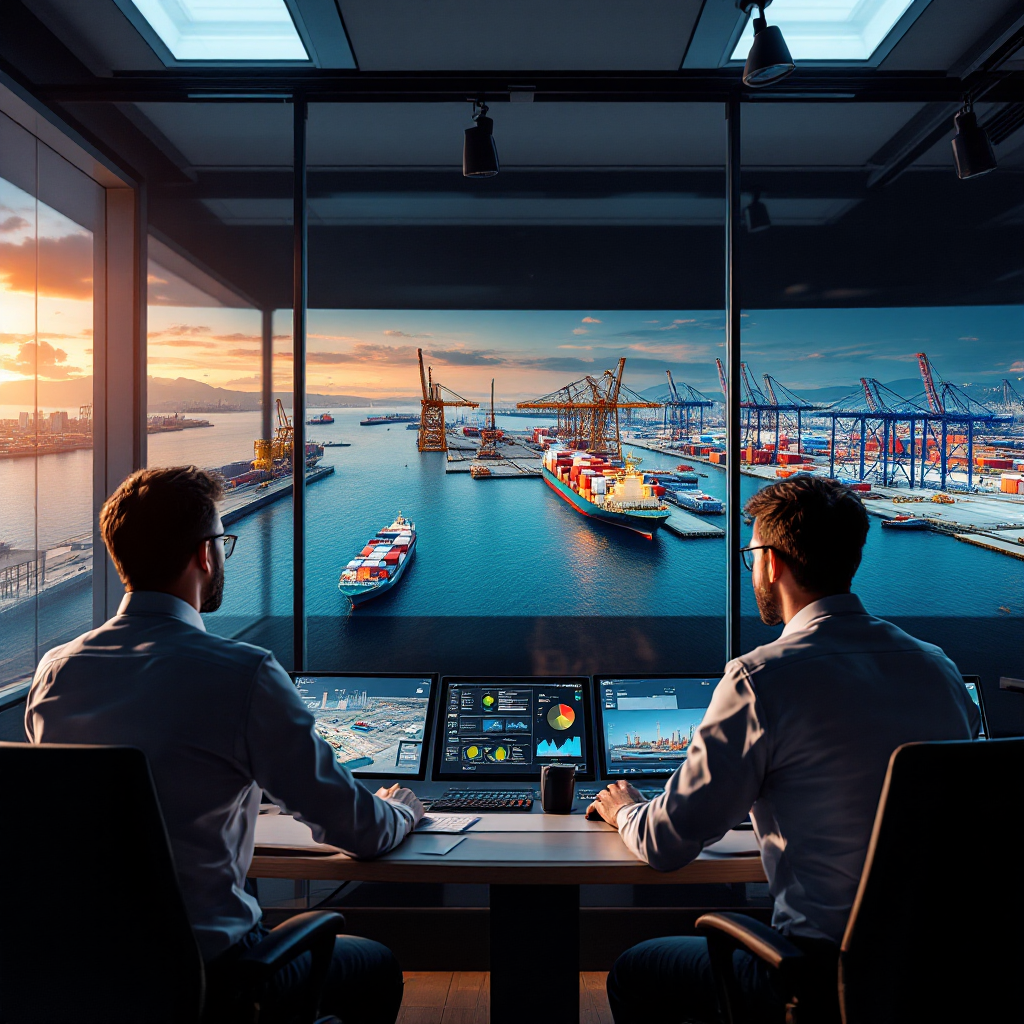
smart port: Mitigate Risks and Enhance Decision Making in Port Logistics
Smart port strategies aim to mitigate risk and enhance decision-making across the terminal ecosystem. They combine AI, digital twins, and semantic data models to create an integrated decision support layer. This layer connects berth planning, crane operations, and yard control. It supports strategic decisions and day-to-day execution. For example, decision support that links vessel unloading with yard availability prevents pile-ups and reduces unproductive container moves. Terminal facilities then run more efficiently and with clearer accountability.
Trust and transparency remain crucial. As one study put it, building trust through explainability increases user understanding and adoption AI for Decision Support: Balancing Accuracy, Transparency, and Trust. Systems should present not only an optimized sequence but also the rationale. That helps the operator confirm safety constraints and check edge cases. Smart port frameworks that embed AI into a transparent workflow gain faster acceptance. They also improve resilience to disruption.
Integration matters too. A smart port that can integrate AI-driven recommendations into its terminal operating system and into automated guided vehicles ensures smooth execution. Semantic models help map data across systems so AI agents can act on consistent information. For terminals planning full digitalization, there are guides on integrating vessel planning and yard planning to unify workflows integrating vessel planning and yard planning. This kind of operational focus aligns with the smart port goal of efficient operations and faster decision making.
Looking forward, deeper AI integration will enable end-to-end automation from berth to yard. That future includes more advanced automated container terminals, improved scheduling methods for quay cranes, and stronger resilience against disruption. Terminals that embrace data-driven practices will see better terminal productivity, lower operational costs, and smoother interactions with shipping lines and the wider supply chain.
FAQ
What is tandem and twin lift planning?
Tandem and twin lift planning refers to coordinating multiple cranes to handle container lifts simultaneously. Tandem lifts use two cranes on one container, while twin lifts handle two containers together. Both approaches aim to increase throughput and reduce berth time.
How does AI improve crane scheduling?
AI processes large volumes of real-time data and past records to identify efficient sequences. It proposes timing offsets and resource allocations that reduce idle time and prevent conflicts. This leads to measurable efficiency gains in many terminals.
Are the efficiency gains from AI proven?
Yes. Research shows AI-enabled planning can raise crane productivity by 15–20% and reduce vessel turnaround times by about 10–12% Efficiency and productivity in container terminal operation. These results depend on implementation and the quality of input data.
What role do digital twins play in lift planning?
Digital twins create a live model of the yard, cranes, and vessels for simulation and what-if testing. They let planners test tandem and twin lift scenarios safely before execution. This reduces risk and improves decision-making speed.
How do terminals build operator trust in AI recommendations?
Trust grows through transparency and explainability. AI systems should show why a plan is optimal and present alternative scenarios. Clear interfaces and confidence metrics help operators validate recommendations AI for Decision Support.
Can AI integrate with existing terminal operating systems?
Yes. AI solutions can connect with terminal operating systems and APIs to push optimized sequences into execution. This reduces manual handoffs and speeds up decision making. Many operators plan such integrations as part of their digitalization roadmap.
Will AI reduce safety at the quay?
No. Properly designed AI respects safety constraints and adds predictive checks to prevent risky sequences. Systems simulate conditions and flag situations where tandem or twin lifts should not proceed. Human operators retain final authority.
How does machine learning differ from traditional scheduling methods?
Machine learning learns from historical data and adapts to new patterns, while traditional methods rely on fixed rules and optimization formulas. ML handles uncertainty and non-linear interactions more effectively in many real-time scenarios.
What are common barriers to adopting AI in terminals?
Barriers include data quality, integration complexity, and operator trust. Terminals also face legacy systems and a need for cloud-based or scalable infrastructure. Addressing these requires a staged rollout and clear governance.
How can small terminals start with AI for lift planning?
Start by capturing clean operational data and piloting decision support on specific berths or shifts. Use simulations to build confidence and integrate with a terminal operating system step by step. For practical implementation steps, see guides on operational readiness and AI rollout in container ports operational readiness strategies.
our products
 stowAI
 stackAI
 jobAI
jobAI
Innovates vessel planning. Faster rotation time of ships, increased flexibility towards shipping lines and customers.
Build the stack in the most efficient way. Increase moves per hour by reducing shifters and increase crane efficiency.
Get the most out of your equipment. Increase moves per hour by minimising waste and delays.
stowAI
Innovates vessel planning. Faster rotation time of ships, increased flexibility towards shipping lines and customers.
stackAI
Build the stack in the most efficient way. Increase moves per hour by reducing shifters and increase crane efficiency.
jobAI
Get the most out of your equipment. Increase moves per hour by minimising waste and delays.