
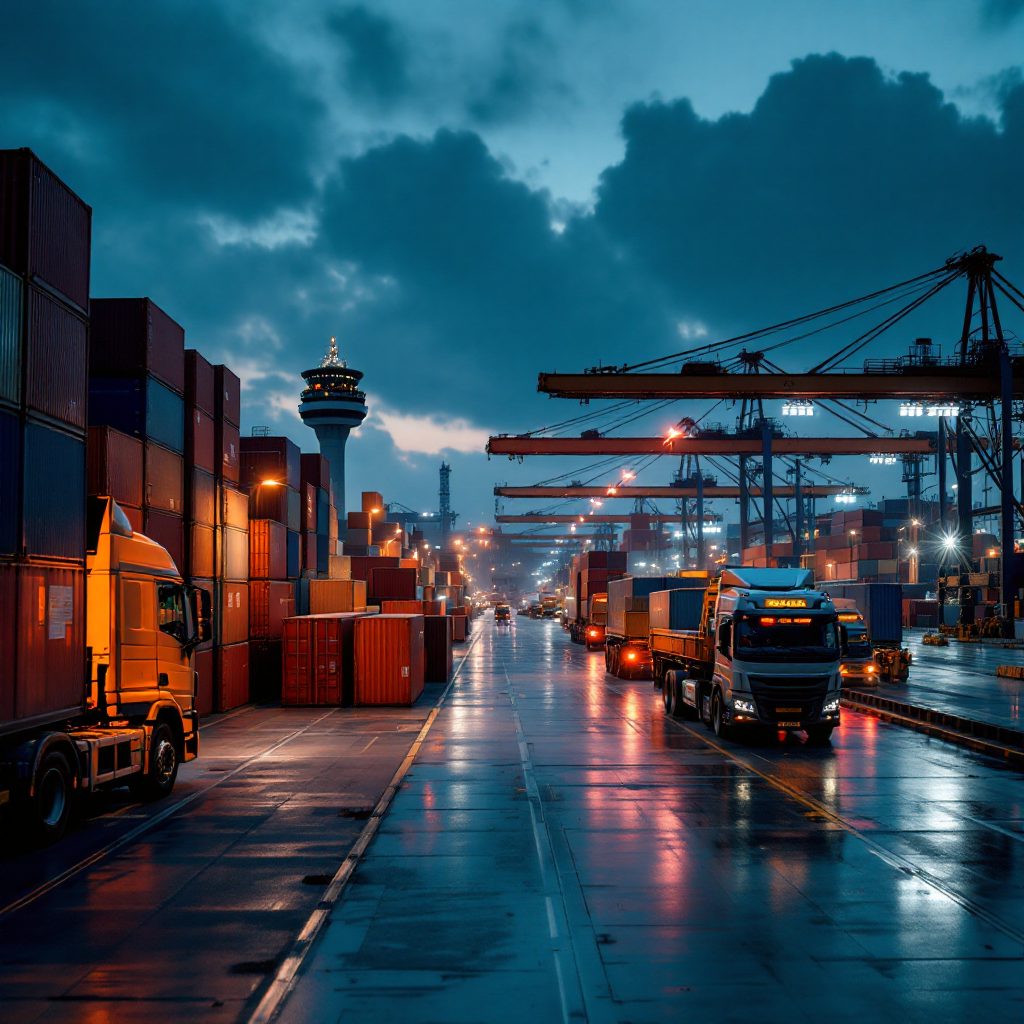
container terminal
The container terminal acts as the hub where ships, trucks and yard equipment meet. First, the yard crane plays a central role in moving containers between berth and storage. Next, space allocation in the storage area determines how fast containers can be found and moved. Therefore, efficient allocation reduces detention, delays and bottlenecks. The complexity rises fast when many container vessels arrive together. For example, different arrival times and mixed loads force dynamic choices about container placement and handling. In practice, the objective is to minimize travel, rehandles and idle time while meeting stowage and safety rules. Thus, an effective algorithm for crane assignment and yard allocation matters a lot.
Container stacking and retrieval create combinatorial complexity. First, stacking cranes and automated stacking cranes may handle multiple types of container. Second, the plan must respect stacking limits and the type of container. Third, the planning process must anticipate arrival time variations. Shortfalls in yard space amplify the difficulty. If the yard crane in a block is not placed correctly, extra moves increase. As a result, yard block boundaries and yard allocation decisions shape throughput.
Inefficient yard planning hurts container terminal throughput and adds cost. For instance, long queues at the berth delay quay crane cycles. Also, extra moves raise energy consumption. Furthermore, longer handling times reduce operational efficiency at the quay and hinterland. Recent studies show automation and algorithm based planning can boost throughput by double-digit percentages; see linked research for details efficiency gains of 15–25%. In addition, ports that optimize allocation see better space utilization and lower emissions smart port development research.
Terminal operators must balance short-term moves and long-term layout. Consequently, planning covers container placement, equipment routing and berth allocation. Also, terminal management must coordinate trucks, cranes and automated guided vehicles. At this point, teams often rely on software that integrates yard planning with quay schedules. For more on integrated planning, see our guide on integrating vessel planning and yard planning in terminal operations.
literature review
The literature review summarizes experiments and field trials in automated container terminal yard planning. First, a comprehensive literature review on yard assembled evidence that automation lifts throughput and reduces costs. Next, studies estimate throughput gains in the 15–25% range for advanced solutions; see quantitative evidence here. In parallel, reports note a reduction in human intervention by up to 40%, which improves safety and consistency Report on Automation and Digital Innovation. The comprehensive literature review on yard also highlights space savings of 10–15% when intelligent allocation guides stacking.
Traditional planning methods rely on exact algorithms and operations research. For instance, linear programming and branch-and-bound can solve small instances. However, real-world yard size makes those exact algorithms impractical at scale. Therefore, heuristic algorithm and metaheuristic strategies often substitute. Evidence shows that heuristic and metaheuristic methods such as genetic algorithm, simulated annealing and tabu search produce strong practical results. Also, model and algorithm hybrids that combine forecasting with optimization are common. For a deep dive into planning methods and software, see next-generation container terminal yard planning software.
A direct comparison of AI-driven approaches versus traditional operations research methods appears across several case studies. AI models improve forecasting of arrival patterns and yard occupancy. Consequently, they feed optimization algorithms with better inputs. In addition, simulation and numerical experiments validate both speed and scalability. For example, numerical experiments often show that the proposed algorithm reduces rehandles and crane idle time. Also, literature review on yard management emphasizes how improved data using digital twins and sensor feeds makes automated stacking and yard allocation more robust.
Drowning in a full terminal with replans, exceptions and last-minute changes?
Discover what AI-driven planning can do for your terminal
algorithm
Heuristic and metaheuristic techniques dominate practical yard optimization. First, genetic algorithm variants encode container placement and crane sequences as chromosomes. Second, tabu search and simulated annealing explore solutions while avoiding local traps. Third, hybrid approaches combine constructive heuristics with local search. This mix reduces compute time and yields high-quality plans for large yards. In the context of the crane scheduling problem, these methods help to allocate tasks across multiple cranes while respecting safety separation and interference constraints. The objective function typically balances moves, makespan and expected rehandles.
Machine learning models complement optimization. For instance, predictive models forecast arrival time and the mix of import container and export loads. As a result, forecasts feed the algorithm and reduce reactive reshuffles. Supervised models and time-series approaches produce better demand profiles. Also, reinforcement learning prototypes learn policies to minimize cumulative delays over many simulated days. In practice, a model and algorithm pipeline pairs forecasting with optimization to create robust plans. This approach shows promise in numerical experiments and field trials.
Digital twin integration enables real-time simulation and adaptive scheduling. First, a digital twin mirrors yard asset states. Then, optimization algorithms evaluate what-if scenarios before committing cranes to sequences. Real-time updates let planners react to equipment failures and late arrivals. For discussion of digital twin use for resilience, see research on resilience assessment Digital Twin for resilience and sustainability assessment. In addition, a proposed algorithm that links digital twins and optimization can adapt to changing demand and help optimize container movements. The entire planning process becomes more proactive and less error-prone.
Implementation requires careful engineering. Data using API layers and telemetry must be reliable. Also, constraint modeling must include stacking limits, handling equipment capacities and safety buffers. In one design, the objective is to minimize travel distance and crane idle time while satisfying stacking height and weight rules. Thus, well-tuned optimization algorithms can solve the planning problem at operational speed. For implementations that focus on equipment task allocation see an example on AI-driven equipment task allocation in container ports.
maritime
Maritime trade growth drives demand for improved terminal capacity. As container flows increase, terminals must scale throughput without proportionate yard expansion. First, more container vessels and tighter schedules increase the pressure on quay crane scheduling and yard allocation. Second, the increase in container volumes requires smarter coordination between berth and yard. Terminal planners therefore seek tools to balance berth allocation with yard moves. For more on berth and yard correlations, see discussions on berth allocation and yard interfaces.
Automated solutions help handle rising container flows. For example, automated container terminal technologies reduce manual tasks and speed handling. In practice, scheduling in automated container environments coordinates cranes, automated guided vehicles and automated stacking cranes. Also, automation supports consistent decision-making during peaks. At the same time, terminals must integrate data across systems to avoid fragmentation.
Environmental benefits are measurable. Reduced crane idle time lowers energy consumption and emissions. In addition, better yard allocation reduces truck circulation inside the port. A green port development plan therefore includes optimization of moves and equipment. Moreover, optimized container placement cuts unnecessary rehandling. Consequently, energy consumption and emissions drop. A recent report highlights that optimizing crane scheduling and yard layouts reduces fuel use and improves sustainability outcomes Report on Automation and Digital Innovation. Thus, maritime container terminals gain both throughput and greener operations.
Drowning in a full terminal with replans, exceptions and last-minute changes?
Discover what AI-driven planning can do for your terminal
maritime container terminals
Terminals using automated crane scheduling report higher efficiency of container terminals. Case studies of leading ports show measurable gains. For instance, synchronized crane scheduling reduces interference and increases gross moves per hour. Data show that automated crane routines can improve crane scheduling efficiency by roughly 18–22% AI Autonomous Container Terminal Operations. In parallel, studies show improved space utilization of 10–15% through smarter stacking and allocation smart container port development. These statistics validate investments in algorithm based planning and in advanced software.
Expert insight adds authority. Dr Li Wei states: “The integration of AI algorithms in container yard planning is transforming port operations by enabling real-time decision-making and adaptive scheduling, which are crucial for handling increasing container volumes efficiently.” This quotation highlights how AI supports decision-making at scale. In addition, the 2024 Report on Automation and Digital Innovation in Port Logistics notes that automated yard planning algorithms “not only improve operational efficiency but also contribute significantly to reducing environmental impacts by optimizing equipment usage and minimizing unnecessary container movements” 2024 Report.
Terminals using coordinated scheduling and digital twins reduce delays during congested calls. For practical resources on yard crane scheduling and dispatching see an applied guide: yard crane scheduling and dispatching in port operations. Also, for vessel-to-yard integration examples, review integrating vessel planning and yard planning in terminal operations. These resources outline how quay crane scheduling ties into yard allocation and truck flows. As terminals modernize, they often pair optimization algorithms with improved telemetry and control systems.
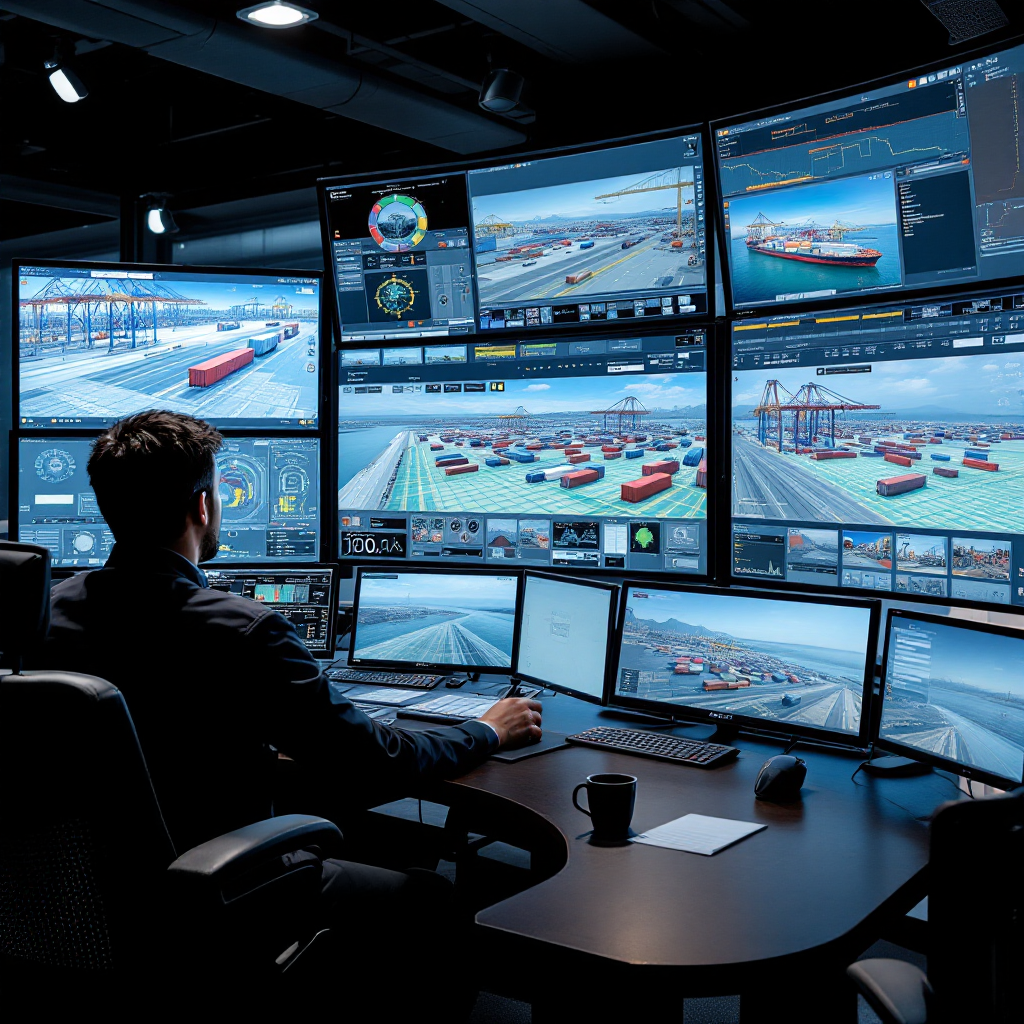
terminal planning
Challenges remain in terminal planning despite algorithmic advances. First, variable arrival times and equipment breakdowns create uncertainty. Second, the planning problem becomes stochastic and multi-objective. Third, data quality often limits model performance. To solve this, researchers explore hybrid models that combine machine learning forecasts with exact optimization and heuristics. These hybrids aim to be robust and fast so planners can react to disruptions.
Hybrid approaches blend strengths. For example, a predictive model estimates arrival time and container mix. Then, an optimization algorithm performs yard allocation and creates crane schedules. This two-stage pipeline reduces reactive reshuffles. In many studies, results show that the proposed algorithm reduces rehandles and waiting time. In addition, numerical experiments support combining machine learning and optimization to solve the planning problem under realistic variance.
Interoperability is critical. Systems must communicate across TMS, WMS and terminal operating systems. Without clean data using standards and APIs, planners struggle to automate the entire planning process. Steps to improve interoperability include standardized messages, data governance and event-driven updates. For practical rollout strategies, consult guidance on operational readiness and real-time job scheduling operational readiness strategies and real-time job scheduling for autonomous equipment in terminal operations. Also, integration with automated guided vehicles and handling equipment must be planned carefully.
Future research directions include robust planning methods that account for the influence of the number of cranes and trucks and that adapt to different port terminal layouts. Also, teams should measure energy consumption and emissions alongside throughput. Finally, terminal operators should test proposed in this paper solutions in pilot areas before wide deployment. This staged approach helps reduce risk and shows that the proposed algorithm can deliver on promised gains while thereby lowering operational costs.
FAQ
What is a yard crane allocation algorithm?
A yard crane allocation algorithm assigns tasks and areas to cranes to move containers efficiently. It balances workload, minimizes travel and prevents crane conflicts while respecting safety constraints.
How do algorithms improve container terminal throughput?
Algorithms optimize sequences and placement, which reduces rehandles and idle time. As a result, they can increase throughput by 15–25% in many studies source.
What role does machine learning play in yard planning?
Machine learning forecasts arrival patterns and yard occupancy. Those forecasts feed optimization engines so that plans are proactive rather than purely reactive.
Are digital twins useful for crane scheduling?
Yes. Digital twins simulate real-time conditions and allow planners to test scenarios before deploying sequences. This reduces risk and improves decision-making research.
Can automation reduce labor at terminals?
Automation can reduce manual intervention significantly; some reports estimate reductions up to 40% report. That improves safety and consistency.
What is the crane scheduling problem?
The crane scheduling problem assigns moves to cranes while preventing interference and minimizing makespan. It is a classic optimization challenge in terminal planning.
How do ports measure success after implementing allocation algorithms?
Ports track metrics like gross moves per hour, container terminal throughput, rehandle counts and energy consumption. Improved figures in those metrics indicate successful deployment.
What integration is needed for real-time planning?
Integration requires clean data flows from TMS, WMS and quay systems, plus APIs for telemetry. Good interoperability enables timely updates and adaptive scheduling.
Are there environmental benefits to optimizing yard allocation?
Yes. Better allocation and optimized container movements reduce truck idling and unnecessary crane cycles. Consequently, energy consumption and emissions decline.
How can smaller terminals adopt these solutions?
Start with pilot projects and focus on data quality. Use hybrid models that scale and test with numerical experiments before full rollout. Also, tools that automate operational emails help planners focus on strategy rather than clerical work.
our products
 stowAI
 stackAI
 jobAI
jobAI
Innovates vessel planning. Faster rotation time of ships, increased flexibility towards shipping lines and customers.
Build the stack in the most efficient way. Increase moves per hour by reducing shifters and increase crane efficiency.
Get the most out of your equipment. Increase moves per hour by minimising waste and delays.
stowAI
Innovates vessel planning. Faster rotation time of ships, increased flexibility towards shipping lines and customers.
stackAI
Build the stack in the most efficient way. Increase moves per hour by reducing shifters and increase crane efficiency.
jobAI
Get the most out of your equipment. Increase moves per hour by minimising waste and delays.