
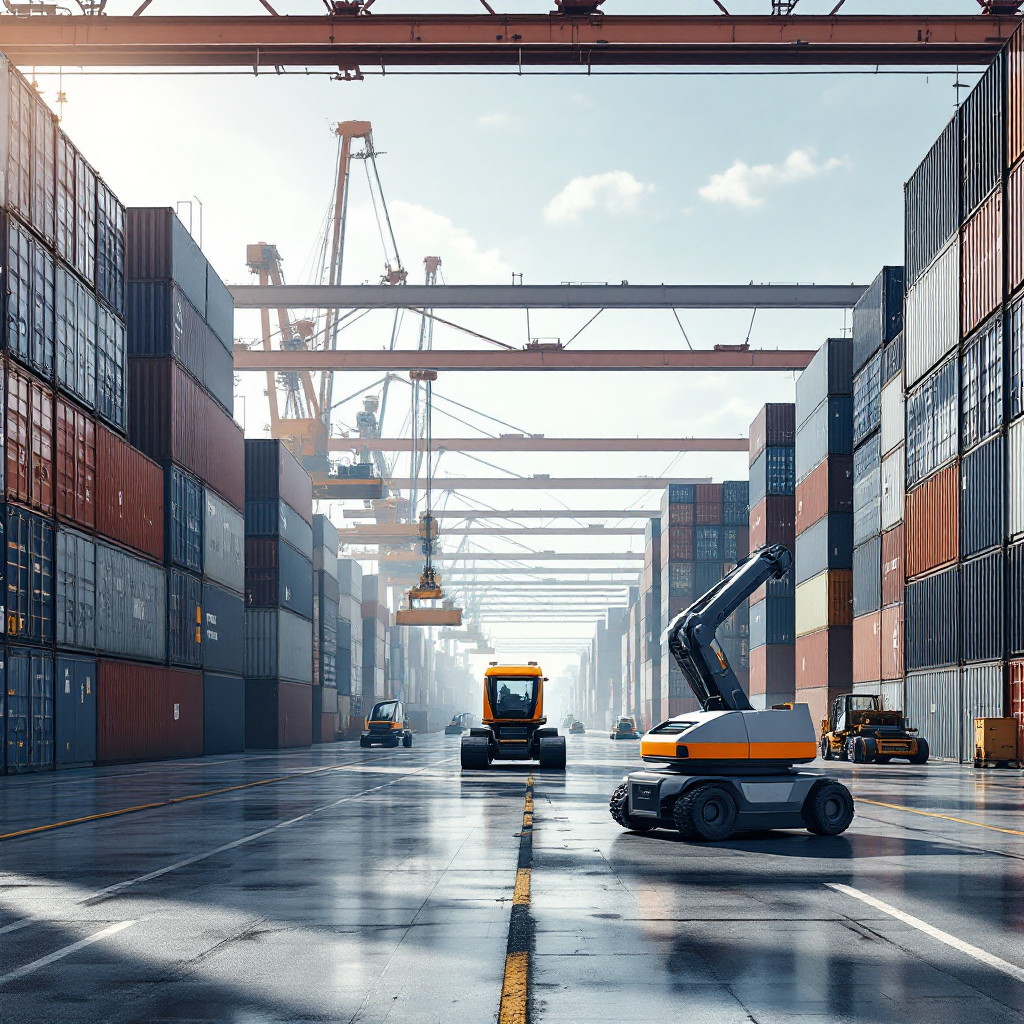
Terminal Automation in Modern Port Container Operations
Terminal automation transforms how a port manages container flows, and ABB’s role matters in that shift. ABB provides high-precision stacking crane designs and control suites that fit into fully automated terminals and into hybrid landside interfaces. These systems allow ASCs to receive pick-and-drop commands, to coordinate with AGV schedules, and to report diagnostics in real time. The result is a smoother container movement path from quay to yard and from yard to gate.
Across automated terminals, research shows clear gains. For example, optimized stack shuffling and automated housekeeping routines can deliver a 30–40% increase in yard space utilisation. Related studies report up to a 25% reduction in delays from automated routines. These numbers link directly to faster berth cycles and reduced berth occupancy. Ports and terminal operators can plan vessel calls with more certainty as a result.
Integration matters at the system level. A terminal operating system must be the core orchestrator. It accepts inputs from quay crane planners, from AGV dispatchers, and from ASCs. Systems then schedule container handling tasks to minimize reshuffles and to keep cranes productive. For more on how quay scheduling and sequencing supports this, see our guide on quay crane sequencing (optimizing quay crane operations with container sequencing software).
Real-time data feeds change decision speed. IoT sensors, RFID tags, and camera analytics deliver position updates and health metrics. Those feeds enable condition-based maintenance, which helps ABB cranes remain online more often. Virtual simulation and digital twin models allow terminal managers to test new stacking policies before applying them in the yard. For reading on digital twins in port operations, follow this primer (the power of digital twin technology).
Finally, software and hardware integration reduces human error and lets terminal operators focus on exceptions. Systems automate routine container handling tasks and route complex exceptions to human supervisors. When a terminal integrates cranes, AGVs, and a terminal operating system, it becomes possible to manage container volumes more predictably. This predictability supports higher throughput and better berth planning.
Container Stacking and Stack Shuffling via Automated Crane Systems
Automated stacking cranes apply deterministic logic to container stacking and to stack reshuffles. Each crane executes moves using a plan that groups like-sized boxes and separates high-turn containers from long-stay boxes. The stacking strategy reduces the need to move one container multiple times. It also reduces congestion in container blocks and simplifies retrieval for the next quay crane unload cycle.
AI-driven stack shuffling routines add a predictive layer. By estimating departure times and by forecasting yard congestion, the system schedules reshuffles when the impact on crane cycles is minimal. Studies indicate that such AI routines can cut unnecessary moves by roughly 20%. That reduction improves crane utilisation and lowers stacking cost across the yard. In practice, ASCs execute precise trajectories and align lifts to millimetre tolerances. Precision reduces equipment wear and enhances safety in the container yard.
Automated container processes also change how a crane interacts with payloads. Sensors on the spreader read twistlock status and container weight and then feed that data back to the control system. The crane compensates for sway and optimises hoist acceleration. Those micro-optimisations shorten cycle times while protecting structural components. They also reduce the frequency of human intervention during load or unload sequences.
Coordination between quay crane and ASC movements matters when balancing flows. A well-timed handover from quay crane to ASC means fewer idle minutes and fewer tugbacks. That coordination depends on a clear interface between the quay planner and the yard handling system. If you want to explore AGV coordination and job prioritisation, this deep dive is useful (AGV job prioritization for import and export flows).
Beyond motion control, stacking logic must consider stacking capacity and stacking policies. Proper layering of containers lowers the probability of blocking moves and keeps turnover slots available for urgent calls. For terminals handling high container volumes the difference is measurable. In practice, combining deterministic stacking rules with AI scheduling yields the best outcomes for both space and safety. The use of automated stacking cranes, as a single phrase, captures how the physical crane and the control software come together to solve stacking problems at scale.
Drowning in a full terminal with replans, exceptions and last-minute changes?
Discover what AI-driven planning can do for your terminal
Optimising the Container Terminal Stack with Heuristic Methods
Heuristic methods help teams decide which containers to reshuffle and when to reshuffle them. These rules reduce computation time and often provide near-optimal solutions for large yards. Common heuristics include grouping by destination, by departure window, and by container type. Heuristics also govern how to split container blocks to keep high-turn lanes accessible. When a terminal applies these guidelines, overall stacking cost falls.
Comparing rule-based heuristics to machine-learning approaches highlights trade-offs. Rule-based heuristics are predictable and explainable. They fit well when terminal operators need clear decision trails. Meanwhile, machine learning adapts to changing patterns in container flow and to seasonality in container volumes. Combining heuristics with reinforcement learning or with dynamic programming provides a hybrid path that balances explainability and adaptability.
Research and field reports support measurable gains from smarter stack allocation. For instance, some terminals see a 15–35% reduction in handling costs when they optimise container blocks and reshuffle strategies. Practices that reduce blocking moves also reduce the need for one container to be moved multiple times.
Using heuristics helps in solving the container stacking problem under time constraints. When the yard must respond to a late-arriving vessel or to sudden weather disruptions, faster heuristic decisions beat slow exact solvers. That speed becomes essential when a terminal needs to maintain throughput during peak windows.
For operators, the choice of method affects staffing and equipment deployment. Heuristic-driven schedules often lead to steadier workload for cranes and fewer peaks for landside transfers. That steadiness improves the lifespan of handling equipment and supports predictable maintenance windows. Terminal operators can then plan mechanic shifts and spare parts accordingly. For terminals considering retrofits, our coverage of smart port retrofits provides useful tactics (retrofitting manual container ports).
AI-driven Operations Research for Stack Shuffling
AI models now predict yard congestion and recommend optimal reshuffle timing. These models consume data from the terminal operating system, from IoT devices, and from external sources such as truck arrival predictions. The models then estimate the expected cost of reshuffles versus the cost of delayed retrievals. This cost-based framing aligns decisions with commercial priorities.
Simulations and digital twins let teams test shuffling strategies without disrupting live operations. Planners can run thousands of scenarios to compare stacking strategies under different container volumes and berth schedules. Digital twins also let engineers tune stacking policies and observe impacts on throughput. They replicate both equipment behaviour and human-in-the-loop responses so teams can validate safety constraints.
Dr Chung-Yee Lee explains that predictive management shifts practices from reactive to anticipatory. His research stresses that proactive reshuffle schedules cut idle time and improve safety by reducing last-minute moves (Chung-Yee Lee on predictive management). AI-driven operations research uses those insights to sequence moves across multiple cranes and to balance workloads. In many automated container terminals, reinforcement learning and simulation-based planning co-exist to achieve both robustness and responsiveness.
AI also supports exception handling. When an unexpected vessel delay or gate surge occurs, the system ranks reshuffle actions by urgency and by downstream impact. That ranking helps human supervisors accept or override recommendations quickly. Teams that use focused email automation for operations can apply a similar tactic: let AI resolve routine exceptions and route the rest to humans with full context.
Finally, AI reduces empty travel and crane idle time by creating consolidated move plans. Those consolidated plans reduce the total number of container movements and improve equipment utilisation. Operators who combine AI planning with robust heuristics tend to see the best balance of prediction accuracy and operational safety.
Drowning in a full terminal with replans, exceptions and last-minute changes?
Discover what AI-driven planning can do for your terminal
Integration of ABB Cranes in Port Container Terminal Automation
ABB brings features that many terminals need. The company supplies cranes with high-precision motion control, embedded IoT sensors, and remote diagnostics. Those capabilities let engineers detect abnormal vibrations, to predict component wear, and to schedule maintenance without disrupting the quay. With sensor data streamed into a terminal operating system, maintenance windows become shorter and vessel operations become more predictable.
AGV and ASC coordination is essential for smooth handovers. ABB cranes can accept AGV approach vectors and adjust pick timing to match AGV arrival. This handshake lowers the risk of idle time at the quay and reduces the number of times a container must be rehandled in the yard. The interface between quay crane planning and yard execution must be reliable to achieve these gains. For deeper guidance on yard density and prediction using machine learning, see this resource (container terminal yard density prediction using machine learning).
Case studies show notable uplifts. One major EU port reported vessel turnaround time cut by about 25% after integrating ABB cranes and synchronising AGV schedules with a central terminal operating system. This improvement derived from fewer waiting cycles, lower crane idle time, and faster handovers at the berth. The same integration also reduced stacking cost by minimising redundant container relocation.
ABB’s remote diagnostics also connect to broader asset-management platforms. Those platforms aggregate crane data with equipment logs, with maintenance records, and with yard sensor inputs. The aggregated view supports condition-based maintenance and parts ordering. For terminals aiming to automize further and to minimize downtime, combining this data with predictive maintenance workflows pays off.
In practice, the integration requires careful testing. System vendors, terminal operators, and hardware makers must validate control logic, safety interlocks, and emergency stop sequences. Successful deployments blend ABB hardware with reliable software stacks and with clear training for operators. When done right, the terminal reaches higher productivity, lower handling costs, and a safer workplace for everyone.
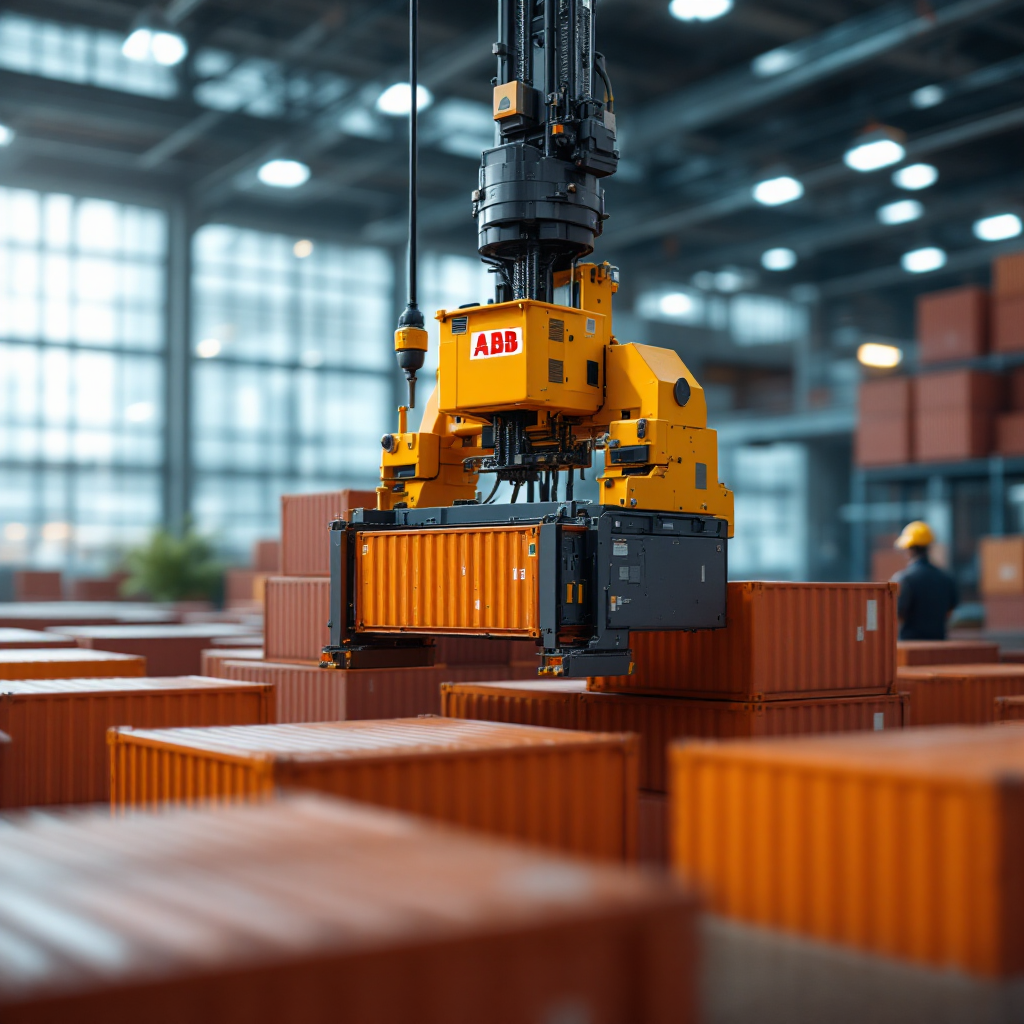
Automation for Container Terminal Housekeeping and Port Productivity
Housekeeping covers yard maintenance, container repositioning, and routine safety checks. Good housekeeping reduces trip hazards, keeps equipment accessible, and prevents small issues from becoming major incidents. That single practice drives higher throughput and reduces unplanned stoppages at the quay and in the landside flows.
IoT and RFID tracking enable continuous housekeeping decisions. Sensors detect misplaced containers and inform scheduling modules to reschedule minor repositioning during slack periods. RFID updates and yard cameras help the terminal operating system maintain an accurate map of the container yard. That accuracy supports both automated container handling and manual interventions when needed.
Automation can also minimize administrative friction. For example, terminals receive frequent emails about exceptions, gate times, and documentation mismatches. The result is faster resolution and consistent records that tie back to the terminal operating system.
Across automated terminals, the combined impact is tangible. Studies show improved yard space utilisation and lower handling costs when housekeeping and shuffling routines run under a single orchestration model (container terminal automation assessment). Properly implemented, these practices yield higher throughput, reduced environmental footprint from fewer moves, and longer equipment life.
To maintain the gains, terminal teams must keep data fresh and interfaces clean. Clear integration points between cranes, AGVs, and the terminal operating system prevent misrouted moves. Regular audits of stacking policies and of container storage assignments identify opportunities to improve stacking strategies. Operators who commit to continuous improvement will keep handling costs down and will keep service levels high for shipping lines and for landside partners.
Automation will not remove human judgement. Instead, it will shift human effort toward exceptions, strategy, and safety oversight. When people and machines work in concert, the terminal can deliver more predictable operations and can support the global flow of goods with greater resilience. For terminals evaluating upgrades, reviewing automated terminal case studies and AGV prioritisation strategies can point to practical next steps (automated terminal case studies and guidance).
FAQ
What is the role of ABB in terminal automation?
ABB supplies high-precision cranes and control systems that integrate with terminal operating systems. These products support remote diagnostics, IoT monitoring, and precise crane motion to improve container handling efficiency.
How much can automation improve yard space utilisation?
Studies report yard space utilisation improvements in the range of 30–40% with optimized stack shuffling and automated housekeeping (research source). The gains depend on terminal layout and on the quality of integration between equipment and software.
What is stack shuffling and why is it important?
Stack shuffling rearranges containers in the yard to reduce blocking and to make retrieval faster. Good shuffling reduces unnecessary moves and keeps cranes productive, which lowers handling costs and improves berth scheduling.
Do AI methods outperform rule-based heuristics for stacking?
AI methods adapt to changing patterns and can outperform simple rules in volatile conditions. However, heuristics are fast and explainable, so a hybrid approach often yields the best, most reliable results.
How do ASCs coordinate with AGVs?
ASCs use an interface to accept AGV arrival times and planned pick-up vectors. Proper coordination reduces idle time at the quay and the yard and improves transfer throughput.
Can automation reduce vessel turnaround time?
Yes. Case studies show vessel turnaround times reduced by about 25% when cranes, AGVs, and the terminal operating system work in concert (case study). That outcome results from fewer delays and faster handovers.
What is the value of digital twins in stack shuffling?
Digital twins let planners simulate strategies without risking live operations. They help compare stacking policies and to validate safety constraints before changes go into production.
How does housekeeping affect port productivity?
Housekeeping reduces equipment downtime and lowers the frequency of emergency moves. Continuous housekeeping decisions based on IoT data keep handling operations smooth and predictable.
What are common challenges when automating a terminal?
Integrating AI-driven shuffling with legacy systems and ensuring data accuracy are common challenges. Balancing automated routines with human oversight for exceptions is also necessary for safe and resilient operations.
How can email automation help terminal operations?
Automated email agents can triage operational messages, draft responses using ERP and TMS data, and escalate only when necessary. This reduces triage time and keeps teams focused on physical yard and crane issues.
our products
 stowAI
 stackAI
 jobAI
jobAI
Innovates vessel planning. Faster rotation time of ships, increased flexibility towards shipping lines and customers.
Build the stack in the most efficient way. Increase moves per hour by reducing shifters and increase crane efficiency.
Get the most out of your equipment. Increase moves per hour by minimising waste and delays.
stowAI
Innovates vessel planning. Faster rotation time of ships, increased flexibility towards shipping lines and customers.
stackAI
Build the stack in the most efficient way. Increase moves per hour by reducing shifters and increase crane efficiency.
jobAI
Get the most out of your equipment. Increase moves per hour by minimising waste and delays.