
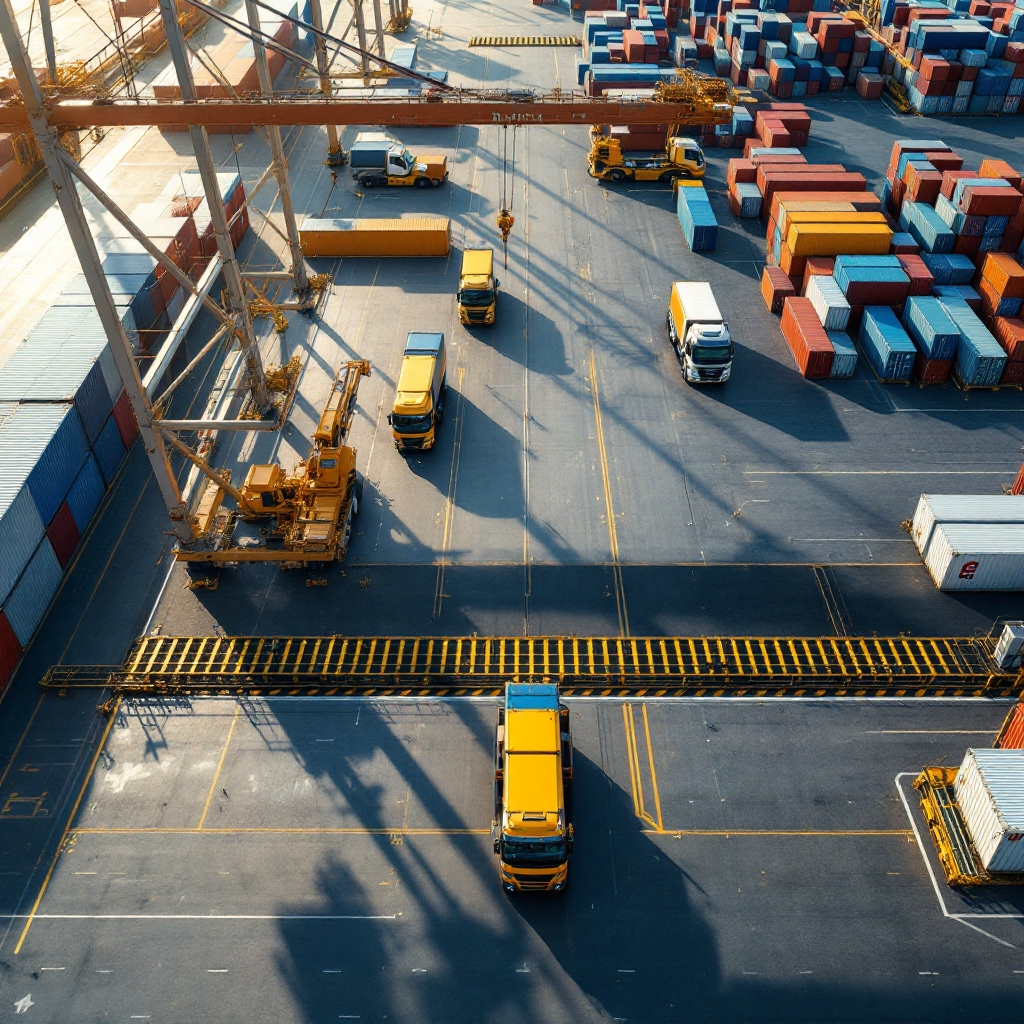
Bottleneck in container terminals
Ports face a common bottleneck that slows the flow of boxes and increases costs. First, vessel turnaround time dominates daily rhythm at the quay. Second, yard congestion creates stacking conflicts and extra moves. Third, gate delays generate long truck queues and idle labour. Together these constraints reduce throughput and raise operational costs. For example, reducing vessel turnaround time by 10% can raise throughput by about 8%; this estimate comes from comparative studies of terminal performance and berth management showing the link between time on berth and terminal throughput. Consequently, small time savings scale into significant gains.
To identify pinch points quickly, terminals now combine simulation models with real-time monitoring. Simulation helps visualise sequences of moves and test alternative berth allocations. Real-time monitoring then validates model outputs and highlights variance. For instance, quay and yard telemetry can show how trucks wait at gates and where cranes accumulate idle time. As a result, teams can reduce the amount of time that vessels spend at berth. Next, diagnostic dashboards translate raw telemetry into action items for the operator. For example, a berth planner will reassign a crane to a high-density bay within minutes when data shows an emerging backlog.
Importantly, human workflow matters as much as hardware. Clear roles for planning, dispatch and gate teams reduce friction. Also, better email and task automation reduces time spent on routine coordination. Finally, regular measurement matters. Use short-cycle tests. Measure impact. Then repeat. This continuous loop helps the port and terminal improve operations incrementally.
Optimise terminal activities with automation and stacking strategies
Automation can reshape the way a terminal assigns tasks and uses space. Automated equipment such as automated stacking cranes, automated guided vehicles and smart yard planners cut manual handoffs and limit human error. For example, terminals that adopt automation and big data showed double-digit productivity gains in recent operational studies reporting faster container handling after equipment upgrades. Thus, automation reduces dwell and increases steady moves per hour.
Stacking strategies deserve clear choices. Block stacking saves space but raises reshuffle moves. Row stacking eases retrieval but consumes area. Dynamic slot planning balances density and accessibility by adapting stacks to vessel call profiles and truck arrivals. Use container stacking rules that group goods by service and dwell time. Also, train planners to apply tactical slots for high-turn containers and reserve deep stacks for long-stay boxes. These actions cut reshuffles and improve crane productivity quickly.
Resource scheduling must link cranes, trucks and maintenance. Crane assignment should follow predicted berth workload. Truck dispatch needs time windows that align with quay rates. Maintenance slots must appear in daily schedules so that equipment downtime is predictable and short. Many terminals now use decision-support systems for yard planning; those systems integrate slotting logic and dispatch rules, and they save planner time while reducing unnecessary moves. For more on yard planning decision support, see an example of container-terminal yard planning tools yard planning decision support. Additionally, terminals should consider replacing single-point manual handoffs with API-driven schedules and dashboards. Finally, regular audits of stacking tactics and equipment mix, including straddle carriers where used, keep operations lean and responsive.
Drowning in a full terminal with replans, exceptions and last-minute changes?
Discover what AI-driven planning can do for your terminal
Improve container terminal productivity in marine terminal operations
Marine terminal performance improves when data and process come together. Big data analytics supports predictive maintenance, demand forecasting and shift-by-shift tasking. For example, data science helps predict crane failures and schedule pre-emptive checks, which reduces unscheduled downtime and keeps moves steady. As one expert put it, “Data science enables us to anticipate bottlenecks before they occur, allowing for proactive management rather than reactive fixes” according to an operational performance evaluation. Therefore, analytics turns noise into a timed action plan.
Process integration matters too. Synchronise quay, yard and gate workflows so that a vessel’s plan maps cleanly to yard allocation and truck windows. Integrated terminal systems tie vessel scheduling to yard stacks and gate slots, and studies show integrated approaches reduce dwell times and increase throughput by meaningful margins. To optimise the flow further, use real-time job scheduling for autonomous and manned equipment. This reduces idle cycles and improves crane productivity during peak windows. For an approach to AI-driven task allocation, explore research on equipment-level decision support AI-driven equipment task allocation.
Layout tweaks yield fast wins. Small changes in lane width, reefer placement and block depth often cut reposition moves. Research indicates that optimising equipment scheduling and layout can reduce container dwell time by up to 30% when combined with better dispatching and yard rules according to reviews of terminal optimisation. Consequently, managers should run controlled experiments that compare alternative layouts, and then lock in the best options. Overall, marrying data with disciplined process raises container handling rates and improves the operational resilience of the marine terminal.
Integrated logistics and carrier strategies at maritime terminal hubs
Coordination with carriers and hinterland partners reduces wasted moves and improves port efficiency. Gate appointment systems and truck scheduling convert ad hoc arrivals into predictable flows. A robust appointment system limits gate peaks and spreads the load across shifts. For more on truck appointment tools and planning, see AI-enhanced truck appointment systems for terminals that integrate arrivals and gate capacity. As a result, dock labour and gate teams face fewer spikes and fewer backups.
Carrier collaboration increases visibility. Shared portals give terminals and carriers real-time vessel updates and ETA adjustments. This helps carriers slot trucks and feeder services more accurately, and it helps the terminal balance quay cranes and yard lifts to match the actual arrival profile. When carriers share stow and ETA changes early, the terminal can adapt stacking priorities and reduce reshuffles. This kind of openness improves carrier satisfaction and helps the terminal keep steady throughput.
Hinterland links complete the loop. Rail, road and feeder integration must match terminal capacity. Timetables and berth windows should align with rail departure slots and road networks, so that containers exit the yard promptly. Different modes of transport need common data standards and shared planning tools. For terminals that link to inland networks effectively, truck dwell time and yard congestion drop, and shipment predictability rises. Finally, forging regular operating agreements with major carriers and hinterland operators makes traffic smoother and reduces the need for costly ad hoc moves.
Drowning in a full terminal with replans, exceptions and last-minute changes?
Discover what AI-driven planning can do for your terminal
Enhancing productivity through terminal management
Strong terminal management turns plans into repeatable results. KPI dashboards provide real-time tracking of moves per hour, crane utilisation and gate queue length. Use clear indicators that operators trust. Display them on shift screens and review them in short management huddles. When operators see metrics clearly, they make faster, aligned decisions.
Continuous skill development increases operator flexibility and reduces errors. For example, cross-training crane operators and yard supervisors helps the team react when a crane goes offline. In parallel, automation of routine communication prevents wasted cycles. This reduces time spent on low-value routing and triage, and it frees staff to focus on operational exceptions.
Maintenance planning must move from reactive to predictive approaches. Predictive maintenance uses sensor data and trend models to schedule service before failures occur. This saves emergency repairs and shortens downtime for quay cranes and other critical equipment. Also, schedule maintenance during low-impact windows to preserve operational momentum. Use digital checklists, and track parts and labour availability in one place. By integrating maintenance into daily job scheduling, teams raise equipment productivity and avoid cascades of delays. Finally, combine these measures into a culture of continuous improvement where small gains in operator efficiency and equipment uptime add up to measurable port performance increases.

Conclusions and future research directions for container terminal productivity
Combining automation, smart stacking and disciplined management produces clear gains. First, automation reduces manual handoffs and increases steady container handling rates. Second, stacking strategies and layout changes cut reshuffles and free crane time. Third, integrated systems and better carrier coordination smooth flows and reduce congestion. Together these measures drive productivity improvement across the terminal in measurable ways. For instance, big data and automation have yielded 15–25% gains in trials, while optimised equipment use can cut dwell by up to 30% in practice according to operational evaluations and industry reports. Therefore, putting these levers together matters more than any single upgrade.
Looking ahead, several trends deserve attention. AI-driven operations and digital twins support faster, safer decisions and continuous replanning. At the same time, greener energy sources for quay cranes and yard trucks reduce emissions and often lower operating cost over the long run. Researchers should also measure sustainability alongside throughput, and they should include resilience metrics for supply chain shocks.
Finally, managers should consider work that tests system-level trade-offs. For example, how does deeper stacking affect crane productivity under different call patterns? What mix of automation and human oversight gives the best return for a mid-sized seaport? Future research directions should include empirical tests of those questions and the development of real-time optimisation tools that link berth, crane and yard plans. To improve operations now, many ports can adopt digital job scheduling and task allocation tools and then monitor gains. Taken together, these steps will help ports improve container terminal productivity and adapt to rising global container throughput while keeping operations resilient and efficient. The documented shift toward automation will continue to change how operators plan work and allocate resources.
FAQ
What are the main constraints that slow container terminals?
Vessel turnaround, yard congestion and gate delays are the most common constraints. Each one creates knock-on effects that increase moves per container and raise operational costs.
How much can reducing turnaround time improve throughput?
Studies show that a 10% reduction in vessel turnaround can increase throughput by roughly 8% according to terminal performance analyses. The gain depends on how efficiently the yard and gate absorb the faster quay rhythm.
Do automated systems really increase container handling rates?
Yes. Terminals that adopt automation and data-driven decision-making have reported productivity gains in the mid-teens to low twenties percentage range per operational studies. These gains come from fewer errors and more predictable cycles.
What is the role of stacking strategies in yard efficiency?
Stacking strategies determine how much reshuffle work the yard will need. Block stacking raises density at the cost of extra moves. Dynamic slot planning balances density with accessibility and reduces unnecessary reshuffles.
How can carriers and terminals improve coordination?
Use shared visibility portals and early stow updates so both sides can adapt plans. Gate appointment systems and agreed windows help spread truck arrivals and reduce peaks, which improves the port and terminal flow.
What maintenance approach works best for quay cranes?
Predictive maintenance based on telemetry and trend analysis reduces unscheduled downtime. Schedule repairs during low-impact windows and keep maintenance data integrated with job scheduling for best results.
Can smaller ports benefit from these strategies?
Absolutely. Mid-sized terminals often achieve high returns from software, better stacking rules and modest automation because they can tune processes faster. Practical pilots reduce risk before wider roll-out.
Continuous skill development raises operator flexibility and reduces mistakes. When staff understand new tools and procedures, the terminal converts technology investment into steady performance gains.
What digital tools should a terminal consider first?
Start with yard planning decision support, truck appointment systems and real-time job scheduling for equipment. These tools give quick wins and form the foundation for more advanced AI-driven optimisation.
Where can I learn more about applied AI for terminal tasks?
Explore resources on AI-driven equipment allocation and yard planning. For practical examples of AI tools that support job scheduling, see research on equipment task allocation and yard planning decision support AI-driven equipment task allocation and yard planning decision support.
our products
 stowAI
 stackAI
 jobAI
jobAI
Innovates vessel planning. Faster rotation time of ships, increased flexibility towards shipping lines and customers.
Build the stack in the most efficient way. Increase moves per hour by reducing shifters and increase crane efficiency.
Get the most out of your equipment. Increase moves per hour by minimising waste and delays.
stowAI
Innovates vessel planning. Faster rotation time of ships, increased flexibility towards shipping lines and customers.
stackAI
Build the stack in the most efficient way. Increase moves per hour by reducing shifters and increase crane efficiency.
jobAI
Get the most out of your equipment. Increase moves per hour by minimising waste and delays.