
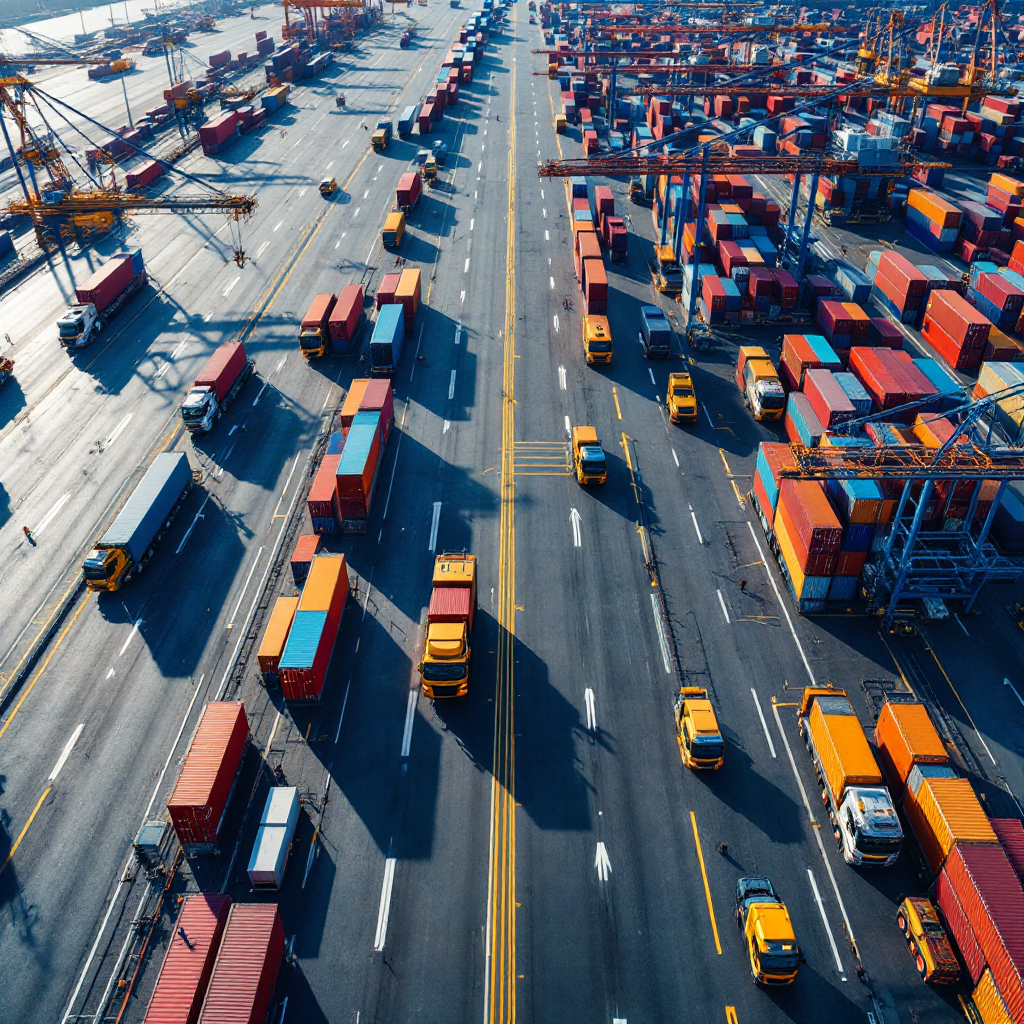
port: importance of yard density prediction
Yard density measures how tightly containers pack into a terminal yard at a given moment. First, yard density defines space utilisation and stacking strategy for a modern port. Second, it links directly to how terminal resources get scheduled and how trucks and container ship operations flow through the gate. Accurate prediction supports layout decisions and real-time moves. An accurate prediction can cut needless reshuffles and speed up quay cycles. However, inaccurate forecasts create wide problems. Congestion rises, crane productivity drops, and handling times climb. For example, research shows LSTM-based forecasting can improve yard occupancy forecasting by up to 15% compared with baseline methods, a notable gain for busy ports [MDPI study]. Therefore, terminals that ignore density forecasts risk slower throughput and higher cost per TEU.
Yard density affects container stacking and retrieval priority. In a high-density scenario, planners must balance container stacking depth against expected retrieval patterns. Consequently, the container relocation problem gets worse as stacks grow. Also, high yard density increases the chance of extra container relocations and longer dwell times. Predict container demand and flow, and you shorten queues and reduce extra moves. A robust predictive model supports that demand-side planning. In practice, terminal operators use yard density estimates for berth allocation, quay crane sequencing, and truck appointment windows. For readers who want operational examples, see an overview of optimizing container stacking for yard operations at container terminals that links stacking rules with density predictions optimizing container stacking for yard operations.
Finally, yard density has a direct link to port throughput. When density is balanced, containers move efficiently from ship to truck or rail. If density is skewed, quay productivity and yard productivity both fall. Thus, yard density prediction is not an isolated KPI. Instead, it is a central lever to improve PER-VEHICLE processing, reduce container dwell time, and raise overall terminal throughput. Transitioning from manual rules to data-driven forecasts brings gains. For that reason, many modern port terminals experiment with machine learning methods to forecast density and guide resource allocation.
container terminal: operational data and constraints
Operational data fuels any predictive work in a container terminal. Sources include arrival schedules, yard layout maps, equipment logs, gate timestamps, and vessel berth plans. Also, terminal operating systems and crane telemetry produce continuous streams. Arrival time and arrival time prediction for vessels or trucks matter a great deal. For example, accurate vessel arrival time forecasts tighten stacking windows and cut unexpected congestion. Terminal operators depend on gate-in times, container arrival records, and container movements logged in the terminal operating system to build usable datasets.
Spatial constraints matter as much as temporal ones. Storage lanes, bay widths, and maximum stack heights limit how containers can be placed. Also, the location of specific import containers and export containers alters retrieval sequences. Therefore, planners must map stacking policies to yard geometry. In practice, this leads to combinatorial rules that traditional forecasting tools struggle to capture.
Traditional statistical forecasting methods show shortcomings under these constraints. Simple time-series rules and linear models cannot account for nonlinear interactions between layout, equipment availability, and arrival bursts. For example, peak arrivals during a short window can create localized high density that a linear model smooths away. As a result, the model understates short-term congestion. This leads to more container relocations and missed quay windows.
To overcome these limits, terminal teams now use richer feature sets and tailored learning approaches. Feature selection often includes gate queue lengths, crane idle rates, planned container loading lists, and container size mixes. Clean data matters. Missing timestamps, mis-tagged container IDs, and inconsistent logs must be fixed before training. Practical guidance and techniques for aligning stacking heuristics with AI-driven prediction are available in an applied guide to AI for yard operations optimizing container stacking in terminals.
Optimize Beyond Your Best Day
Most AI copies the past. Loadmaster.ai uses Reinforcement Learning to simulate millions of scenarios, delivering higher crane productivity and fewer rehandles without needing historical data.
Learn how StowAI, StackAI, and JobAI superpower your terminal →
container port: managing throughput and congestion
High yard density reduces container flow and harms quay productivity. When stacks become deep, cranes need more repositioning, and trucks wait longer. Quay cranes see lower moves per hour. Therefore, every minute of additional dwell time multiplies across cranes and trucks. The cost implications are real. Studies report that better yard allocation and real-time policies can reduce container dwell time by about 12% when ML and queuing theory are combined [Real-time policy study]. That reduction translates into millions saved at scale for major container ports.
Additionally, congestion increases container relocations. More relocations mean higher fuel use, extra equipment wear, and longer berth times. A recent multi-layer stacked ensemble model achieved 90.76% accuracy for container relocation counts, proving that forecasting can directly reduce unnecessary moves [Frontiers study]. Thus, density forecasts become a planning tool. Planners use them to schedule reshuffles, assign yard cranes, and set truck appointment windows. Effective forecasts help optimize container loading and unloading sequences and ensure faster quay cycles.
Cost is also operational. Congestion increases demurrage and detention exposure for shippers. It raises labor overtime and equipment rental. Therefore, better forecasts lower operating cost per TEU and improve ship turnaround. Also, forecasting supports capacity decisions like when to open additional storage yard modules or when to shift export containers toward buffer lanes. For practical integration, ports can link prediction outputs into yard dispatch systems and terminal operating systems. For example, readers may explore quay crane sequencing and container stowage planning to see how predictive inputs reshape quay-side work optimizing quay crane operations with container sequencing software.
machine learning predictive model: architectures and methods
Machine learning offers multiple architectures for yard density prediction. LSTM networks capture temporal dependencies and sequence patterns in container flows. LSTM is especially useful when arrival bursts and time-varying patterns matter. Research shows LSTM-based frameworks outperform baseline methods in forecasting yard occupancy and throughput [MDPI study]. In addition, ensemble techniques combine base learners to improve robustness. A multi-layer stacked ensemble model can raise R² scores and deliver reliable container relocation estimates [Frontiers study].
Hybrid approaches blend machine learning with queuing theory and optimization. For real-time yard allocation, models feed predicted arrival streams into decision rules derived from queuing analysis. This hybrid method delivers quicker, more stable decisions under uncertainty. For example, a system might predict arrival time distributions, then use a queuing model to assign yard blocks to minimize waiting time. That integration has produced measurable dwell-time reductions in research deployments [TUE study].
Beyond LSTM and ensembles, modelers experiment with deep learning models and reinforcement learning approaches. Deep learning can learn complex spatial-temporal embeddings for yard cells. Deep reinforcement learning helps optimize sequential actions such as automated container terminal crane moves and pre-marshalling plans. Still, these advanced approaches require careful reward shaping and simulation environments. Learning algorithms must avoid overfitting to idiosyncratic events and handle sparse reward signals.
Importantly, practitioners must balance complexity and interpretability. Terminal operators need explanations when models suggest costly reshuffles. Therefore, using explainable ML layers and scenario-simulators alongside the predictive model helps achieve operational trust. For teams scaling pilot projects, tools that translate model outputs into action lists for yard crews reduce friction. Finally, for readers interested in broader AI-enabled yard solutions, a digital twin article shows how simulation and predictive models combine to guide terminal decisions digital twin in port operations.
Optimize Beyond Your Best Day
Most AI copies the past. Loadmaster.ai uses Reinforcement Learning to simulate millions of scenarios, delivering higher crane productivity and fewer rehandles without needing historical data.
Learn how StowAI, StackAI, and JobAI superpower your terminal →
terminal using empirical data: feature engineering and integration
Feature engineering transforms raw logs into signals a model can learn from. Typical variables include occupancy rates, arrival intervals, gate queue lengths, crane idle time, container size mix, and stack heights. Selecting, cleaning and validating empirical variables are critical steps. First, timestamp alignment across systems prevents label leakage. Second, canonical container identifiers link events from gate to yard to quay. Third, derived features such as rolling occupancy or time-to-next-arrival capture dynamics.
Using empirical data requires careful handling of missing values. Imputation strategies range from simple forward-fill to model-based imputation. Also, anomaly detection flags sensor-dropouts and tag-errors. For example, a short loss of crane telemetry can distort occupancy calculations unless corrected. Best practices include cross-validation split by time windows, careful normalization, and outlier handling.
Real-time data integration presents technical challenges. Terminals often run heterogeneous systems: TOS, WMS, ERP, and truck-appointment platforms. System interoperability is a barrier. For smoother integration, adopt APIs and event-driven data buses. At this point, a no-code layer that connects ERP/TMS/TOS/WMS and email histories can speed pilots. That approach shortens the loop between prediction and action. For example, predictive outputs can populate dispatch emails or gate instructions, and the no-code layer can log execution feedback for model retraining.
Finally, preprocessing steps matter. Standardize container sizes, convert categorical attributes to embeddings, and resample telemetry to a common cadence. When arrival time data is uncertain, provide probabilistic inputs rather than single-point estimates. This improves robustness for downstream scheduling. For teams beginning to use data-driven yard forecasts, a how-to on maximizing yard operations efficiency can supply practical guidance and case templates maximizing efficiency of yard operations.
predictive model used in container: performance and future directions
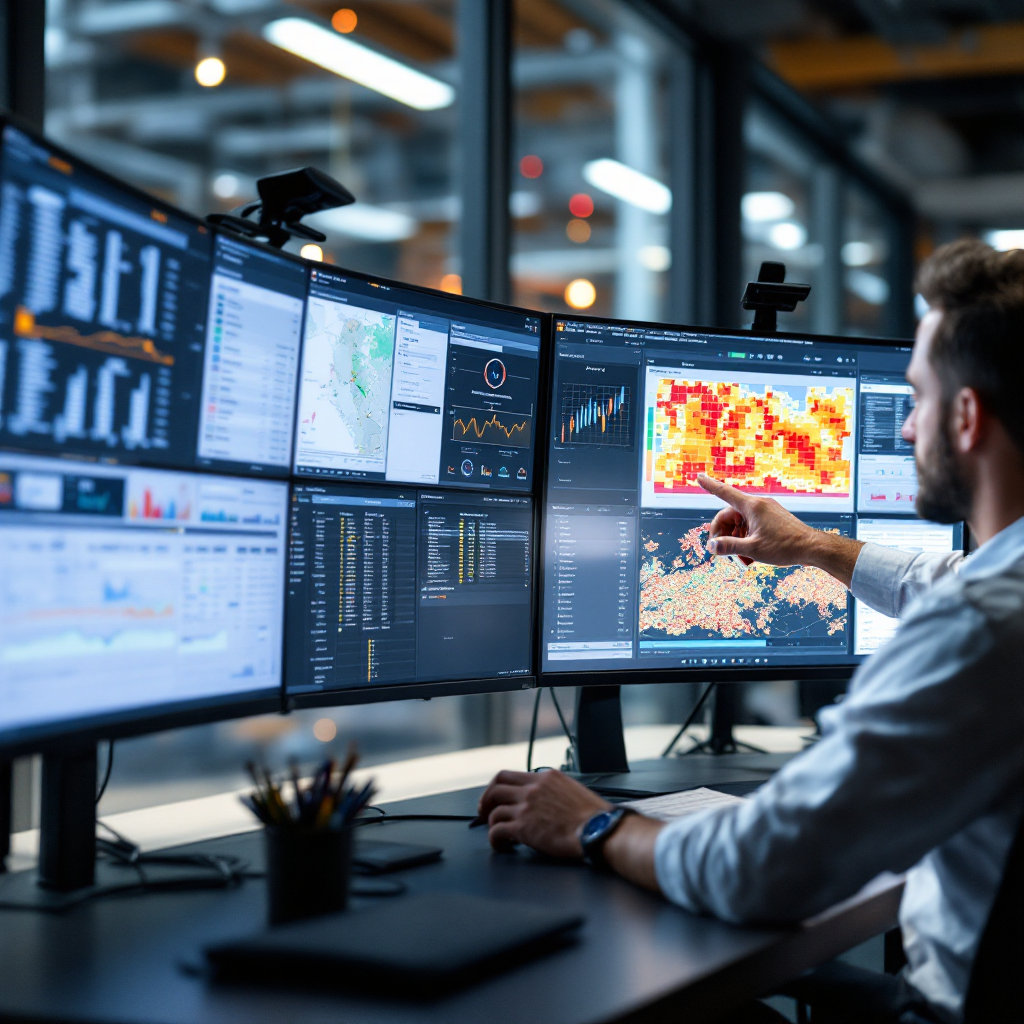
Performance metrics show the impact of predictive models in terminals. Key metrics include R², accuracy for container relocations, dwell-time reductions, and prediction accuracy for occupancy levels. For instance, a stacked ensemble model reported an R² near 0.914 and container relocation accuracy above 90% [Frontiers]. Also, LSTM-based frameworks improved occupancy forecasting by up to 15% versus baselines [MDPI]. As a result, operators saw fewer unexpected moves and higher resource utilization.
Case studies and expert insights reinforce these gains. A survey of computational intelligence in terminal operations found that machine learning helps optimize space utilization and reduce bottlenecks [IET survey]. Experts report that coupling ML outputs with rule-based dispatch reduces human error and enables faster decisions on the ground. Predictive machine learning models now inform berth allocation, truck appointment windows, and pre-stow sequencing for container ships.
Future research directions include combining prediction with explicit sustainability targets. Researchers explore how to keep emissions low while maintaining throughput [Wiley on sustainability]. Also, model interpretability will grow in importance. Teams want transparent reasons why a model suggested extra reshuffles. Therefore, explainable layers and counterfactual tools are becoming standard. Deep reinforcement learning plays a role in automated strategies, but it must be paired with simulation to test rare events safely.
Finally, practical deployment requires integration into terminal operation workflows and legal-compliance checks. Pilots must prove business value before full rollout. In many cases, the fastest returns come from augmenting human dispatchers with clear daily action lists derived from the model. For teams aiming to optimize container operations, focus on measurable KPIs: reduced dwell time, fewer relocations, and higher quay crane productivity. Predictive systems that hit those targets will scale across terminals. As research and practice converge, modern container terminals will use these tools to support smarter, greener, and faster port operations.
FAQ
What is yard density and why does it matter?
Yard density is the concentration of containers within a terminal yard at a given time. It matters because it affects container stacking efficiency, handling times, and the number of container relocations required. Accurate forecasts help planners reduce congestion and improve overall port throughput.
Which data sources feed yard density models?
Common sources include gate logs, vessel berth schedules, crane telemetry, terminal operating system records, and truck appointment data. Combining these sources yields better features for machine learning and improves prediction robustness.
How do LSTM networks help in yard prediction?
LSTM networks capture temporal patterns and dependencies in sequential data. They help forecast short-term occupancy and arrival bursts that drive yard density. Research shows LSTM can outperform traditional time-series models in throughput and occupancy tasks [MDPI].
Can predictive models reduce container relocations?
Yes. Ensemble and stacked predictive models have shown high accuracy for container relocation counts, which lets operators plan moves proactively and reduce unnecessary reshuffles [Frontiers]. That lowers handling time and operational cost.
What are the integration challenges for real-time deployment?
Challenges include heterogeneous IT systems, missing or noisy data, and latency in telemetry feeds. Overcoming these requires API-based integration, event buses, and a robust data layer. No-code connectors can speed this process and reduce IT overhead.
How is sustainability considered in predictive yard models?
Future research directions include optimizing for emissions alongside throughput. Models can incorporate energy use and equipment idling to recommend plans that reduce carbon output while maintaining productivity [Wiley].
What role do terminal operators play with ML outputs?
Terminal operators remain central. They validate model suggestions, approve action lists, and handle exceptions. Predictive outputs work best when integrated into operator workflows and terminal operating systems for seamless execution.
Is explainability important for these models?
Yes. Operators need to trust why a model recommends reshuffles or reassignments. Explainable ML and scenario simulators provide reasons and counterfactuals so operators can accept or adjust recommendations safely.
How quickly can terminals see ROI from predictive systems?
ROI depends on scale and baseline inefficiencies. Many pilots report measurable improvements in weeks when predictions inform dispatch and gate scheduling. Key gains come from reduced container relocations and shorter dwell times.
Where can I learn more about applying AI to yard operations?
Start with practical guides and case studies on stacking, stowage planning, and digital twin applications. For example, articles on optimizing container stacking and quay crane sequencing provide operational context and examples stacking guide, quay sequencing, and digital twin.
From operational pressure to predictable terminal performance
Discover how loadmaster helps terminals reduce rehandles, improve planning accuracy and stay in control as volumes grow.
Loadmaster.ai — Reinforcement Learning AI agents for Container Terminals. Book a demo to see our digital twin in action.