
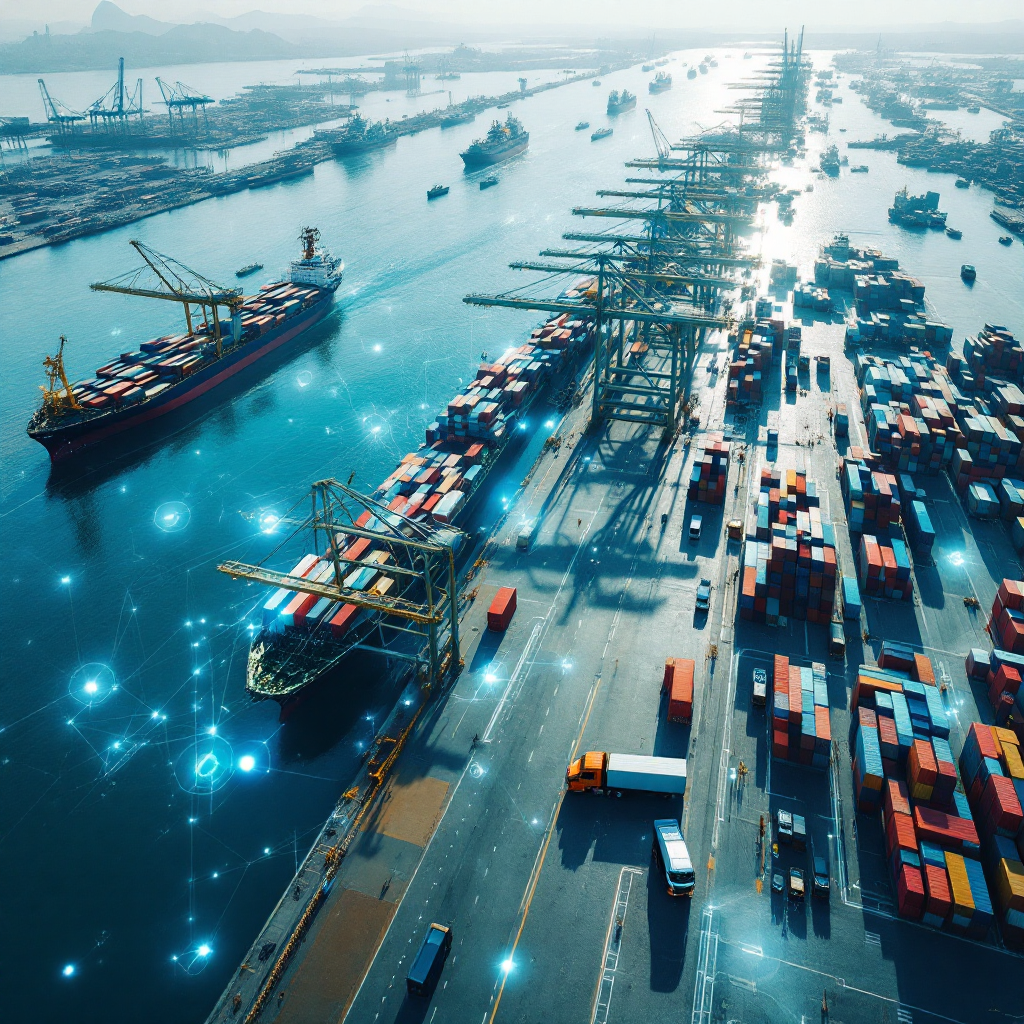
simulation model and digital twin for container terminal planning
A simulation model and a digital twin work together to recreate real-world port operations in a virtual setting. In practice, a digital twin is a live, data-driven replica of physical assets and workflows. It mirrors vessel movement, quay activity, yard stacking and gate flows. The model feeds the twin with rules, timing, and probabilistic events so planners can examine outcomes without disrupting real operations. Planners can simulate varied arrival patterns and visualize the effects on berth and quay crane deployment. In short, the combination helps optimize resource allocation, reduce waiting times and improve decision speed.
Core variables drive the fidelity of these simulations. Vessel arrival times, berth allocation, crane moves and yard management are the backbone. Each variable links to operational constraints such as tug availability, berth and quay crane limits, and gate processing capacity. The simulation captures cargo types and intermodal transfers to reflect complex interactions across supply chains. A robust model also factors in stochastic elements to represent uncertainty. That means planners see not only typical performance but also risk scenarios that could increase vessel delays or cause congestion.
The goals are straightforward and measurable. First, minimize waiting times for deepsea vessels and feeder calls. Second, boost resource utilisation by reducing idle time and optimizing quay cranes. Third, improve overall productivity with verifiable metrics for throughput, berth utilization and turnaround. Simulation supports design and operations choices by providing quantifiable trade-offs. For example, planners can evaluate whether adding a new quay or extending a quay will raise utilization rates enough to justify capital expense.
Importantly, a digital twin and simulation model act as a risk-free environment. Teams would serve as a testbed to try various design options and planned the reorganization of yard blocks before spending on equipment or construction. This approach lets terminal operators and ports and terminals mitigate disruption, reduce idle time and demurrage, and quantify the likely gains from changes. For further reading on creating a digital replica for scenario testing, see this resource on a digital replica of terminal operations for scenario simulation (digital replica of terminal operations for scenario simulation).
port simulation: key features of the deepsea simulator
A deepsea simulation delivers features that inform tactical and strategic choices. Scenario testing sits at the core. Planners can recreate peak traffic, equipment failures or labour shortages to see how operations adapt. Because the simulator captures complex systems and discrete events, it can test disruption response and risk mitigation plans. A simulator provides visual feedback so teams can visualize traffic within terminals and the knock-on effects on feeder schedules and intermodal links.
Predictive analytics enhance the simulation by projecting future throughput and berth occupancy based on historical data and current schedules. Using big data and real-time updates, the tool can forecast demand spikes and help predict how the changes to gate rules or quay crane shifts will affect vessel traffic. This fusion of model and analytics supports berth allocation and scheduling and helps streamline operations management across ports and terminals. For case evidence that analytics plus emulation improves productivity, see the Port of Antwerp study showing productivity gains when TOS and emulation tools were combined (Efficiency and productivity in container terminal operation).
Integration is key. Modern simulation tools integrate vessel schedules, environmental factors and third-party systems including TOS and AIS feeds. That means the simulation can ingest big data, historical data and live sensor input to remain current. A deepsea simulator can serve as a testbed for container yard planning and help predict how changes to yard layout will influence yard planning and help predict stacking density and terminal throughput. This makes the system a powerful tool for terminal planning, for port design and for longer-term capacity planning.
Other important features include discrete-event logic to model quay crane cycles, tug maneuvers and truck turn times. The simulator supports visualization of berth and quay crane interactions and quantifies berth utilization and utilization rates across shifts. Planners also get reporting that helps with business processes and logistics analysis. If you are assessing software choices, consider vendors that provide a user-friendly interface, live-data connectors and support for stochastic input so the model reflects variability rather than fixed timetables. For a practical example of a simulation study used to assess throughput demand and berth planning, consult this assessment of forecasted container throughput demand (Assessing forecasted container throughput demand on optimal …).
Drowning in a full terminal with replans, exceptions and last-minute changes?
Discover what AI-driven planning can do for your terminal
automation and AI for berth planning to optimize throughput
Automation and AI change how terminals optimize berth schedules and overall performance. AI-powered berth planning agents now consider more than a dozen variables; in advanced setups they handle over 130 vessel variables and deliver plans in seconds. Such agents can achieve about 80% predictive accuracy when tested in production-type environments, cutting human planning time drastically and reducing vessel delays (An AI-powered Berth Planning Agent revolutionizing vessel berthing). These tools support both berth allocation and scheduling and optimize berth use to reduce idle periods.
AI also supports crane automation and automated container handling. By pairing AI with yard control logic and terminal operating systems, terminal operators can reduce crane idle time and speed container handling cycles. The result is measurable: reduced berth idle time, faster vessel turnaround and higher throughput for the same physical footprint. The integration of AI-driven scheduling with quay cranes and yard automation promotes consistent performance and fewer manual interventions. For more on active productivity improvement strategies, see container terminal productivity improvement strategies (container terminal productivity improvement strategies).
Automation demands accurate inputs and clear governance. Systems must ingest reliable data sources such as AIS, terminal equipment telematics and ERP feeds. This reduces decision latency and enhances AI agents’ access to structured data without extra manual work.
To get the most from these capabilities, terminals should treat AI as part of a broader optimization program. Combine AI planning with scenario simulation to test policies in a risk-free setting. Use simulation to test labor shift changes, crane reassignments and gate rules. Where possible, adopt anylogic simulation or other modeling options that support live-data plug-ins and stochastic variability. This approach helps mitigate risk and provides verifiable gains before full rollout.
port design and terminal operations for informed decisions
Simulation outputs drive smarter port design and more efficient terminal operations. Planners use model results to size quays, decide quay length and position cranes, and set yard layout parameters. When a team visualizes different design options, they can quantify how each option will affect berth utilization, cargo handling rates and waiting times. The simulation helps predict how extending a quay will trade off against added yard density or additional quay cranes.
Resource planning also becomes data-driven. The model provides insight on staffing needs, machinery allocation and gate operation schedules. Terminal operators can streamline hiring and shift planning by seeing peak load windows and staffing shortfalls before they occur. The simulation supports operational changes such as introducing automation in the yard or changing truck appointment rules. This decreases vessel delays and minimizes idle time and demurrage.
Simulation modeling feeds into broader port design discussions. It makes the decision process transparent by showing how modifications affect navigational constraints, tug requirements and traffic within a terminal. It can also help test intermodal scenarios that involve rail and road connections. As a tool for terminal planning, the simulator would serve as a testbed to try various design and operations alternatives and quantify long-term benefits.
An example shows the link between modeling and strategy. Port planners can use outputs to plan investments in quay cranes or to alter gate layouts. They can validate whether a new storage block will improve throughput or merely shift the bottleneck elsewhere. For more about aligning yard planning with vessel planning and stowage, see integrating stowage and yard planning in port operations (integrating stowage and yard planning in port operations).
Drowning in a full terminal with replans, exceptions and last-minute changes?
Discover what AI-driven planning can do for your terminal
case study: maritime container terminal performance improvements
Real-world deployments show measurable benefits. The Port of Antwerp combined an advanced TOS with emulation tools and achieved productivity improvements in container handling of roughly 15–20% according to research from the University of Antwerp (Efficiency and productivity in container terminal operation). Those gains arose from better quay crane scheduling, reduced idle cycles and improved gate throughput. The study highlights how simulation and digital twin approaches translate into tangible KPIs.
In Vietnam, digital readiness studies report that container terminals adopting digital tools gain transparency and shorten turnaround times. The dissertation on digital readiness documents that data integration and change management are as important as technology in delivering benefits (Digital readiness of container terminals for digital technology adoption).
Key takeaways include the need for clean data, robust system integration and effective change management. Poor data quality undermines even the best models. Integration with third-party systems, such as TOS and ERP, is critical to keeping the simulator current. Teams must also plan for user adoption and for operational governance so that simulation outputs lead to informed decisions rather than ignored reports.
For a focused look at improving crane productivity and reducing driving distances in terminal operations, readers can consult resources on crane idle time reduction and yard distance strategies. These techniques, combined with simulation, improve operational resilience and reduce vessel delays. For further examples of productivity tactics and to see how simulation to test policies works alongside operational change, check reducing driving distances in container port operations (reducing driving distances in container port operations).
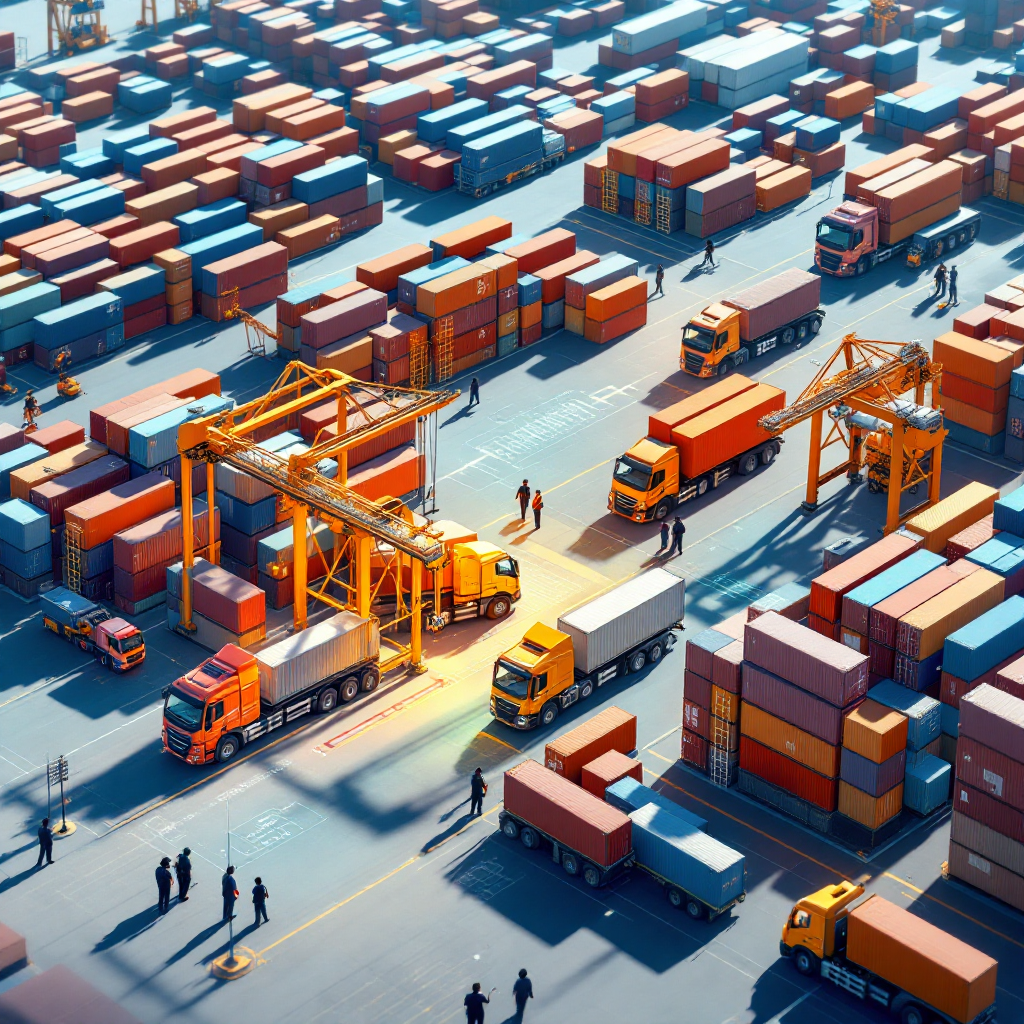
simulator optimization: port digital twin and automation trends
Simulation and machine learning now intersect to produce smarter digital twin software. Emerging ML enhancements make forecasts more accurate by learning from historical patterns and live sensor feeds. These enhancements reduce forecast error and help terminal operators manage capacity with greater confidence. As models evolve, they incorporate environmental factors and emissions metrics to answer sustainability questions as well as throughput ones.
Another trend is embedding environmental and sustainability metrics into simulation outputs. Terminals can simulate how operational changes affect fuel use, emissions and local air quality. This supports decisions that both reduce cost and affect environmental performance. By including environmental factors, simulation tools help terminal teams quantify trade-offs and meet regulatory goals.
Future requirements for meaningful adoption will include investment in skilled personnel, live data feeds and robust data governance. Good governance ensures that data sources are trusted and that simulation outputs remain verifiable. Terminals must also set up structured data capture across email, ERP and TMS systems.
Finally, platforms will need to support integration with automation equipment, from quay cranes to automated guided vehicles. Terminal operators should prioritize models that handle stochastic events and that offer user-friendly visualization. The best systems let planners run discrete-event and stochastic scenarios quickly so they can mitigate risk and test mitigation measures. When properly integrated, a digital twin and simulator become a powerful tool to optimize berth allocation and to improve cargo handling, while also guiding port design and long-term strategic planning.
FAQ
What is a digital twin for a container terminal?
A digital twin is a live, data-driven replica of terminal equipment, yard layout and operational flows. It uses a simulation model to represent current conditions and to test alternative strategies without affecting real operations.
How does simulation improve berth allocation?
Simulation allows planners to test berth allocation and scheduling under various arrival patterns and delays. It quantifies berth utilization and helps optimize berth and quay crane assignments to reduce vessel delays.
Can AI-based berth planning really cut planning time?
Yes. AI-powered berth planning agents can process many vessel variables in seconds and provide plans with high accuracy. One demonstration of such an agent reported approximately 80% predictive accuracy in real-world testing (An AI-powered Berth Planning Agent revolutionizing vessel berthing).
What data do simulators need to work well?
Simulators need historical data, live AIS and TOS feeds, equipment telematics and gate records. Clean, well-governed data ensures models remain verifiable and that outputs support informed decisions.
How do ports measure the impact of simulation projects?
Terminals measure changes in throughput, quay crane productivity and waiting times. Research shows that combining TOS with emulation can raise container handling productivity by around 15–20% in some deployments (Efficiency and productivity in container terminal operation).
Is a simulator useful for port design choices?
Yes. Simulation modeling can test various design options and quantify their effect on utilization rates and operational costs. It would serve as a testbed for different quay lengths, yard layouts and equipment mixes.
How do terminals address data quality challenges?
Terminals invest in data governance, system integration and staff training. They also automate unstructured inputs from email and documents so planners have timely, accurate data for simulation inputs. Tools that automate email workflows can reduce manual lookup time and improve data completeness.
What role does environmental modeling play in modern simulators?
Environmental metrics let terminals simulate emissions and fuel use linked to operational choices. This supports greener port design and helps align operations with regulatory targets and sustainability goals.
Can small or mid-sized terminals benefit from simulation?
Absolutely. Mid-sized terminals can use simulation to streamline gate operations, reduce yard congestion and optimize equipment. For tailored strategies for smaller facilities, see smart port solutions for mid-sized inland container terminals (smart port solutions for mid-sized inland container terminals).
How do I start a simulation project at my terminal?
Begin with a scoping exercise to define KPIs and required data sources. Pilot a simulation model on a constrained area of operations, validate outputs against historical performance, and then scale. For insight on real-time yard optimization that often follows successful pilots, explore real-time container terminal yard optimization strategies (real-time container terminal yard optimization strategies).
our products
 stowAI
 stackAI
 jobAI
jobAI
Innovates vessel planning. Faster rotation time of ships, increased flexibility towards shipping lines and customers.
Build the stack in the most efficient way. Increase moves per hour by reducing shifters and increase crane efficiency.
Get the most out of your equipment. Increase moves per hour by minimising waste and delays.
stowAI
Innovates vessel planning. Faster rotation time of ships, increased flexibility towards shipping lines and customers.
stackAI
Build the stack in the most efficient way. Increase moves per hour by reducing shifters and increase crane efficiency.
jobAI
Get the most out of your equipment. Increase moves per hour by minimising waste and delays.