
Introduction to Portal Trolley Optimisation
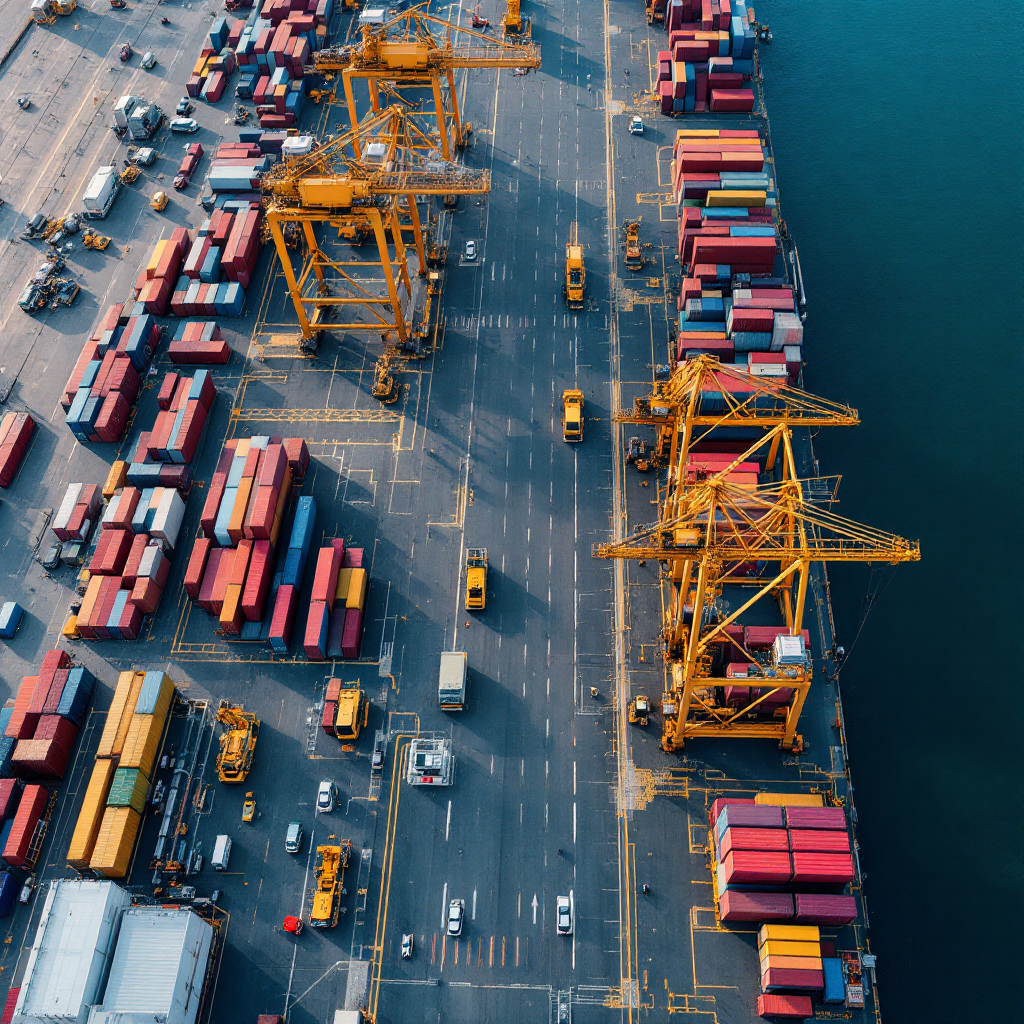
Portal trolleys are horizontal transport units that run under or between quay cranes in an automated container terminal. They move containers along the quayside and feed quay cranes during loading and unloading. In many automated container terminal designs, portal trolleys work with automated guided vehicles and yard crane systems to shuttle import container loads and export stacks. They play a crucial role in peak vessel calls because they bridge vessel operations and yard handling. Poor portal trolley allocation and slow trolley cycles can cause long berth queues and extend vessel stays.
Sub-optimal trolley use can prolong vessel turnaround by as much as 20%, and that increases berth congestion and creates a berth allocation bottleneck for the whole terminal. A recent study found such delays when configuration and schedules of DTQCs and AGVs were not coordinated (joint configuration and scheduling study). Ports pay directly for delay time through higher berth idle costs and through delayed links to truck and rail. For this reason, the objective is to minimize the total time a vessel spends alongside the berth and to optimize quay cranes, trolleys and AGVs together.
Improved trolley scheduling shortens ship stays, raises berth throughput, and reduces fuel use and costs. For example, targeted scheduling optimization has delivered double-digit improvements in throughput and measurable energy savings in case studies (energy and utilization findings). Better coordination also supports better berth allocation and quay crane sequencing, and it helps terminals respond to variable arrival time patterns. For terminal managers the benefits include shorter vessel waits, lower operational costs, and higher berth utilisation.
literature review
The literature review of portal trolley optimization covers joint configuration, scheduling optimization, and real-time methods. Early research used mathematical programming and integer programming model approaches to assign quay cranes and portal trolleys. Later studies proposed a two-phase mixed integer approach and response surface methodology (RSM) to tune configuration and scheduling parameters. A key finding is that optimizing configuration and scheduling across quay cranes and AGVs yields measurable gains in both energy and throughput. For quantified examples, an RSM-based study reported energy reductions of roughly 15–25% and throughput rises of 10–18% (joint configuration and scheduling). Other research supported cost falls up to 12% when trolley idle time and waiting are reduced (cost and scheduling study).
Researchers also compared algorithmic approaches. Mixed-integer models and integer programming model formulations seek exact solutions for small to moderate problems. Heuristic and metaheuristic methods, including a based on improved genetic algorithm, help solve the large-scale allocation problem in real terminals. For U-shaped terminals the crane scheduling problem couples quay cranes with yard crane and AGV flows and becomes a complex scheduling problem. One practical line of work used cooperative scheduling and heuristics to balance workload across cranes and AGVs, and it reported trolley utilization increases above 85% in optimized runs (throughput and utilization).
Advanced studies added predictive elements and satellite data integration for arrival time forecasting. The UNCTAD analysis shows how satellite tracking and port platforms improve predictive scheduling for quay crane assignment problem and berth allocation and quay crane coordination (KPIs and tracking). That approach reduces unexpected delay and supports dynamic reassignment. In sum, the literature supports a blend of mathematical optimization, heuristic algorithm design, and real-time data for robust scheduling optimization. These works form the foundation for the proposed solution in many modern automated container terminal projects.
Drowning in a full terminal with replans, exceptions and last-minute changes?
Discover what AI-driven planning can do for your terminal
Scheduling and Configuration Strategies
Scheduling and configuration strategies must address the allocation problem among quay cranes, portal trolleys and automated guided vehicles. A two-phase model has proven effective: first, select the equipment configuration and trolley deployment; second, run a detailed scheduling process to assign tasks to quay cranes and AGVs. In phase one the objective is to minimize energy and to balance loads across resources. In phase two the objective function often minimizes makespan and vessel delay while preventing conflicts at the berth and along transfer lanes. The approach combines mathematical programming with fast heuristics so planners can respond during peak vessel calls.
Real-time data integration changes how assignments are made. Systems ingest AIS vessel positions, container weights, yard crane availability and berth schedules to produce dynamic plans. When arrival time shifts, systems recalculate assignments and notify operators so trolleys and quay cranes shift tasks without causing long delays. This dynamic approach uses algorithm-driven decision rules and predictive models. For example, an algorithm that uses arrival forecasts and container handling times will adapt trolley paths and assign quay cranes to reduce idle cycles. Such scheduling optimization reduces unnecessary container reshuffles and lowers total berth idle time.
Comparing heuristics versus formal optimization clarifies trade-offs. Exact mixed integer models yield high-quality plans but can struggle with real-time constraints in large-scale terminals. Heuristics and metaheuristics, including genetic algorithm variants, produce good solutions quickly and support replanning during seaside operations. For many terminals, a hybrid method works best: use a mathematical formulation off-line to set parameters and a fast heuristic online to assign tasks during vessel calls. This way terminals can solve the scheduling problem in minutes rather than hours, and they keep quay cranes productive. Section 3 of this guide highlights that cooperative assignment and scheduling can reduce delay and improve the overall port terminal throughput while respecting maintenance windows and operator constraints.
Practical deployment also requires clear data flows. That integration reduces manual time at the operations desk and keeps the scheduling process tight and consistent.
case study
A leading deepsea container terminal implemented joint trolley and crane scheduling at scale. The case study involved a major berth complex that routinely handled simultaneous large vessel arrivals. The terminal applied an integrated berth allocation and quay crane scheduling approach, with coordinated portal trolley deployment and AGV flows. The project combined a mixed integer programming model for strategic planning and fast heuristics for realtime replanning. Before the project, berth allocation was manual and reactive. After deployment the terminal saw measurable shifts in performance.
Outcomes included reduced berth idle times and faster vessel turnaround. The terminal reported energy savings near 20% and a container throughput increase of 15% during peak windows (energy and throughput results). The study also recorded lower operational costs, near the 12% range cited in earlier research (cost study). These gains derived from coordinated assignment and scheduling of quay cranes and portal trolleys, and from tighter berth allocation rules. During high-concurrency vessel calls the terminal used cooperative scheduling to assign trolleys where demand was highest, which kept cranes busy and minimized waiting at the berth.
Key lessons learned focused on handling unpredictable arrivals and equipment maintenance. First, accurate arrival time forecasts are crucial. The port improved forecasts with AIS feeds and with machine learning models that considered historical berth occupancy. Second, regular trolley and yard crane maintenance must be scheduled into the planning problem so that failures do not cascade into long delays. Third, human operators must get clear alerts when a shift in plan is necessary. For communications, the terminal used automated email agents to route critical schedule changes to planners and to shore-side teams. That automation reduced response latency and helped the terminal wait for a shorter time before reallocating trolleys and quay cranes, which improved overall port performance.
Drowning in a full terminal with replans, exceptions and last-minute changes?
Discover what AI-driven planning can do for your terminal
Performance Metrics and Operational Impact
Key performance indicators guide improvements and measure impact. Primary KPIs include vessel turnaround time, berth occupancy rate, trolley utilisation percentage, and carbon footprint per TEU. Vessel turnaround time captures the direct effect of better assignment and scheduling. Berth occupancy rate shows how efficiently quay cranes and trolleys use the quay. Trolley utilisation and throughput confirm that the scheduling optimization met its equipment-level targets. Terminals track time and delay time metrics to make targeted changes during peak windows.
Optimized trolley schedules reduce idle cycles at the berth and allow faster loading and unloading. That outcome shortens vessel dwell and improves berth allocation across the terminal. When a terminal synchronizes quay cranes and portal trolleys with yard crane flows, truck and rail handoffs are smoother. A coordinated approach can increase throughput by 10–18% and lift trolley utilization well above typical non-optimized rates (throughput study). These gains improve supply chain timing and reduce demurrage risk at the vessel level. They also reduce fuel consumption for quay cranes and AGVs, which supports greener maritime operations.
For port management these metrics drive investment choices. If berth congestion persists, managers may expand scheduling optimization before adding quay cranes. That strategy is more cost effective. In addition, tracking the quay crane assignment problem and the berth allocation problem helps managers reassign resources during peak vessel arrivals. Tools such as digital twin models can simulate scenarios and predict performance, and they support decisions on container storage and yard crane shifts (digital twin resources). For further reading on quay crane sequencing see a review on container sequencing software (quay crane sequencing). For AGV prioritization strategies see a guide on automated-guided-vehicles job prioritization (AGV job prioritization).
future work
Future work will push predictive and autonomous scheduling farther. Machine learning and deep learning models can predict peak loads and adapt trolley paths before a vessel arrives. Digital twin simulations let planners test proposed solutions under varied arrival time scenarios and operational uncertainties. Combining these approaches will help solve the planning problem for large-scale automated container terminal operations. Researchers are already exploring how reinforcement learning could support real-time decisions and reduce human workload in the scheduling process.
IoT sensors and condition monitoring will support predictive maintenance for portal trolleys and quay cranes. Sensors feed health metrics into a maintenance plan so terminals avoid surprise failures. That integration reduces unplanned delay and extends equipment life. The future research agenda also includes sustainability targets. Terminals will model decarbonisation pathways, green energy use, and regulatory compliance when they optimize resource allocation and trolley deployment.
Finally, the scheduling optimization ecosystem needs better human-system interaction. When an algorithm recommends a change, a grounded email with context and data can reach the right person and accelerate acceptance. As terminals invest in integrated berth allocation and quay crane sequencing, they also need tools to communicate and to close the loop between algorithmic plans and human approvals. This combined approach will help the industry solve the problem of peak congestion and continue improving container terminal services while meeting sustainability goals.
FAQ
What exactly are portal trolleys and how do they differ from AGVs?
Portal trolleys run along the quay and hand containers to quay cranes, while automated guided vehicles move containers between quay and yard. Both types of equipment support container handling, but portal trolleys focus on the immediate berth area and AGVs manage longer transfers.
How does better trolley scheduling reduce vessel turnaround time?
Improved scheduling reduces idle cycles for quay cranes and prevents bottlenecks at the berth. Consequently, cranes complete loading and unloading faster which shortens vessel dwell and lowers delay at the berth.
Can existing terminals adopt joint configuration and scheduling without new hardware?
Yes, many terminals optimize software and processes first by applying mathematical models and heuristics to current assets. A mixed integer programming model or heuristic algorithm can improve performance before new cranes or trolleys are bought.
Which metrics should terminals track to measure success?
Track vessel turnaround time, berth occupancy rate, trolley utilisation percentage and carbon footprint per TEU. These KPIs together show operational efficiency and environmental impact.
Are there proven energy savings from scheduling optimization?
Yes. Studies show optimized scheduling of dual-trolley quay cranes and AGVs can reduce energy consumption by around 15–25% (energy study). These savings come from fewer idle cycles and smoother equipment flows.
What role do algorithms play in the optimization process?
Algorithms allocate tasks, sequence moves and balance workload across equipment. They range from mixed integer models to genetic algorithm-based heuristics and hybrid approaches designed for large-scale terminals.
How does berth allocation affect trolley use?
Berth allocation determines where vessels dock and thus shapes where trolleys must operate. Efficient berth allocation and quay crane sequencing reduce long trolley runs and increase utilization at busy berths.
Can machine learning help predict peak demand for trolleys?
Yes. Machine learning and deep learning models can predict vessel arrivals and peak container volumes, improving proactive trolley assignment. These models feed into digital twins and realtime schedulers for robust plans.
What are the common challenges when implementing joint scheduling?
Challenges include uncertain arrival time, equipment maintenance windows and integration with legacy systems. Clear data flows and automated communications help mitigate these issues.
How can terminals improve communications during replanning?
Automated email agents and integrated notification systems reduce manual delay and ensure the right teams receive context-rich updates. Tools that combine data grounding with routing logic accelerate decision acceptance and action.
our products
 stowAI
 stackAI
 jobAI
jobAI
Innovates vessel planning. Faster rotation time of ships, increased flexibility towards shipping lines and customers.
Build the stack in the most efficient way. Increase moves per hour by reducing shifters and increase crane efficiency.
Get the most out of your equipment. Increase moves per hour by minimising waste and delays.
stowAI
Innovates vessel planning. Faster rotation time of ships, increased flexibility towards shipping lines and customers.
stackAI
Build the stack in the most efficient way. Increase moves per hour by reducing shifters and increase crane efficiency.
jobAI
Get the most out of your equipment. Increase moves per hour by minimising waste and delays.