
Introduction and Background
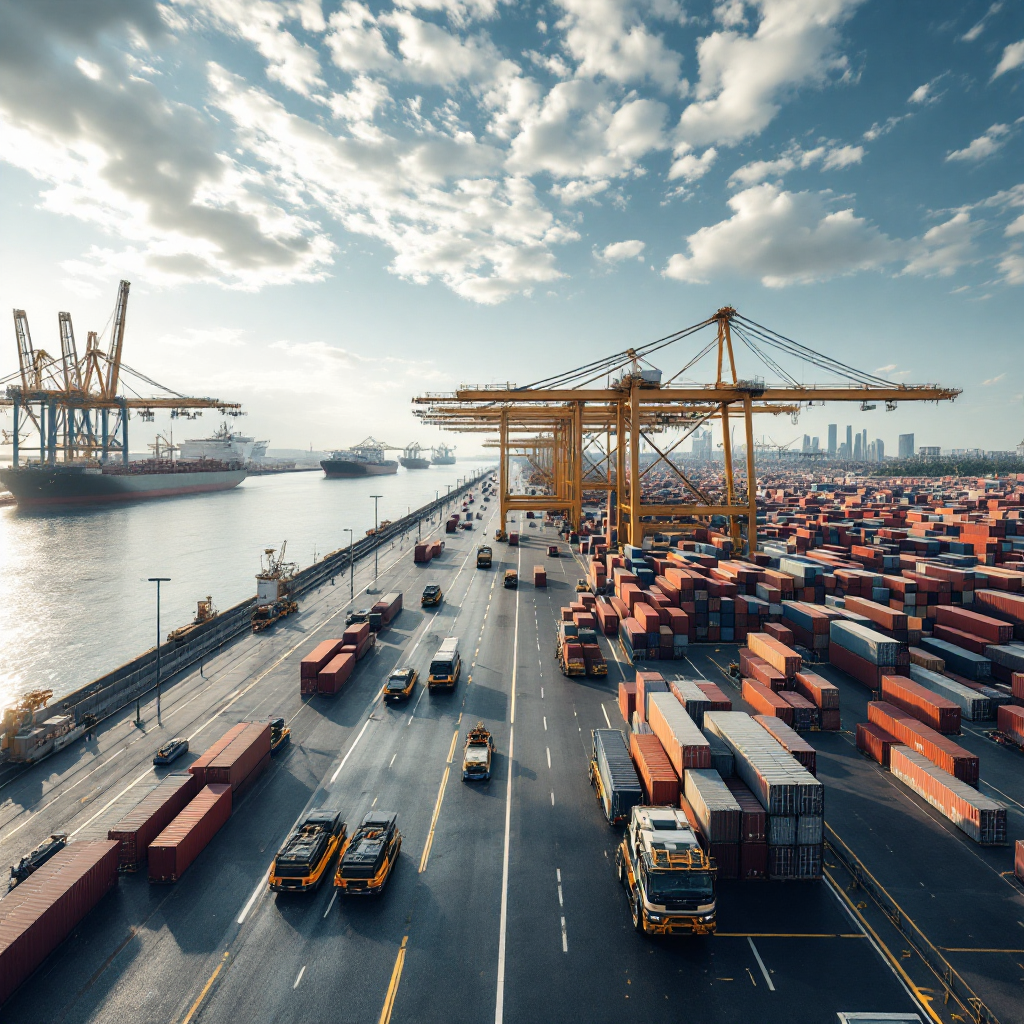
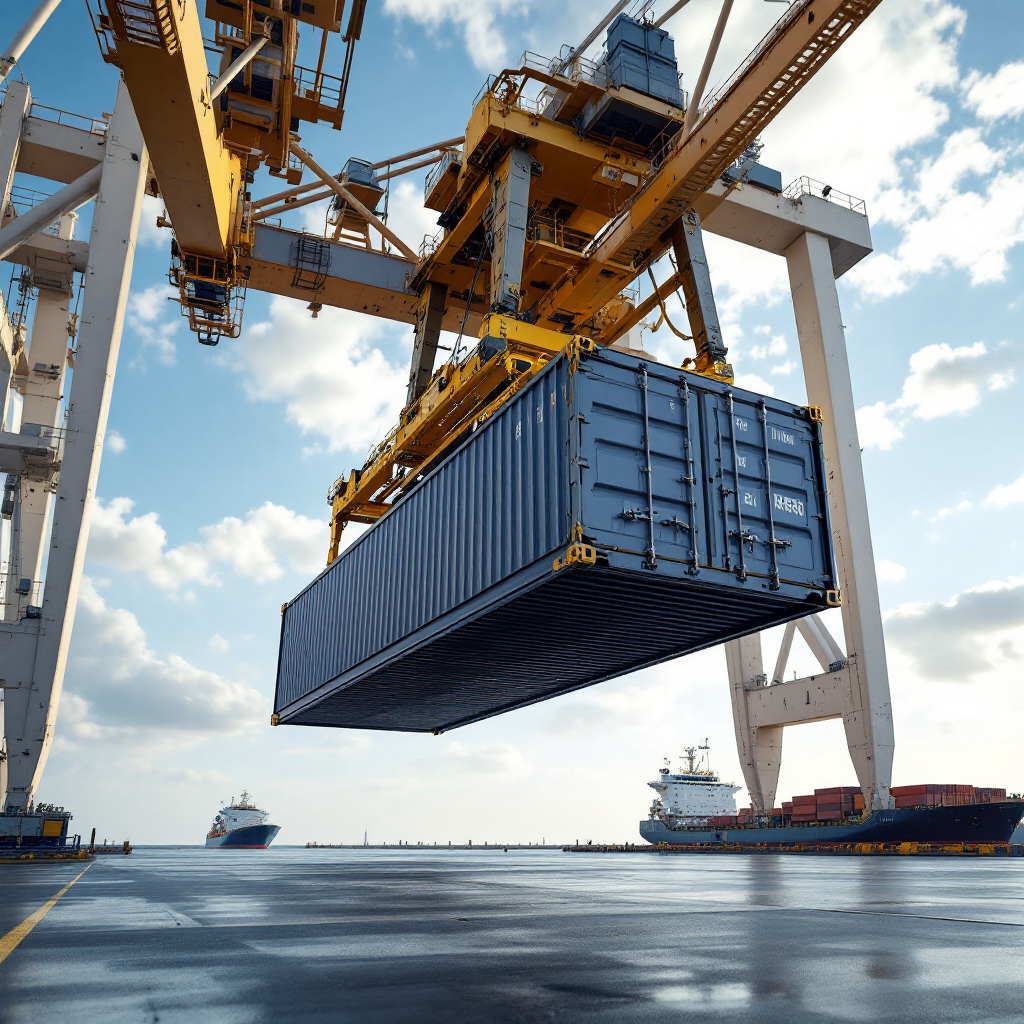
Tandem lifting and twin lifting are advanced methods used in a container terminal to boost throughput and reduce waiting at the berth. Tandem lifting uses two quay cranes working in unison on a single heavy container, while twin lifting uses one crane with a spreader to handle two 40ft loads at once. For automated container terminal layouts, these techniques change how operators plan loading and unloading operations at scale. The need to optimize sequencing comes from a simple fact: faster, safer lifts lead to shorter vessel turnaround. For example, terminals that adopt twin or tandem modes can see major gains when they change how they assign tasks to each crane and to AGVs.
Key performance metrics are straightforward to track. Throughput measures how many container moves happen per hour. Energy consumption quantifies kilowatt-hours saved per move. Cost captures labor, fuel, and equipment wear. Terminals that measure these metrics can make data-driven decisions to improve operational efficiency. Also, vessel turnaround time falls as coordinated scheduling improves. The choice of equipment in an operation affects the statistics. A well-equipped quay with twin spreaders can serve a large container ship faster than many single-lift cycles. As one report notes, “Implementing tandem spreader systems to handle two 40ft containers at a time can significantly reduce vessel turnaround time, saving ports both time and operational costs” WorldCargo News.
This article scopes the key ideas and constraints behind sequencing. It also covers scheduling problems and solution families. We will examine programming model choices, integer formulations, heuristics, and neighborhood search techniques. In doing so, the article provides a comprehensive review that connects research findings to real terminal practice. Readers will find practical tips for equipment scheduling, safe changeover between single lift and tandem modes, and ways to integrate automated guided vehicles into a broader plan. For further operational context, teams can read about real-time replanning strategies for a container terminal here.
Literature Review
This literature review summarizes recent studies on scheduling for tandem quay cranes, twin-lift systems, and scheduling optimization in container ports. A number of academic works target quay crane scheduling and integrated scheduling of quay cranes with AGVs. Some studies formulate integer linear programming or branch-and-bound methods to reach an exact solution for small instances, and heuristic rules for larger ones. For example, an exact algorithm for scheduling tandem quay crane operations shows reductions in handling time after accounting for mode changeover durations ScienceDirect. Also, another paper examines scheduling of automated guided vehicles for tandem quay cranes and highlights the interdependence between crane cycles and vehicle routing ScienceDirect.
Single-lift, twin-lift and tandem-lift operations each bring trade-offs. Single lift offers simple control and minimal synchronization. Twin lift doubles payload per crane cycle but requires spreader hardware and careful weight checks. Tandem lift spreads a heavy or oversized single container across two cranes and demands precise coordination. Studies report productivity gains of up to 30–40% when terminals adopt tandem or twin modes under suitable layouts and vessel profiles AJOT. In some cases, optimized scheduling of tandem quay cranes cuts total handling time about 15–25% after factoring changeover times ScienceDirect.
Research methods range widely. Integer linear programming and exact solution techniques shine in the programming model stage for proof of concept. Heuristics, neighborhood search, and decomposition methods scale better to real port conditions. A combined literature review shows that hybrid methods that embed neighborhood search in an exact framework often reach high-quality feasible schedules fast. For practical adoption, terminals must balance algorithmic quality with real-time responsiveness. For further reading on yard-level optimizations that influence quay performance, see container terminal yard optimization fundamentals here.
Drowning in a full terminal with replans, exceptions and last-minute changes?
Discover what AI-driven planning can do for your terminal
Scheduling Problems
Scheduling problems in a container terminal stem from constraints related to equipment, cargo, and vessel schedules. Weight limits for tandem lifts restrict which stacks or single containers can be paired. Synchronisation between two cranes is mandatory for tandem modes. Changeover times between single, twin and tandem lifts add delays that must be modelled explicitly. Terminals must also avoid crane interference along the berth and minimize idle time. These factors make assignment and scheduling hard but structured.
Automated guided vehicles are central to modern workflows. AGVs transport containers between quay and yard. They can queue, wait, and stage loads for cranes. How AGVs are routed affects the entire unloading process. Integrated scheduling of quay cranes with AGVs and yard cranes reduces bottlenecks. In academic terms, the scheduling of qcs and agvs problem captures these interdependencies. In practice, solutions must account for vehicle travel time, crane cycle time, and stacking constraints. Quay crane buffer areas and yard crane availability both shape feasible schedules.
Common objective functions include minimizing makespan and minimizing the completion time for a vessel or set of vessels. Terminals may also maximize throughput or minimize energy consumption per container. Multi-objective approaches sometimes trade a small increase in makespan for a significant energy reduction. Many models include hard constraints such as safety separation, weight limits for tandem lifts, and berth assignment windows. For terminals exploring scheduling in an automated container terminal, a mixed-integer programming formulation often becomes the starting point. For practical heuristics and rerouting ideas, teams can explore predictive equipment repositioning methods to minimize non-productive moves here.
Equipment Scheduling
Crane capabilities drive much of the equipment scheduling decisions. Modern cranes may support twin spreaders, tandem lift interfaces, and wireless control. Wireless-controlled cranes allow real-time coordination between two crane operators or remote systems. One industry expert observes that “Wireless control systems are revolutionizing tandem lifting by enabling real-time coordination, which is crucial for maintaining safety and operational efficiency” EOT Crane Kit. Equipment scheduling must anticipate the time cost of mode changeovers. Switching from single lift to tandem mode may require repositioning of spreaders, safety checks, and system recalibration.
Layout and outreach influence crane assignment. A crane with a 72-meter outreach may serve larger container ships without repositioning, which reduces container moves and crane interference. Terminal planners must consider berth geometry, ship stowage plans, and the number of containers per bay when assigning cranes. For many seaport container terminals, a layout that supports overlapping spans reduces idle time and improves vessel service rates. Yard crane and AGV availability feed back into decisions about when to use twin lifts or tandem lifts.
Procedures for changeover deserve explicit protocols. Operators should follow checks for spreader locks and communication handshake steps before any tandem lift. A proposed model for scheduling must include these operational windows and safety buffers. In some terminals, the transition windows are incorporated as additional constraints in the programming model to capture realistic durations. For teams wanting to coordinate between quay movements and yard operations, reading about AI-based workload balancing for wide-span yard cranes can help align priorities here. For example, automating the notification workflow that triggers a changeover checklist reduces manual delay and ensures compliance with the changeover protocol.
Drowning in a full terminal with replans, exceptions and last-minute changes?
Discover what AI-driven planning can do for your terminal
Numerical Experiments
The numerical experiments section lays out a typical model setup and benchmark scenarios. A proposed model often defines decision variables for crane-to-bay assignments, start times for each lift, and AGV routes for container transportation. Constraints related to crane interference, weight limits, berth windows, and yard capacity are encoded. Objective functions commonly minimize the makespan or maximize throughput while limiting energy consumption. Tests include small instances where an exact solution can be found and larger instances where heuristics aim for near-optimal solutions.
In benchmark results, researchers report productivity gains ranging from 15% to 40% versus single-lift baselines. These figures depend on vessel size, number of containers, and layout designs and handling technology. For instance, when cranes and spreaders allow twin automated stacking cranes or tandem modes, terminals handling ultra-large container ships see larger proportional gains. Numerical experiments were conducted with scenarios that vary changeover times and the number of cranes assigned per berth. Sensitivity analysis shows that a one-minute reduction in changeover time yields noticeable throughput improvements on long calls.
Scenarios also test the scheduling of qcs and agvs together. When AGVs transport containers efficiently, crane idle time drops sharply. Conversely, slow AGV cycles create queues that blunt the advantage of tandem lifts. Results indicate the performance of the proposed model improves with coordinated scheduling and with smarter AGV dispatch rules. For those building experiments, including a neighborhood search and decomposition method often yields strong feasible schedules fast. If you are evaluating how to minimize crane idle time and improve container movement, see our work on predictive equipment repositioning and related strategies here.
Operations Research Insights and Future Directions
Operations research yields several actionable insights for terminal planners. First, trade-offs exist between throughput, safety and energy use. More aggressive tandem use increases throughput but raises coordination demands. Second, integrating scheduling across quay, yard, and vehicle layers produces better operational efficiency than optimizing each layer separately. Third, real-time scheduling capabilities are essential to react to vessel delays and berth changes.
AI and real-time control systems can support dynamic coordinated scheduling that adapts to unfolding events. For example, AI-based control can reprioritize lifts when a container ship unexpectedly changes discharge order. By embedding predictive models within a scheduling optimization, terminals can reduce average vessel dwell. Automating these handoffs speeds decision cycles and preserves audit trails.
Future directions include multi-terminal coordination and improved sustainability metrics. Research on integrated scheduling problem variants will likely grow, with emphasis on decarbonization strategies and reduced idle running time. Areas for further study also include capacity-aware routing at seaport container terminals and the bi-objective quay crane scheduling challenges that weigh energy alongside makespan. The directions for future research should also explore the use of hybrid exact and heuristic algorithms to provide near real-time optimal solution candidates for large instances. Finally, new work on neighborhood search heuristics for cluster-based quay crane scheduling problem variants will improve scalability and robustness under stochastic conditions.
FAQ
What is the difference between tandem lifting and twin lifting?
Tandem lifting uses two quay cranes jointly to lift a single heavy or oversized container. Twin lifting uses a single crane with a spreader that handles two 40ft containers at once. Both methods increase productivity but require different coordination and equipment checks.
How much productivity improvement can terminals expect?
Reported gains vary with layout and ship size. Studies show productivity improvements of up to 30–40% when terminals adopt twin or tandem modes under the right conditions AJOT. Realistic scheduling that models changeover times often yields 15–25% handling time reductions ScienceDirect.
What are the main scheduling problems to solve?
Scheduling problems include assigning cranes to bays, synchronising tandem lifts, timing mode changeovers, and coordinating automated guided vehicles. The goal often is to minimize the completion time or to maximize throughput while limiting energy and safety risks.
How do AGVs affect crane scheduling?
Automated guided vehicles transport containers between quays and yard. Their routing and availability influence crane idle time and queueing. Coordinated scheduling of AGVs and quay cranes reduces delays and smooths the unloading process.
Do wireless systems improve tandem lift safety?
Yes. Wireless control systems enable tighter real-time coordination between cranes and operators. Industry reports highlight improved synchronization and safety when wireless systems are used for tandem lifting EOT Crane Kit.
What modeling approaches work best for planning?
Integer linear programming and exact algorithms work for small instances and to validate methods. For large, real-world terminals, hybrid heuristics and neighborhood search deliver high-quality schedules quickly. Decomposition methods also help handle complex constraints.
How should terminals handle mode changeovers?
Terminals should codify changeover protocols that include safety checks and communication handshakes. Scheduling models must include changeover durations as explicit constraints to reflect real operational windows. Automated alerts reduce manual delay in these steps.
Can smaller terminals benefit from tandem or twin lifts?
Smaller terminals may benefit when specific vessels or cargos justify the equipment investment. Benefits depend on vessel mix and the number of container moves per call. A careful cost-benefit analysis helps decide whether to adopt twin or tandem capabilities.
What role can AI play in real-time scheduling?
AI can predict delays, recommend dynamic crane assignments, and automate repetitive coordination tasks. Integrating AI with optimization engines produces more responsive operations.
Where can I learn more about yard and quay integration?
Further reading on yard-level decisions and their impact on quay performance helps. For example, container terminal yard optimization fundamentals explains stacking and repositioning strategies that complement crane scheduling here. Also explore predictive equipment repositioning for reducing non-productive moves here.
our products
 stowAI
 stackAI
 jobAI
jobAI
Innovates vessel planning. Faster rotation time of ships, increased flexibility towards shipping lines and customers.
Build the stack in the most efficient way. Increase moves per hour by reducing shifters and increase crane efficiency.
Get the most out of your equipment. Increase moves per hour by minimising waste and delays.
stowAI
Innovates vessel planning. Faster rotation time of ships, increased flexibility towards shipping lines and customers.
stackAI
Build the stack in the most efficient way. Increase moves per hour by reducing shifters and increase crane efficiency.
jobAI
Get the most out of your equipment. Increase moves per hour by minimising waste and delays.