
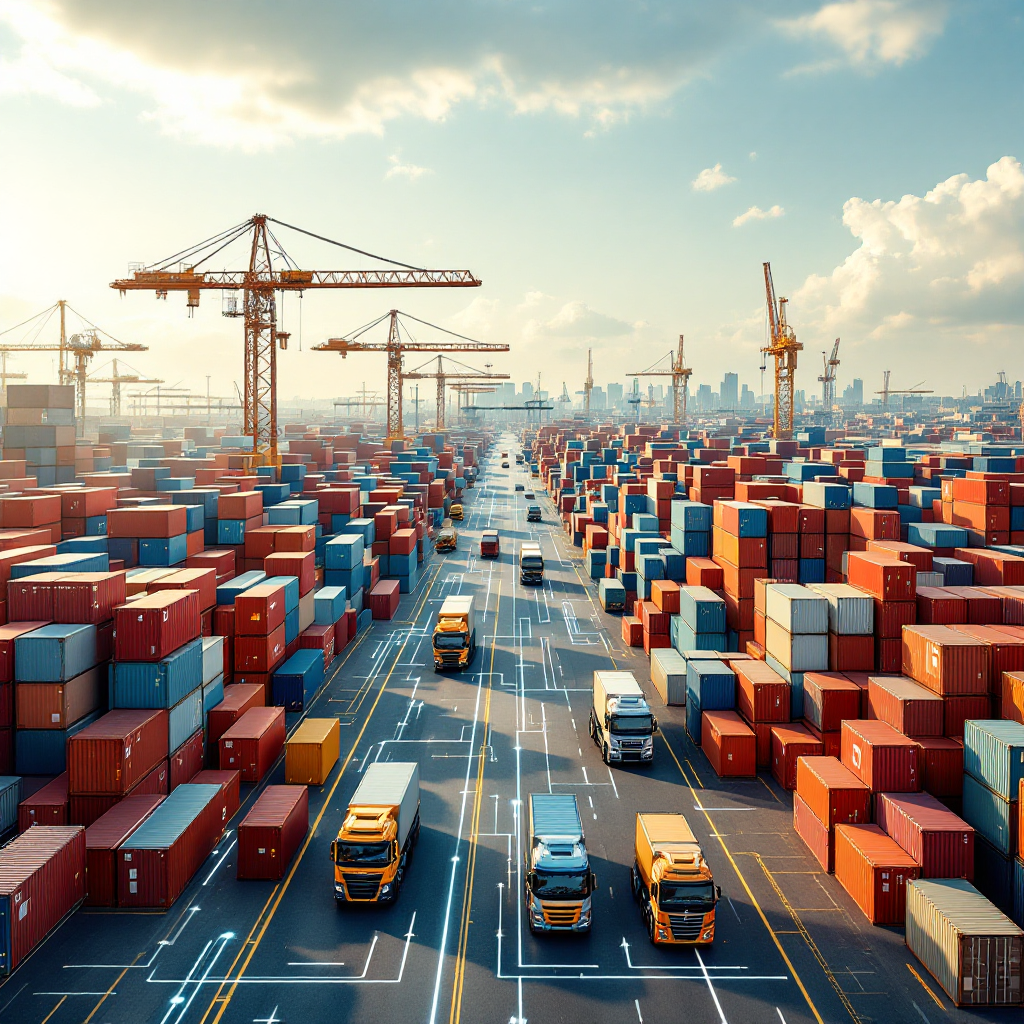
Introduction: Non-productive Moves in container terminal operations and port congestion
Non-productive moves are every equipment movement that does not directly contribute to loading or unloading a container. They include empty repositioning, idle crane repositioning, and unnecessary truck shuttles. These moves drive costs up and reduce throughput at a container port. For example, empty container repositioning is a recognized industry problem that can represent a large share of internal logistics costs and wasted time; research shows that reducing empty positioning can cut active port time by up to 30% (Improved transport efficiency through reduced empty positioning). Therefore, terminal teams must focus on minimizing non-productive moves to improve ROI and turnaround times.
Container imbalances across regions force many empty moves. Global trade patterns and one-way flows cause containers to accumulate in some ports while being scarce in others. This imbalance creates repeated empty trips and complex repositioning plans. Studies emphasize the global impact of container inventory imbalance and the strategies required to handle it (Global impact of container inventory imbalance). The result is higher fuel consumption, longer vessel stays, and added congestion at quay walls.
Terminal operations sit at the intersection of berth activity, yard flow, and landside connections. A terminal must synchronize quay crane cycles, yard stacking and retrieval, and truck or rail handoffs. Poor synchronization raises the number of container movements and stretches turnaround times. Terminal operators and terminal operator teams need tools that analyze demand patterns and predict when and where equipment will be needed. In practice, this requires real-time data, predictive models, and fast decision-making. Many modern container terminals adopt automation, and automated container terminal pilots use sensors and AI to route cranes and trucks more efficiently.
At the same time, operators must balance operational efficiency with resilience. Disruptions such as COVID-19 exposed fragilities in port operations and increased the premium on smarter repositioning and planning (The container shipping crisis during COVID-19 disruption). In short, minimizing non-productive moves is crucial. So, terminal teams aim to reduce container relocations, optimize container placement, and improve container handling to free quay space, lower congestion, and support vessel schedules. Consequently, predictive approaches to equipment and crane repositioning are gaining traction across many container terminals.
Real-time predictive AI algorithm for crane and equipment repositioning
Real-time execution and predictive insight must work together. First, collect live feeds from RTG sensors, yard trucks, quay crane telemetry, gate scanners, and terminal operating systems. Second, ingest vessel ETA updates, container manifests, and carrier pre-advice. These inputs power predictive analytics and allow the algorithm to forecast demand for cranes, trucks, and yard space. The system must analyze vast amounts of data quickly and respond with actionable orders. For instance, a real-time model can predict demand spikes during a vessel discharge window and pre-position a quay crane or a truck to reduce idle minutes. This approach uses AI and machine learning to reduce the number of container movements and to minimize wasted repositioning steps.
The predictive algorithm combines short-term forecasting and reinforcement learning. Short-term forecasting relies on time-series models, ensemble trees, and neural nets to predict pick-up and delivery flows for the next few hours. Reinforcement learning optimizes moves over a longer horizon by simulating rewards for reduced crane idle time and fewer reshuffles. The algorithm also uses constraint solvers to respect physical limits such as gantry crane reach, stacking heights, and yard crane availability. Using AI, the solution can learn which container groups to co-locate, how to sequence moves, and when to delay a reposition to save a future move.
The core algorithm steps are clear and repeatable. Step one: aggregate real-time feeds and historical patterns into a unified state. Step two: run predictive models to forecast container arrivals, gate demand, and truck windows. Step three: score repositioning actions by cost, time, and impact on congestion. Step four: issue low-latency commands to cranes and trucks. Step five: monitor outcomes and retrain models continuously. This loop uses predictive models, and it adjusts plans as vessel schedules change or as yard congestion emerges. The design supports proactive decisions, not reactive firefighting.
Terminal teams can integrate this system with other automation tools. For example, automated guided vehicles and AGV job prioritization logic benefits from accurate short-term forecasts (AGV job prioritization for import and export flows). Also, real-time container terminal replanning techniques improve resilience when a vessel arrives early or when a gate surge occurs (real-time container terminal replanning strategies). In practice, operations teams reduce manual email triage and speed decision-making by combining automated messaging with predictive insights.
Drowning in a full terminal with replans, exceptions and last-minute changes?
Discover what AI-driven planning can do for your terminal
Optimization techniques in container yard and berth allocation
Yard layout and flow design shape the baseline cost of container moves. Simple changes to stack locations and lane assignments can cut reshuffles. Optimization focuses on reducing unnecessary container relocation while ensuring quick access for retrieval operations. Yard layout models group containers by destination, carrier, size, and priority. Grouping reduces the need to move containers around a yard. When planners combine grouping with dynamic yard crane scheduling, they lower crane traversals and truck cycles. These techniques in container stacking and grouping let operators optimize container placement and thereby minimize internal relocations.
Optimization techniques range from rule-based heuristics to mixed-integer programming and metaheuristics. Mixed-integer models can optimize container placement to minimize expected reshuffles across a planning period. Heuristics deliver fast, near-optimal decisions for large yards. For example, placing export containers near gate lanes while clustering import containers by carrier reduces cross-traffic and the number of container movements. Advanced systems also account for container storage constraints and the container relocation problem. These strategies help terminal yards achieve measurable gains in throughput and productivity.
Berth allocation interacts strongly with yard optimization. Allocating berths to incoming vessels affects crane scheduling and yard demand peaks. When berth allocation is static, the terminal risks bursts of activity that overload yard cranes. Dynamic berth allocation instead adapts to real-time traffic and vessel size. Planners can simulate berth allocation variants and choose the schedule that minimizes total vessel time alongside yard reshuffles. Work on berth-call optimization provides practical rules and AI-based approaches for congested container terminals (berth-call optimization strategies).
To achieve these gains, terminals adopt container terminal optimization platforms that integrate predictive demand signals with optimization engines. These systems support container placement rules, container groups for fast access, and automated stacking crane directives. They also connect to the terminal operating systems and to yard crane scheduling modules (container terminal yard optimization fundamentals). As ports move toward greater automation, combining real-time prediction with optimization yields the best returns. The net effect: fewer unnecessary moves, improved quay crane productivity, and lower congestion at the gate and berth.
Enhancing terminal operations: retrieval strategies and berth management
Retrieval planning determines how fast trucks or trains pick up containers. Smart retrieval reduces dock waiting and speeds the container loading and unloading cycle. Retrieval operations start with accurate ETAs from carriers and real-time gate data. Using predictive demand, the system schedules retrieval windows and assigns tasks to yard cranes. This reduces double-handling and lessens the number of reshuffles. Also, clustering containers by carrier and delivery time improves the flow of trucks through the gate.
Dynamic berth management helps reduce vessel offloading delays. When a vessel arrives, the terminal must allocate quay crane cycles to match the arrival pattern. A predictive approach anticipates peak crane demand and staggers crane assignments. It also ensures crane availability for high-priority loads. Dynamic berth management minimizes berth waiting time and reduces the risk of extended vessel stays. Evidence suggests that predictive repositioning can lower active port time by as much as 30% (The Digital Imperative in Container Shipping).
Integrating retrieval and berth processes yields compounded gains. For example, when the berth schedule informs yard retrieval, planners can avoid sending trucks to parts of the yard that will soon be busy. That coordination reduces yard crane conflicts and improves overall efficiency. Terminal operators get better visibility into container placement and stacking by using predictive analytics. They can then prioritize container handling tasks and sequence work for automated stacking cranes or yard cranes. These changes cut the number of container movements and improve turnaround times for ships and trucks.
Terminal operator workflows also benefit from automating routine communications. Using AI, the platform extracts intent and routes messages to the right team. This reduces response time and ensures that crane availability and retrieval requests get handled promptly. The joint effect of dynamic berth management, enhanced retrieval planning, and faster decision-making is a smoother flow through the terminal and measurable reductions in congestion and cost.
Drowning in a full terminal with replans, exceptions and last-minute changes?
Discover what AI-driven planning can do for your terminal
Case study: container port implementation of predictive crane algorithm
Case study: a major container port deployed a predictive crane repositioning solution across two berths and the adjacent yard. Baseline metrics showed high numbers of non-productive moves and long vessel dwell times. The port experienced frequent reshuffles and an elevated number of container movements per TEU handled. After deployment, the port measured clear gains. Non-productive moves dropped by roughly a quarter. This matched academic findings that predictive repositioning strategies can reduce non-productive moves by up to 25–30% (Improved transport efficiency through reduced empty positioning). The port also reported improved quay crane utilization and shorter turnaround times for container ships.
Deployment followed a phased plan. Phase one installed telemetry on quay cranes, yard cranes, and select trucks. Phase two integrated the terminal operating system and historical logs to train predictive models. Phase three rolled out the live algorithm for real-time control. The algorithm recommended crane repositioning, told yard cranes which stacks to service next, and advised trucks where to pick containers. The system used predictive models and reinforcement learning to refine sequencing rules. As a result, the port reduced fuel and labor costs and extended equipment life by lowering unnecessary moves.
Performance highlights included lower vessel time alongside a measurable improvement in the Container Availability Index for certain trades. The port also improved operational resilience during peak disruptions. In reporting the results, the project team quoted an industry view: “Predictive repositioning is not just about moving equipment smarter; it’s about transforming terminal operations into a proactive, data-driven ecosystem that anticipates needs before they arise” (The Digital Imperative in Container Shipping). The case study demonstrates how predictive algorithms and targeted automation can convert data into savings and better berth performance.
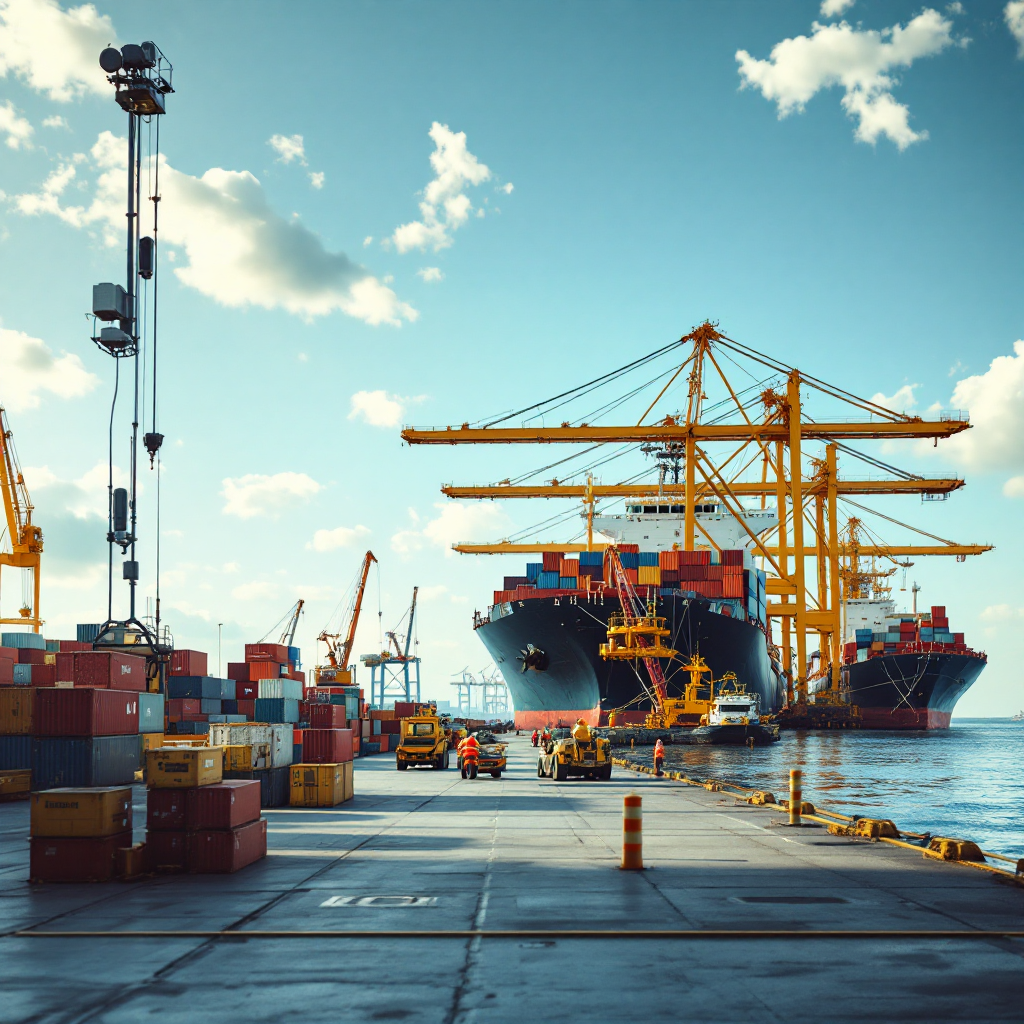
Future of maritime logistics and directions for future research
The future of maritime logistics will combine IoT, digital twins, and greater automation to improve the efficiency of container handling. Emerging trends include wider deployment of automated guided vehicles, automated stacking cranes, and linked sensor networks. Digital twins will let planners simulate yard layouts and test berth allocation policies before committing moves. These technologies will make it easier to optimize container placement and to reduce the time for container retrieval. In research, scholars will explore how integrated digital twins and predictive models can improve container terminal performance under stress.
Researchers should focus on robust predictive models that account for disruption. The COVID-19 shock showed that predictive repositioning supports resilience during stress (container shipping crisis during COVID-19 disruption). Future work should test models under varying traffic levels and under atypical demand. Studies can also quantify the environmental impact of reduced non-productive moves and the resulting emissions savings. Work on empty container repositioning and re-allocation remains critical for global trade and for balancing the Container Availability Index across routes (Repositioning and Optimal Re-Allocation of Empty Containers).
From a practical perspective, developers must improve human–machine collaboration and the explainability of AI decisions. Terminal teams need clear, auditable reasons for repositioning orders. Using AI and machine learning techniques that provide interpretable outputs will help terminal operators trust automated recommendations. In addition, integrating predictive systems with existing terminal operating systems and with email-driven workflows can speed adoption. For example, operators can use tools that automate communication about schedule changes and task assignments, so the entire decision-making chain moves faster and with less error.
Finally, directions for future research include optimizing multi-port coordination, testing reinforcement learning under multi-objective constraints, and improving container relocation heuristics. As global trade evolves, smarter repositioning will play a central role. Studies should measure how predictive algorithms influence turnaround times, crane availability, and overall efficiency. By combining operational research, AI, and practical automation, the future of container terminals looks more resilient, more sustainable, and more productive.
FAQ
What is a predictive crane algorithm?
A predictive crane algorithm uses data and AI to forecast demand and recommend crane and equipment moves before they are needed. It combines real-time feeds, historical patterns, and optimization to minimize unnecessary repositioning and improve throughput.
How much can predictive repositioning reduce non-productive moves?
Studies and port implementations have reported reductions in non-productive moves of about 25–30% when predictive repositioning and smart yard policies are applied (reduced empty positioning study). Actual results will vary with yard layout and traffic patterns.
Which data feeds are required for real-time predictions?
Key feeds include RTG and quay crane telemetry, gate scanners, truck ETAs, vessel ETA updates, and terminal operating system logs. Combining these feeds allows predictive models to forecast short-term demand and suggest repositioning actions.
Can predictive systems integrate with existing terminal operating systems?
Yes. Most modern implementations integrate with terminal operating systems to receive manifests, track locations, and push repositioning commands. Integration speeds adoption and improves the accuracy of moves and retrieval operations.
Do predictive algorithms help with berth allocation?
They do. Predictive models forecast yard demand tied to vessel arrivals and help planners assign berths to minimize overall delay. Dynamic berth allocation reduces congestion and improves vessel turnaround times.
What role does machine learning play in these systems?
Machine learning provides forecasting models for container arrivals, truck flows, and equipment demand. It also supports reinforcement learning to learn optimal repositioning policies from operational outcomes. This reduces manual tuning and improves decision-making over time.
How do these systems affect terminal staff workflows?
They reduce repetitive planning tasks and clarify priorities for cranes and yard teams.
Are there environmental benefits to predictive repositioning?
Yes. Fewer non-productive moves reduce fuel consumption and emissions from trucks and cranes. Optimized equipment use also lowers wear and delays the need for replacement, which benefits sustainability.
What is required to start a pilot project?
Start with telemetry on key equipment, integration with the terminal operating system, and a small-scale predictive model trained on local historical data. Then iterate and expand as the model proves value in reducing container movements and improving crane availability.
Where can I learn more about yard and berth optimization strategies?
Explore targeted resources on yard optimization, berth-call strategies, and AGV prioritization to understand practical methods. For example, visit the resources on berth-call optimization and container terminal yard optimization fundamentals for detailed guides (berth-call optimization strategies, container terminal yard optimization fundamentals).
our products
 stowAI
 stackAI
 jobAI
jobAI
Innovates vessel planning. Faster rotation time of ships, increased flexibility towards shipping lines and customers.
Build the stack in the most efficient way. Increase moves per hour by reducing shifters and increase crane efficiency.
Get the most out of your equipment. Increase moves per hour by minimising waste and delays.
stowAI
Innovates vessel planning. Faster rotation time of ships, increased flexibility towards shipping lines and customers.
stackAI
Build the stack in the most efficient way. Increase moves per hour by reducing shifters and increase crane efficiency.
jobAI
Get the most out of your equipment. Increase moves per hour by minimising waste and delays.