
predictive Planning in the maritime industry
Predictive planning and reactive planning describe two very different approaches to how a port runs each day. Predictive planning uses forecasts, historical patterns and sensor feeds to anticipate vessel arrivals, cargo volumes and resource needs. By contrast, reactive planning waits for events and then responds. In a busy deepsea container port that distinction affects throughput, costs and service levels.
When a port uses predictive tools it can reduce idle time and minimize delay for vessels. Recent studies show that ports employing predictive techniques reported a 20–30% reduction in vessel turnaround times, and that improvement translated into higher throughput and less congestion. Other literature on container shipping supply chain planning supports the same effect and shows that predictive planning lowers the frequency of last-minute disruptions and their costs by almost 40%. Those numbers matter to shipping lines, terminals and customers.
Dr Maria Jensen puts the shift succinctly: “Incorporating real-time data feeds and advanced forecasting models allows ports to transition from reactive firefighting to proactive management, which is essential for handling the increasing complexity of global container flows.” That quotation highlights why ports adopt predictive workflows and why stakeholders expect more predictable service. Combining predictive models with clear operational rules helps reduce demurrage and streamline cargo handover.
Predictive planning requires investment in data and people, and it also requires new ways of thinking about port activities. Ports that remain mainly reactive keep paying for last-minute fixes, overtime and underused assets. By contrast, a predictive core enables better resource allocation, faster decision-making and fewer costly delays. For ports that want to optimize capacity without physical expansion, predictive planning is a route to measurable gains, and it connects directly to broader supply chain goals and to how global trade flows are managed.
analytics for enhanced visibility in port operations
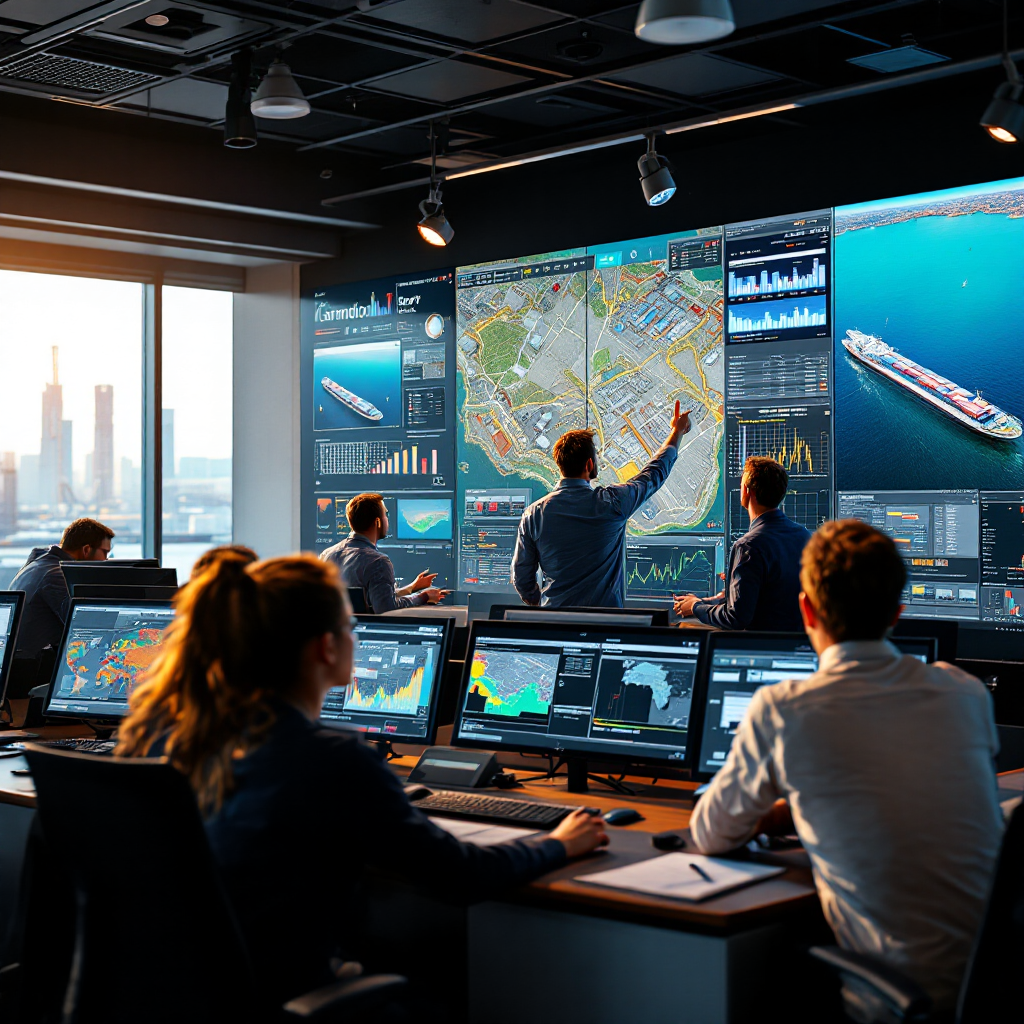
Real-time visibility transforms how a port sees cargo, equipment and people. With satellite tracking, IoT sensors and terminal operating systems feeding a single view, operators can spot upcoming congestion and assign resources earlier. Those feeds turn raw data into dashboards that show vessel ETAs, crane status and yard occupancy. The combined view improves decision-making and reduces wasted movement, and it helps stakeholders coordinate across gates and berths.
Analytics dashboards give clear, actionable insight into the flow of goods. They show trends and anomalies and they help teams prioritize tasks. A live-data approach can lift berth utilisation significantly. For example, data from major ports like Shanghai shows that integrating live feeds and analytics can improve berth utilisation by about 15%. That gain lets a port increase effective capacity without building new quays or adding cranes.
To support this capability a port needs solid data governance and clean interfaces. That includes reliable ETAs, consistent ship registry records and frequent yard updates. When systems interoperate, the dashboard becomes more useful and the port gains timely insight. For teams that want to learn how to move from basic monitoring to prescriptive action, resources such as a container terminal digitalization roadmap can provide practical steps and templates for adoption (container terminal digitalization roadmap).
Good analytics also improve collaboration with port authorities and carriers. They allow gate operators to manage truck appointments while crane planners adjust shift patterns. That reduces gate queues and lets teams avoid unnecessary crane idle time. For ports aiming to enhance overall port performance, an emphasis on real-time and data-driven visibility is a foundational move that supports downstream automation and smarter port logistics.
Drowning in a full terminal with replans, exceptions and last-minute changes?
Discover what AI-driven planning can do for your terminal
ai-driven predictive and ai-powered advanced analytics
AI and machine learning enable forecasting at scale. Machine learning models predict arrivals, cargo volumes and equipment needs by combining historical data with current indicators. Those ai models learn patterns for specific trade lanes and adapt to seasonal cycles. They can also account for external factors such as weather conditions and port congestion, and they provide estimates that teams can use to plan shifts and allocate cranes.
One concrete example is Fluent Cargo’s live freight data project, which received USD 500K in funding to improve prediction accuracy and to feed operational systems. The project shows how a consistent live data stream improves scheduling, and it demonstrates that well-integrated data reduces the chance of last-minute changes by supporting live freight visibility. Ports that add ai-driven predictive models then use those outputs to sequence vessel berthing and yard moves.
Benefits are clear and measurable. Predictive analytics can cut late disruptions and surprise changes by roughly 40%. That reduction lowers demurrage and makes service commitments more reliable. When analytics offers timely alerts and when teams act on those alerts, operations become less reactive and more cost effective.
Advanced analytics tools also link into broader port systems and into cargo owners’ workflows. By combining terminal operating system feeds with external AIS and weather data, the models improve ETAs and reveal potential choke points. For ports planning to adopt AI solutions, it helps to start with defined use cases such as berth scheduling and yard reshuffle reduction, and then scale to holistic, ai-powered orchestration.
port management: transitioning from reactive to proactive planning
Transitioning a port from reactive to proactive planning starts with governance and processes. Integrated management systems, clear escalation rules and shared dashboards let teams coordinate resource allocation and staffing before a problem becomes a crisis. A simple step is to schedule staff around predicted peak windows, and to adjust crane assignments based on forecasted load. That approach reduces overtime and helps maintain service levels for carriers and shippers.
Even with strong prediction, reactive measures remain essential as contingency. Unplanned equipment failures and sudden weather changes still occur, and a resilient port keeps fallback procedures and quick-response crews ready. The trick is to make those reactive responses well defined and limited, so that predictive planning handles most routine variations while contingency plans cover true emergencies.
The Port of Trois-Rivières provides a practical line on this balance. A senior port operations manager explained that their shift to predictive planning allowed them to anticipate peaks and allocate labor and cranes more efficiently, leading to smoother operations and better service levels for customers. That perspective reflects how a combined approach reduces repeated firefighting and improves customer satisfaction.
To implement change, ports must up-skill staff and integrate systems so that predictions inform routine checklists and daily briefings. Tools that automate manual tasks—such as email triage and routine coordination—help operations teams focus on exceptions. That kind of automation complements predictive planning and helps ensure that predicted actions become executed actions in the yard.
Drowning in a full terminal with replans, exceptions and last-minute changes?
Discover what AI-driven planning can do for your terminal
container tracking, berth scheduling and utilisation
End-to-end container tracking feeds the scheduling engine that assigns berths and cranes. When container tracking data is accurate, berth scheduling algorithms can sequence arrivals, reduce overlap and shorten slots where multiple vessels compete for space. That sequencing reduces vessel waiting time and improves quay productivity, and it supports smoother loading and unloading.
Data-backed berth scheduling can raise berth utilisation without physical expansion. Shanghai’s example, where live data integration produced around a 15% uplift in berth utilisation, shows how better timing and clearer ETAs add effective capacity. More efficient berth use also reduces fuel burn for vessels while they wait, and it lowers emissions linked to port calls.
Quantifying savings is straightforward. Faster hand-overs cut the ship’s idle time and reduce the probability of demurrage. They also lower the cost of extra crane shifts. For terminals, a focus on optimising berth sequences and on optimizing scheduling of trucks and yard moves converts better forecasts into measurable savings. Practical guides on vessel planning and yard optimization offer methods and tools that any terminal can pilot; see resources such as vessel planning optimization tools and real-time yard optimization strategies for starting points.
Finally, container tracking improves accountability across stakeholders. When carriers, terminal planners and hauliers share the same container status, they make coordinated decisions faster. That reduces rework, shortens turnaround and supports higher port productivity for the whole supply chain.
optimize deepsea container port performance
To optimize deepsea container port performance start with clear objectives and small pilots. First, map the highest-impact pain points, such as crane idle time and gate congestion. Then, choose predictive analysis use cases that address those pain points. A stepwise approach keeps costs manageable and helps teams gain early wins that build momentum.
Key implementation steps include data integration, model selection and operator training. Integrate AIS, TOS, truck appointment and weather feeds and then apply an effective predictive model to those combined data points. Make sure the model is explainable and that outputs are understandable at the operations floor. That transparency helps teams trust forecasts and act on them. To understand how to reduce crane idle time and other bottlenecks, terminals can consult existing work on crane productivity and yard reshuffle reduction (reducing crane idle time).
Challenges will appear. Data quality and systems integration take time. Teams need to develop new skills in data analysis and in managing AI tools. You must also maintain contingency protocols so that uncertainties—such as sudden weather or mechanical failures—do not halt operations. Balance is critical: a predictive core with reactive safeguards gives a resilient, efficient port.
Finally, measure results and scale. Track vessel turnaround, berth utilisation, demurrage and the volume of disrupted calls. Use those metrics to refine forecasts and to justify further investment. When done well, predictive analytics will help ports optimize operations, reduce delay, reduce costs and improve service for carriers and cargo owners. In short, predictive adoption helps ports meet future demand, improve efficiency and shape the future of port operations in a measurable way.
FAQ
What is predictive planning and how does it differ from reactive planning?
Predictive planning uses data, forecasting and models to anticipate events and to prepare responses before problems occur. Reactive planning waits for events and then responds; it tends to cost more and to increase delay for vessels and cargo.
How much can predictive analytics reduce vessel turnaround times?
Studies indicate that predictive planning can reduce vessel turnaround times by around 20–30% in many cases (research). The exact gain depends on data quality, implementation scope and how port teams act on forecasts.
What technologies enable better visibility in port operations?
Key enablers include satellite tracking, IoT sensors, terminal operating systems and analytics dashboards that combine data into one view. These tools provide the real-time signals needed to plan shifts and to sequence berths.
Can AI reduce last-minute disruptions and demurrage?
Yes. Combining machine learning with live freight feeds has been shown to lower last-minute disruptions by roughly 40% (literature). This lowers demurrage and improves service reliability.
How does container tracking improve berth scheduling?
Container tracking gives accurate position and status data that feed scheduling algorithms, which then sequence vessel calls to reduce overlap and waiting time. Better tracking leads to more efficient berth allocation and fewer idle hours for cranes.
What role do port authorities and carriers play in predictive planning?
Port authorities and carriers must share data and align processes so forecasts become executable plans. When everyone trusts the same predictive outputs, coordination improves and operational efficiency rises.
What are common challenges when implementing predictive analytics at a port?
Challenges include data quality, systems integration and the need to up-skill staff for new tools and workflows. Finance, governance and change management are also important to ensure adoption and to reduce resistance.
Is reactive planning still necessary?
Yes. Reactive measures remain essential for equipment failures, sudden weather shifts and other true emergencies. The goal is to limit reactive firefighting and to use it only for genuine contingencies.
How can operations teams reduce email and coordination bottlenecks?
Automating routine, data-dependent emails speeds responses and reduces manual lookups.
Where can I find practical guidance on vessel planning and yard optimization?
There are practical resources that outline tools and methods for vessel planning and yard optimisation, including specialized pages on real-time yard optimisation and vessel planning optimization tools (real-time yard optimization, vessel planning optimization). These guides help teams design pilots and measure early wins.
our products
 stowAI
 stackAI
 jobAI
jobAI
Innovates vessel planning. Faster rotation time of ships, increased flexibility towards shipping lines and customers.
Build the stack in the most efficient way. Increase moves per hour by reducing shifters and increase crane efficiency.
Get the most out of your equipment. Increase moves per hour by minimising waste and delays.
stowAI
Innovates vessel planning. Faster rotation time of ships, increased flexibility towards shipping lines and customers.
stackAI
Build the stack in the most efficient way. Increase moves per hour by reducing shifters and increase crane efficiency.
jobAI
Get the most out of your equipment. Increase moves per hour by minimising waste and delays.