
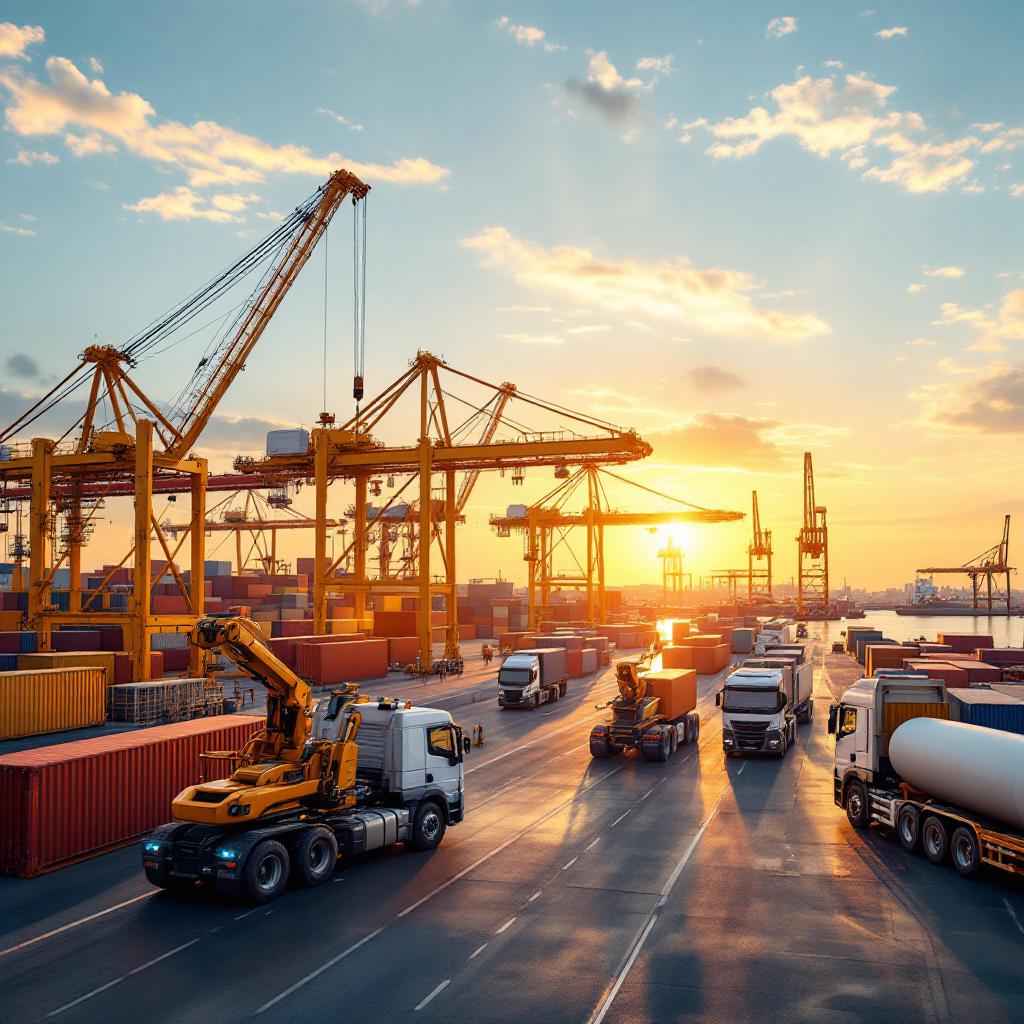
How traditional port Retrofit Extends Equipment Lifespan
First, define retrofit: it means upgrading existing machines with new controls, sensors and software instead of buying replacements. Next, contrast that with full replacement, which demands large capital, long lead times and major yard disruption. For many ports, especially small and medium ones, this matters. For example, retrofitting reachstackers or cranes can add roughly 5–7 years of service life while avoiding full capital cycles. Also, the industry describes this approach as a “quick, inexpensive and straightforward solution compared to introducing new machines” source.
Therefore, ports save on procurement, dock redesign and training time. Also, downtime shrinks because upgrades can be staged rather than replacing entire fleets all at once. Port operators can schedule phased work during low-traffic windows. As a result, productivity returns faster. In practice, a port operator who fits new control electronics and IoT-enabled sensors onto an existing crane can restore performance and improve accuracy without losing terminal capacity for weeks.
Moreover, lifecycle extensions reduce waste and support sustainability goals. For ports aiming to meet emissions targets and improve circularity, extending equipment life is a pragmatic strategy. In addition, many port asset-management firms see retrofit as a way to balance cost and capability while preserving skilled roles on the quay. For port operators weighing options, a careful cost-benefit comparison favors upgrades for moderately aged fleets. Finally, upgrade projects often include training on new HMI and remote control tools. This helps staff adapt quickly and keeps institutional knowledge within the port community.
Also keep in mind that the port sector must manage vendor ecosystems, spare-part logistics and compatibility with terminal control systems. Therefore, planning should include validation tests, rollback plans and stakeholder sign-off. For further technical guidance on yard-side AI for legacy equipment, a practical resource is the yard AI overview on container terminals yard AI for container terminals. Overall, a staged Retrofit approach reduces risk, lowers capital intensity and keeps the port running while it modernizes.
Why Smart port Solutions are Essential for Modern Container Handling
First, smart port solutions combine IoT, AI and automated gates to make container handling faster and safer. For example, IoT sensors on chassis, cranes and trucks provide rich telemetry. Then, AI analytics turn that telemetry into actionable insights for scheduling and resource allocation. By doing so, these solutions cut errors and reduce delays.
Also, the shift matters for throughput and safety. Data shows that all 10 of the largest U.S. container ports now use automation to track and communicate container movements, which improves coordination between terminals and shipping companies source. Consequently, ports can reduce manual checks and the risk of misplaced containers. Furthermore, automated gates and digital booking reduce truck queues, which lowers emissions within the port.
Moreover, smart port technologies help staff work more productively and safely. For example, crane operators receive augmented views and collision warnings. Yard controllers get alerts when a container stack risks instability. Additionally, remote control and assisted crane functions reduce exposure to hazardous conditions. Therefore, worker safety and equipment uptime both improve.
Next, these systems also strengthen the port ecosystem. Interfaces to the port community let carriers and shipping lines exchange ETA and slot data in real time. For more on optimizing container stacking and yard efficiency, consult the AI-based container stacking resource container stacking optimization. Finally, because a port operator can adopt modular smart port infrastructures, upgrades can begin at gates or on a single quay and then scale across the terminal. This lowers initial cost and demonstrates results quickly.
Drowning in a full terminal with replans, exceptions and last-minute changes?
Discover what AI-driven planning can do for your terminal
Achieving Operational Excellence in port operations Through Automation
First, automation in quay cranes, AGVs and yard management systems changes how terminals operate. For instance, automated quay cranes increase pick-and-place consistency. Also, automated guided vehicles reduce internal truck moves and improve gate cycles. Then, yard management systems sequence tasks to reduce idle time and avoid congestion.
Additionally, terminals can target specific KPIs. In practice, ports report 20–30% shorter ship turnaround times and about a 10% capacity boost when they integrate automation equipment and software with existing terminal operations. This outcome follows from better container sequencing and reduced human delays. For detailed methods that support quay efficiency, see the container sequencing software guide for quay cranes optimizing quay crane operations.
Next, integration matters. Systems within the port must speak to the terminal operating system and to gate automation. Therefore, APIs, message standards and secure interfaces are essential. Also, the right integration reduces the need for manual reconciliation across platforms. Furthermore, automated container yard functions can be paired with AI-based workload balancing to smooth demand on wide-span yard cranes and straddle carriers. For approaches to AGV prioritization and job flows, see the AGV job-prioritization resource AGV job prioritization.
Moreover, port operators who plan training alongside deployment get better outcomes. Training prepares operators for remote control modes and exception handling. In addition, digital twins and real-time dashboards give managers visibility to adapt plans quickly. For further reading on yard density and AI predictions, consult the yard density prediction study yard density prediction. Ultimately, automation raises reliability and helps ports handle rising volumes without linear increases in labor or footprint.
Harnessing Real-time Data with 5g smart port Connectivity
First, private 5G networks deliver the bandwidth, low latency and deterministic performance needed for industrial IoT. As a result, ports can support high-density sensor deployments, remote control and real-time telemetry. For instance, a 5g network enables streamed video from crane cabins and instant sensor alerts for structural or operational anomalies.
Next, with real-time asset tracking, operators know where each container and vehicle is at any moment. Also, remote diagnostics become feasible. Therefore, predictive maintenance can trigger repairs before failures occur. This reduces unscheduled downtime and preserves reliability across the terminal.
In addition, the 5g smart port approach improves security and resilience. Private network slices keep operational traffic separate from public access. For Port 4.0 initiatives, this segregation is essential. Also, edge compute nodes can process video and sensor data near the quay, thus lowering cloud dependency and latency.
Furthermore, combining IoT sensors with AI models yields useful insights. For example, vibration and load sensors on port cranes alert engineers to bearing wear. Then, AI analytics predict maintenance windows and spare parts needs. Also, interfaces to the port community and to shipping companies ensure that ETA slippage or berthing changes propagate across systems, keeping all stakeholders aligned.
Finally, standardizing data formats and governance makes the network scalable. For ports looking to optimize container handling and internal truck travel time, integrating 5G-enabled telemetry with dispatch tools is key. In short, a 5g network plus smart port technologies unlocks reliable, real-time operations that support modern logistics and reduce friction across the port.
Drowning in a full terminal with replans, exceptions and last-minute changes?
Discover what AI-driven planning can do for your terminal
Embarking on the Port 4.0 Journey: A Blueprint for port digitization
First, a phased roadmap reduces risk. Start with assessment, then pilot, then scale. During assessment, catalog systems, interfaces and skill gaps. Next, pick a pilot that yields measurable gains, such as an automated gate or a single quay equipped with sensors and an edge node.
Also, stress interoperability standards and data governance early. Use open APIs and messaging standards so systems within the port can integrate smoothly. Additionally, build a data catalog and a common schema for container and vessel information. Then, define access controls, retention policies and audit trails to satisfy port authority and regulator needs.
Furthermore, link digitization to sustainability and regulatory compliance. For example, better container management and reduced truck idling cut emissions and improve the port environment. Also, digital tools help track energy consumption on port cranes and equipment, which supports sustainability reporting and incentives.
Next, address change management and the port ecosystem. Engage unions and staff, and co-design new business models that preserve essential jobs while shifting routine tasks to automation. Also, create interfaces to the port community so shipping companies and trucking firms can participate in new, data-driven workflows. For practical simulation and digital twin approaches, see the digital twin technology resource for port and terminal operations digital twin technology in port operations.
Finally, measure outcomes against clear KPIs: turnaround time, truck dwell, yard density and equipment uptime. Align investments with expected ROI and with the wider development of smart ports. Overall, Port 4.0 is a sequence of practical steps that transform legacy systems into a resilient, data-driven port ecosystem ready for the future of shipping.

Transitioning from traditional port to smart port: Overcoming Common Challenges
First, capital investment and workforce concerns top the list of barriers. Therefore, adopt a phased rollout that prioritizes high-return projects. For instance, start with gate automation or yard equipment upgrades. Also, spread spending across multiple budget cycles and seek grants or public-private partnerships.
Next, address labor and training proactively. Offer upskilling programs for operators who will work with automation equipment and software. Additionally, include staff in pilot design so they understand new roles and exceptions handling. This helps reduce administrative load while retaining operational domain expertise.
Moreover, manage vendor and integration risk. Use modular solutions and insist on open interfaces so future upgrades do not require expensive rip-and-replace cycles. Also, simulate scenarios in a digital twin before wide rollout. For yard-side deployment, combine workload balancing tools with intelligent scheduling to improve outcomes while keeping manual processes for exceptions.
Additionally, collaborate across the port community and with peers. Share lessons on standards, safety protocols and stakeholder agreements. For example, ports need clear data-sharing rules with shipping lines, trucking firms and customs. Finally, plan for regulatory and sustainability reporting from day one so compliance does not become a blocker later. By following a phased retrofit strategy, ports can minimize disruption and deliver measurable gains in productivity, reliability and environmental performance.
FAQ
What does “retrofit” mean for port equipment?
Retrofit means upgrading existing machinery with new controls, sensors and software rather than buying new units. It lets ports extend asset life and improve functionality with lower upfront cost and less downtime.
How do IoT sensors improve container handling?
IoT sensors provide telemetry on location, load, vibration and temperature. That data allows operators to track assets in real time, schedule maintenance and reduce errors in container management.
Can ports add automation without replacing cranes?
Yes. Many ports upgrade control systems, add cameras and sensors, and enable remote control or assisted functions on existing cranes. This approach is faster and less disruptive than replacing equipment.
What role does a 5g network play in a smart port?
A private 5g network supplies low latency and high bandwidth for video, telemetry and remote control. It supports real-time analytics and edge processing, improving resilience and operational speed.
How do automated guided vehicles affect yard productivity?
AGVs reduce internal truck moves and help sequence container transfers more predictably. As a result, yards see lower dwell times and smoother flows, increasing overall productivity.
How should a port start its Port 4.0 program?
Begin with a clear assessment, then run a focused pilot that proves value. Next, standardize interfaces, train staff and scale successful modules across the terminal in phases.
Yes. Routine tasks may shift to machines, while new roles emerge for supervision, analytics and exception handling. Training and joint design with staff reduce resistance and protect institutional knowledge.
How do ports ensure data security during digitalization?
Ports must implement network segmentation, strong identity controls and audit logging. Private networks, encrypted links and governance rules help protect operational systems and stakeholder data.
What quick wins can deliver early ROI?
Automating gate processing, adding real-time tracking for high-value cargo, and retrofitting cranes with sensors are common quick wins. These steps reduce delays and often show clear financial benefits.
How can ports share knowledge about automation projects?
Ports benefit from industry forums, peer-to-peer working groups and vendor consortiums that publish standards and case studies. Collaboration reduces replication of mistakes and accelerates smart port development.
our products
 stowAI
 stackAI
 jobAI
jobAI
Innovates vessel planning. Faster rotation time of ships, increased flexibility towards shipping lines and customers.
Build the stack in the most efficient way. Increase moves per hour by reducing shifters and increase crane efficiency.
Get the most out of your equipment. Increase moves per hour by minimising waste and delays.
stowAI
Innovates vessel planning. Faster rotation time of ships, increased flexibility towards shipping lines and customers.
stackAI
Build the stack in the most efficient way. Increase moves per hour by reducing shifters and increase crane efficiency.
jobAI
Get the most out of your equipment. Increase moves per hour by minimising waste and delays.