
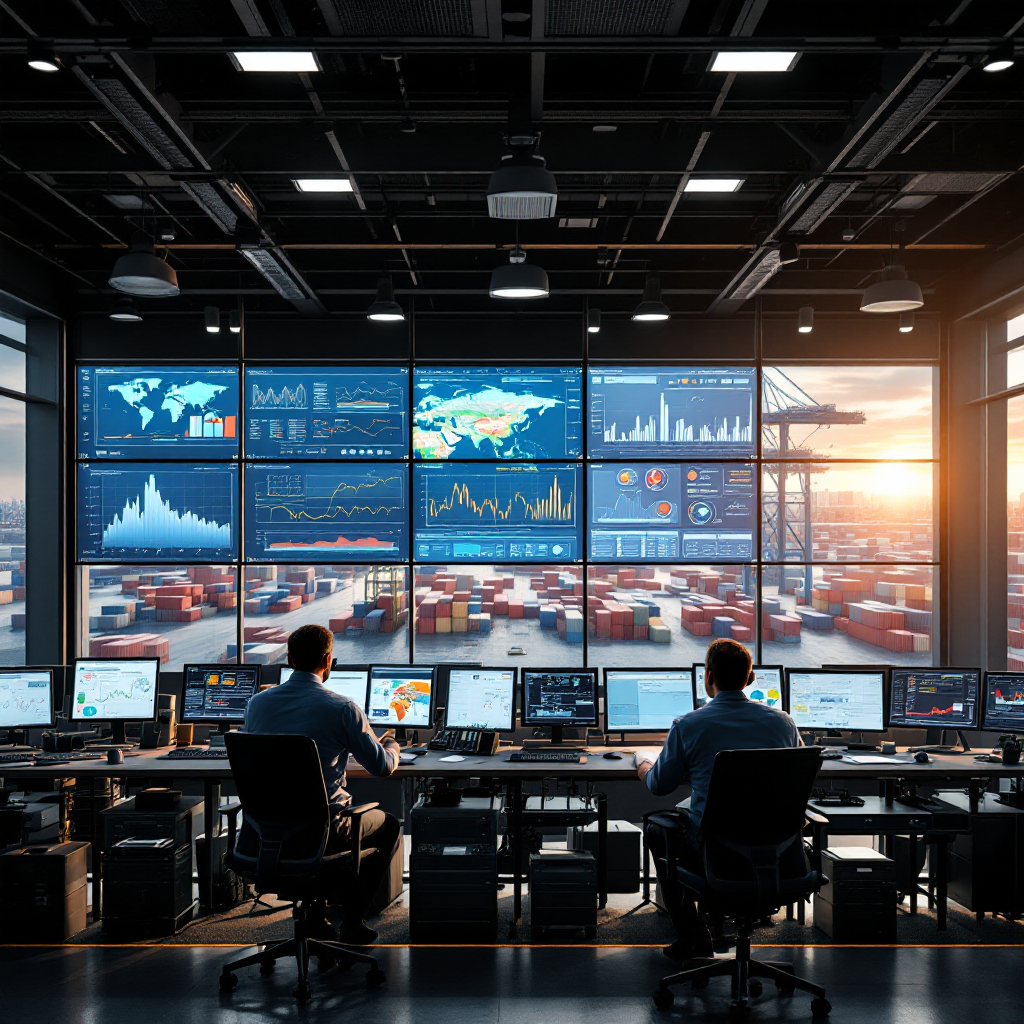
Container Terminal AI Optimization: TOS-Agnostic API Layers
ai integration in container terminal operations
AI integration in the modern terminal changes daily work. First, a TOS-agnostic API layer sits between heterogeneous systems and AI tools. It standardizes data and hides vendor differences. As a result, operators can feed consistent inputs to models. This approach lets AI analyze throughput, container movements, and equipment telemetry without being blocked by proprietary formats. For example, a patent describes “converting the data into a TOS agnostic format, and performing processing” to enable cross-platform handling US9495657B1. Therefore terminals gain flexibility and faster integration windows. Also terminals see reduced integration risk when they adopt a neutral data layer.
AI helps predict equipment faults and optimize yard layout. For instance, industry work shows AI can improve operational efficiency by up to 30%. That statistic demonstrates real upside for inland container terminals and for the wider port ecosystem. Next, AI reduces downtime and improves slot utilization. Also predictive analytics lower maintenance costs and decrease container dwell time.
We route and resolve operational emails, and we connect to ERP, TMS, WMS and document stores. As a result, teams get faster, data-driven decisions. Consequently terminals and terminal operators can reduce manual email triage and speed decision-making about arrivals, gates and equipment. In addition, that same data plumbing feeds AI models that optimize container flows and crane schedules.
Finally, integrating TOS-agnostic layers lets terminals avoid vendor lock-in. It enables phased AI deployment and hybrid upgrades. Also it supports future-ready systems and permits incremental deployment of automation across the terminal.
Drowning in a full terminal with replans, exceptions and last-minute changes?
Discover what AI-driven planning can do for your terminal
tos-agnostic stack for ai-driven real-time optimization
A robust TOS-agnostic stack includes data ingestion, transformation, a messaging fabric, model serving, and a visualization layer. First, ingestion captures events from PLCs, IoT sensors, and transactional systems in the terminal. Then a transformation layer maps vendor-specific fields into a common schema. Next, the messaging fabric distributes normalized events to models and dashboards in real-time. This stack design prevents vendor lock-in and lets teams deploy different AI models without rewriting connectors. Also the stack supports an event store that replays historical streams for model retraining. As a result, teams can evaluate model changes against past periods and measure gains in utilization and throughput.
Real-time data feeds let AI predict queues at gates and allocate trucks to lanes. For example, a real-time feed into a yard planning model reduces unnecessary moves. Also when models drive yard crane assignments they shorten container retrieval cycles. You can read related approaches in yard planning and decision support research, such as next-generation container terminal yard planning software next-generation container terminal yard planning software. Furthermore, teams that adopt a TOS-agnostic stack report better crane utilization and faster gate turnaround.
Performance metrics tie directly to business KPIs. For example, automated crane sequences increase moves per hour and lower unproductive moves. Also improved allocation reduces dwell time and frees slot utilization. In some cases, AI models running over a TOS-agnostic stack support automated tandem or twin-lift sequencing, which links to research on crane split and lift sequencing container terminal crane split optimization algorithms. Therefore terminals can run mixed fleets and still benefit from coordinated automation. Finally, the stack eases deployment of new ai algorithms and lets teams swap models in production with minimal code change.
machine learning and ai-powered predictive maintenance
Machine learning drives predictive maintenance across the terminal. Sensors on cranes, trucks, and yard equipment stream telemetry to a central data hub. Then models flag anomalies and forecast failures. As a result, maintenance teams can schedule repairs before a breakdown. Industry studies show predictive maintenance powered by AI cuts downtime by roughly 25%. That reduction translates into significant savings and fewer disruptions to container flows.
Models use vibration, temperature, and cycle counts. Also they consume transactional logs from the terminal operating system and work orders. Data used for training includes historical faults, repair records, and sensor trends. In addition, model-agnostic meta-learning methods like MAML help adapt models to new machines with little labeled data. Chelsea Finn notes that “Model-Agnostic Meta-Learning (MAML) provides crucial flexibility in adapting AI models to new tasks with minimal data” MAML overview. Therefore terminals can deploy a core model and fine-tune it quickly for a specific crane or yard tractor type.
Hardware differences matter. So a TOS-agnostic middleware transforms operational data into consistent features. Also this layer enables models to reason about similar failure modes across diverse fleets. For terminals that want to automate repair scheduling and spare parts allocation, integrating predictive analytics with work order systems reduces mean time to repair. In practice, teams connect AI forecasts to workflows. For example, routing an email or a ticket into a maintenance queue can be automated.
Finally, teams planning deployment should track model drift and maintain retraining pipelines. Also they should define governance and monitoring. As a result, the terminal gets repeatable improvements in operational readiness and lower total cost of ownership for equipment fleets.
Drowning in a full terminal with replans, exceptions and last-minute changes?
Discover what AI-driven planning can do for your terminal
maritime container terminals: streamline port terminal operations
Maritime container terminals face different constraints than inland terminals. Ships arrive with tight berthing windows. Port yard space may be limited. Also hinterland links must sync with vessel schedules. Consequently maritime terminals need coordinated scheduling across quay cranes, yard cranes, and truck gates. A TOS-agnostic API layer helps by unifying data from vessel planning, gate systems, and yard management. This unified view enables AI to optimize container flows and reduce congestion.
When a port integrates a neutral middleware, AI can route containers across modes and improve intermodal handover. For example, models can predict peak truck arrival times and then recommend gate staffing and lane allocation. That streamlines container retrieval and reduces container dwell time at the terminal. Also shared data helps synchronize vessel planning with yard planning; see integrated planning examples in vessel and yard planning research integrating vessel planning and yard planning in terminal operations. Therefore the terminal achieves better slot utilization and smoother train load cycles.
AI reduces on-dock congestion and improves throughput. For instance, traffic models allocate vehicles to lanes and then sequence appointments. Also optimization of container stacking and automated gate sequencing improves berth productivity. Research shows that combining deep learning-enhanced quantum scheduling methods can outperform traditional heuristics in complex scheduling problems deep learning-enhanced quantum optimization. As a result, terminals can shorten berth time and avoid cascading delays across the port.
Finally, smart port transformation requires cross-stakeholder data sharing. Port community systems and terminal systems must talk. By using a TOS-agnostic approach, ports and terminals can adopt common APIs and support multimodal routing. That lets the entire supply chain benefit from AI-driven routing and better resource allocation. In short, a neutral API layer helps maritime terminals become more efficient and more resilient to variability in arrivals and cargo flows.
ai in terminal: boosting efficiency in container terminals
AI-driven yard management optimizes container placement and retrieval. Models evaluate slot utilization and predict where to put a container to minimize future moves. Also they consider dwell time and departure predictions. As a result, terminals save moves and increase throughput. For detailed techniques, see advanced planning and yard decision support work such as container terminal yard planning decision support systems. That research explains how decisions convert to fewer gross moves per hour and better slot utilization.

Also modern approaches integrate deep learning-enhanced quantum scheduling methods to solve large-scale allocation problems. These hybrid methods show improved scheduling performance in academic and field tests study. Consequently terminals can run complex sequencing with fewer heuristics. AI models then produce actionable plans for crane teams and gate staff. Also they generate alerts for operators when unexpected delays occur. That improves decision-making at every layer.
The market for AI logistics tools is growing fast. Analysts project a generative engine optimization market reaching $7.3 billion by 2026 with a projected industry adoption near 58%. Therefore investment in AI and neutral integration layers pays off. Also terminals that implement ai-powered scheduling and predictive analytics report higher productivity and lower operational costs. In practice, terminals see measurable gains in container throughput and in reduced container dwell time.
To scale, teams should measure KPI improvements and run A/B tests between model policies. Also they should adopt governance for model changes and rollout. That approach ensures a steady path from pilot to full deployment. Finally, integration partners should support both legacy operating system formats and modern cloud-native services. This dual support allows terminals to modernize without halting operations.
optimization: ai-powered TOS stack for container terminal operations
An AI-powered TOS middleware delivers end-to-end optimization across yard, quay and gate. First it standardizes operational data. Then it feeds AI models that optimize crane sequences, vehicle routing, and slot allocation. The result is higher throughput and lower cost per container moved. Also interoperability gains come from a vendor-neutral approach. It reduces integration time and lowers total cost of ownership.
Operational benefits include improved utilization and faster decision-making. For example, smarter allocation of quay and yard assets reduces idle time. Also precise prediction of arrivals lets teams stage staff and equipment efficiently. You can explore related topics such as automated stowage verification in inland terminals for more context automated stowage plan verification. Consequently operator workloads fall and response speed rises.
Deployment planning should follow clear milestones. First, build the TOS-agnostic connectors and the event pipeline. Next, deploy models in a constrained domain such as gate appointment assignment. Then expand to yard planning and crane automation after validating gains. Also include governance, monitoring, and retraining plans. This sequence lowers risk and accelerates value capture.
Finally, a roadmap for terminals should include stakeholder alignment, pilot metrics, and phased scale. Also it should include staff training and operator interfaces that surface model recommendations. As a result, terminals become more resilient and future-ready. The overall terminal benefits from improved productivity, reduced dwell time, and measurable operational efficiency improvements. In short, a TOS-agnostic AI stack helps terminals optimize today and adapt tomorrow.
FAQ
What is a TOS-agnostic API layer?
A TOS-agnostic API layer standardizes data from different terminal systems into a common schema. It enables AI models to consume consistent inputs without rewriting connectors for each terminal operating system.
How does AI improve crane productivity?
AI sequences crane moves to minimize travel and idle time. Also it adapts sequences based on real-time conditions and reduces container handling errors.
Can AI-driven systems reduce downtime?
Yes. Predictive maintenance models detect faults before failure and schedule repairs proactively. For example, studies show AI can reduce equipment downtime by about 25%.
Do TOS-agnostic layers cause vendor lock-in?
No. They are designed to prevent vendor lock-in by translating proprietary formats into neutral schemas. As a result, terminals can swap AI models and backend systems freely.
How quickly can a terminal deploy AI solutions?
Deployment depends on data readiness and scope. Typically teams pilot a single function like gate appointment assignment, then scale to yard and quay optimization. Also phased deployment reduces disruption to operations.
What data do AI models need?
Models use sensor telemetry, transaction logs, and historical repair records. Also they benefit from gate, vessel and yard schedule data to predict container flows and dwell time.
How do maritime and inland terminals differ for AI projects?
Maritime terminals must coordinate vessel berthing and quay cranes, while inland terminals focus on rail and truck handovers. In both cases a TOS-agnostic API layer helps unify data across modes.
Can small terminals benefit from AI?
Yes. Smaller terminals can adopt cloud-hosted stacks and phased automation to improve utilization and reduce manual work. Also targeted pilots often unlock rapid ROI.
How do AI and digital twin approaches work together?
A digital twin models the terminal state and feeds scenarios to AI models. AI then recommends actions based on simulated outcomes. Together they improve decision-making and planning.
How can I learn more about yard planning and crane sequencing?
Explore specialized resources on yard planning decision support and crane split optimization for technical details. For example, this page on container terminal yard planning decision support systems offers deeper guidance container terminal yard planning decision support systems.
our products
 stowAI
 stackAI
 jobAI
jobAI
Innovates vessel planning. Faster rotation time of ships, increased flexibility towards shipping lines and customers.
Build the stack in the most efficient way. Increase moves per hour by reducing shifters and increase crane efficiency.
Get the most out of your equipment. Increase moves per hour by minimising waste and delays.
stowAI
Innovates vessel planning. Faster rotation time of ships, increased flexibility towards shipping lines and customers.
stackAI
Build the stack in the most efficient way. Increase moves per hour by reducing shifters and increase crane efficiency.
jobAI
Get the most out of your equipment. Increase moves per hour by minimising waste and delays.